

Spurring productivity growth requires innovation. Not just in products, but in our business models and management practices.
Articles on Innovation
Displaying 361 - 380 of 670 articles

Creative makerspaces in Ontario schools weave passion with digital technologies to teach 21st century skills.

From kingfishers to dandelion seeds and bone tissue, natural organisms are the source of many radical human innovations in technology and medicine.

The 2017 Global Innovation Index shows that most countries in Latin America and the Caribbean could do much more to tap their innovation potential

Inequality actually restricts people from earning more, educating themselves and becoming entrepreneurs.

The UK is about to miss an opportunity if it tries to take on the giants of the lithium-ion battery industry.

Doctors are taught how to treat skin cancer – but not necessarily how to empathise with those who have it.

A comparison of 36 Australian cities finds that, unlike Europe, the data on their creativity and culture are not closely linked to their capacity to generate economic value and social well-being.

Holding patents can be a lucrative and powerful position to be in. Here’s a proposal for how nonprofit patent holders can do more for the common good – and live up to their end of the tax break bargain.

Without leading edge innovations and coordination, Canadians will die from the epidemic of antibiotic resistant infections.

The digital economy in the US is already on the verge of stalling; failing to protect an open internet would further erode the United States’ digital competitiveness.

Europe’s approach to antitrust enforcement picks up where the US left off in the 1980s, when the view that breaking up monopolies hurt innovation took hold.

New research shows that young people and employers have different ideas about innovation and the future of work.
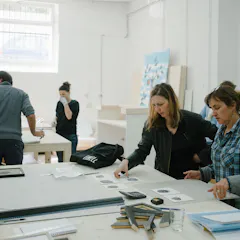
What do these new places tell us about the transformations of our professional, social and political world? And how to turn them into springboards for territorial development?

The iPhone changed the game not because of the technical details of the device, but rather as a result of its creators’ imagination and courage.

Demonstration farms are a key way in which new knowledge can be transferred to farmers around the world.

We don’t know much about the origins of most human achievements – scientific and otherwise. Like evolution, does progress occur as random insights are selected for or against?

The digital pin-ups’ business models actually inhibit serendipity and, indeed, innovation by absorbing entire markets into the sealed-off space of their platforms.
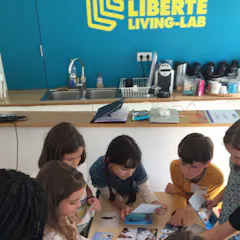
The concept of laboratory schools has raised interest in recent reports (CNIRE, François Taddei…). Will they manage to bridge the gap between teaching and research?

Rethinking work is crucial for industrialised and emerging economies, where job losses are being felt even in the presence of substantial, although diminishing, economic growth.
Top contributors
-

Emeritus Professor of Innovation, University of Technology Sydney
-
Director, Melbourne Institute of Applied Economic and Social Research, The University of Melbourne
-
Senior Lecturer and Researcher in Innovation and Digital Leadership, University of Brighton
-
Professor of Advanced Technology Transitions, Arizona State University
-
Innovator in Residence, University of Oxford and Emeritus Professor, School of Business, The University of Queensland
-
Professorial Fellow, University of Canberra
-
Professor of the Practice of International Development, Harvard Kennedy School
-
Professor and Founding Director of QUT Centre for the Digital Economy, Queensland University of Technology
-
Associate Professor of Public Policy and Women's Studies, University of Michigan
-
Visiting Professor, University of Technology Sydney
-
Directeur de l'agence Villes Innovations, Chercheur associé au laboratoire PACTE (Université de Grenoble), Co-fondateur du Laboratoire d’usages culture(s)-art-société (LUCAS), Université Grenoble Alpes (UGA)
-
Winthrop Professor, Entrepreneurship, Innovation, Marketing and Strategy, The University of Western Australia
-
Professor of Natural Philosophy in the Department of Physics, University of York
-
Founding Director, Institute for Sustainability, University of Surrey
-
Productivity Growth Program Director, Grattan Institute