

Nowadays, much of the information surrounding us is noise – insignificant and irrelevant information that no one needs to know.
Articles on Information science
Displaying all articles

End-of-life planning today includes making sure your loved ones have access to digital photos, email archives and social media accounts.

Every field has its own standard for what data gets recorded for specimens archived in a museum collection, which can make research difficult.

Students have 24/7 access to a vast collection of audio books, e-books, movies, magazines, journals, newspapers and other digital resources through the POWER Library.

Humans crave certainty in an increasingly uncertain world. Liberal politicians must find a way to provide it.
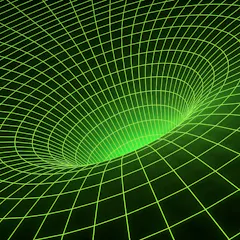
A study of 480,000 Wikipedia users shows how ‘busybodies’, ‘hunters’ and ‘dancers’ follow their curiosity in different ways.

The phrase ‘research data management’ might make your eyes glaze over, but it’s actually this behind-the-scenes work that allows for large-scale scientific discoveries and collaborations.
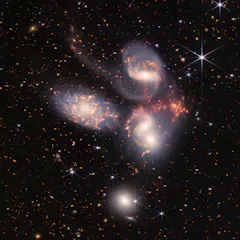
There may be ways to check if our universe is just simulated entertainment for an advanced, alien species.

A scholar of literature for children and young adults shares her insights on how to better connect children with literature and libraries with their communities.
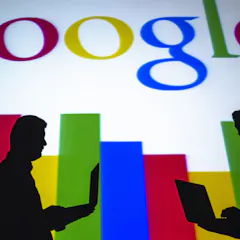
Unlike scholars, Google’s search engine can’t automatically decide which sources are the most important, most accurate or most significant.

Does it seem like your friends have better lives than you do? Mathematics, in the form of the “majority illusion,” can help explain why.

South Africa has a history of burning books. The ashes of burnt books tell of the barbarism to which a society can descend.
Top contributors
-

Professor of Information Sciences, University of Tennessee
-
Professor of Mathematics, University of Surrey
-
Beverly Cleary Professor for Children & Youth Services, University of Washington
-
Research Professor of Computer Science, University of Southern California
-
Director of Innovation & Research Support, University of Memphis
-
Emeritus Professor of Information Science, University of Pretoria
-
Associate Teaching Professor of Library and Information Science, Rutgers University
-
T32 Fellow, Feinberg Medical School, Northwestern University
-
Associate Professor of Information Science, University of Colorado Boulder
-
Adjunct Senior Industry Fellow, School of Global, Urban and Social Studies, RMIT University
-
Associate Professor in Physics, University of Portsmouth