

Contaminated masks are an infection risk. Here’s how to clean them properly.
Articles on Infection control
Displaying 41 - 60 of 67 articles
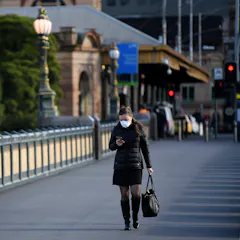
Even though cases haven’t dropped off yet, mandatory masks have probably helped to prevent cases continuing to spiral upwards - which is a real risk with this virus.

When it comes to PPE, we could be better protecting our frontline health-care workers. We need to update current guidelines to reflect the latest evidence around how COVID-19 spreads.

Just because someone isn’t wearing a mask doesn’t mean they don’t want to. They might have a disability or medical condition you can’t see that makes wearing a mask difficult or distressing.

The more layers your mask has, the better, our new research confirms.
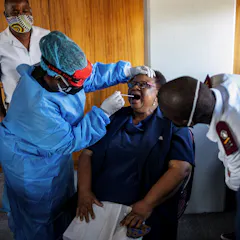
Healthcare workers bear the extraordinary practical and psychological challenges of working daily with the threat of infection and for many months.

Health workers, who have long used face masks as part of their everyday work, share their tips on how to comfortably wear them and see where you’re going.
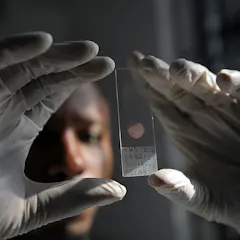
Having the right equipment is not enough – getting health workers to use it is also a challenge.

What we understand about how COVID-19 spreads should be the basis for infection control procedures during any lockdown of a residential tower.
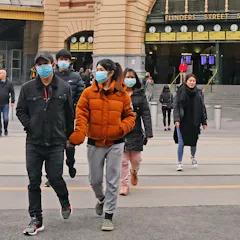
As Melbourne returns to lockdown, the evidence suggests routine mask-wearing - as seen in many countries but not so far in Australia - could be a valuable tool to help stop the spread of COVID-19.
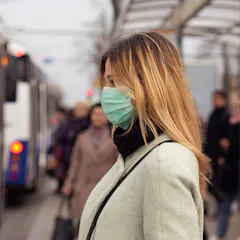
Masks protect you from infection and protect others from getting sick. But authorities are leaving it up to individuals to decide if they want to wear masks on the bus or train. Here’s how to decide.

If you’re itching to get back to the gym when it re-opens, here’s what you can do to protect yourself and others from COVID-19.

As restaurants and cafes re-open, here’s what you can do to limit the chance of coronavirus transmission.

Don’t spit, change out of your kit at home and clean match balls. These are just some of the ways sport is changing as restrictions ease.
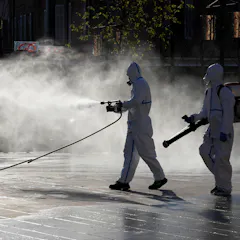
We’ve all seen the footage of people in protective suits and vehicles spraying cities to control COVID-19. But because of the way disinfectant and contamination work, it might be mostly for show.
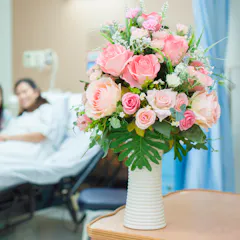
As the number of people hospitalised with COVID 19 rises, so do the number of people wanting to visit their sick loved ones. Who can visit?
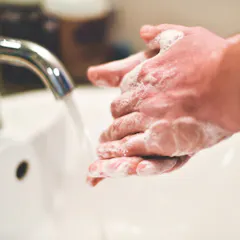
You can prevent your skin becoming dry and inflamed with some simple steps. And if you do develop dermatitis, it’s important to seek early medical help.
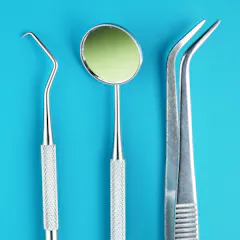
Your regular check-up will need to be postponed. But if you’re in acute pain, dentists may still be able to treat you. Here’s what’s allowed and what’s not.

The government has made several announcements to safeguard aged care residents and those in hospitals, but we’re yet to see the same attention paid to the one in five Australians with a disability.
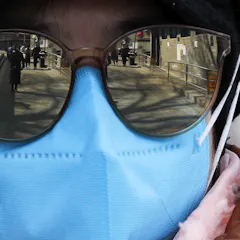
Some measures taken in China to contain the COVID-19 outbreak have raised concerns about patient privacy. As other countries bring in containment measures, will patient privacy be compromised?
Top contributors
-

Professor of Nursing and Health Services Research, University of Newcastle
-
Professor, Director of Research, Nursing and Midwifery, Monash University
-
Professor of Global Biosecurity, NHMRC L3 Research Fellow, Head, Biosecurity Program, Kirby Institute, UNSW
-
Professor Emerita, Nursing, School of Nursing and Midwifery, Griffith University
-
Senior Lecturer, Infectious Diseases Epidemiology and Control, UNSW
-
Associate Professor, Epidemiology, Deakin University
-
PhD Candidate, The Kirby Institute, UNSW
-
Senior Lecturer in Environmental Health, CQUniversity Australia
-
Professor, School of Mechanical and Manufacturing Engineering, UNSW
-
UNSW
-
Lecturer, UNSW
-
Research Associate, UNSW
-
Professor, School of Population Health, UNSW
-
Clinical Chair and Professor of Infection Prevention and Disease Control at the University of Sydney, University of Sydney
-
Professor MBBS, PhD, MPH, PGDipEcho, FANZCA, GAICD, The University of Melbourne