

It’s worth having a conversation with family and friends to set some rules to minimise the risk of COVID transmission.
Articles on Infection control
Displaying 21 - 40 of 67 articles
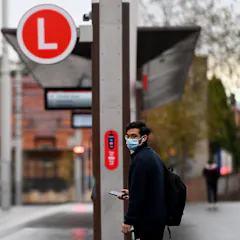
In Hong Kong, SARS created a new social norm, where people accepted mask use as part of their ‘civic responsibility’.

We can do better than building a village of glorified dongas. Smart quarantine can be much higher-tech, and more adaptable for future uses once the pandemic is over.

Health workers have long called for better protections against COVID-19. Well fitting masks are now required when caring for COVID-19 patients. But the guidelines on ventilation miss the mark.
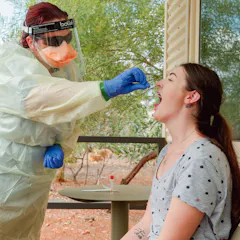
We have the chance to build a world class, dedicated quarantine facility. Here’s how we could do it.
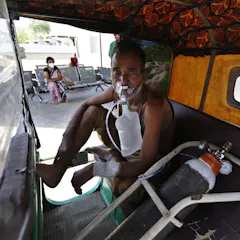
The response to the crisis in India speaks to the complexity of public health decision-making.

A deep clean involves cleaning objects or surfaces that may not be routinely cleaned, such as walls, ventilation ducts, curtains, carpets, and hard-to-reach places.

Nebulisers deliver life-saving medications yet they increase the risk of spreading COVID-19 in hotel quarantine.

With no national standard, casually employed staff, a lack of PPE and a refusal to account for aerosol transmission, infections such as the one that prompted Perth’s lockdown will keep happening.

As we approach our first COVID-era Christmas, the way we celebrate this year might need a bit more thought. Here are some tips to keep the festivities with family and friends COVID-safe.

Three infection prevention and control experts break down Victoria’s new hotel quarantine system.

Following these simple steps can help to keep your holiday memorable in the best possible way.

No kissing, jumping up and down on the dance floor, or buffets. Sounds like a COVID wedding.

The aged care royal commission’s recent report on COVID-19 recommended accredited infection prevention and control experts be sent into residential aged care. Here’s what that means.

Health-care workers’ access to personal protective equipment, along with appropriate infection control procedures, affected their mental health during the first wave of the COVID-19 pandemic.

Our video shows aerosol emissions from singing a simple scale. No wonder singing in a choir can be risky.
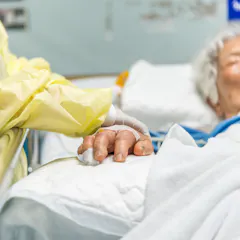
We can strike a balance between minimising transmission risk and practising compassion to allow loved ones to visit patients with COVID-19 in ICU at the end of their lives.

Some 70-80% of health-care workers testing positive to COVID-19 in Victoria’s second wave were infected at work, compared with 22% in the first wave.
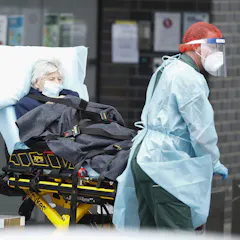
Most aged care homes are designed to be naturally ventilated. But when windows are closed to keep out the cold, poor ventilation appears to be common – and that’s a problem for infection control.

There are a number of things you should do, including keeping the person with COVID-19 isolated, and cleaning regularly.
Top contributors
-

Professor of Nursing and Health Services Research, University of Newcastle
-
Professor, Director of Research, Nursing and Midwifery, Monash University
-
Professor of Global Biosecurity, NHMRC L3 Research Fellow, Head, Biosecurity Program, Kirby Institute, UNSW
-
Professor Emerita, Nursing, School of Nursing and Midwifery, Griffith University
-
Senior Lecturer, Infectious Diseases Epidemiology and Control, UNSW
-
Associate Professor, Epidemiology, Deakin University
-
PhD Candidate, The Kirby Institute, UNSW
-
Senior Lecturer in Environmental Health, CQUniversity Australia
-
Professor, School of Mechanical and Manufacturing Engineering, UNSW
-
UNSW
-
Lecturer, UNSW
-
Research Associate, UNSW
-
Professor, School of Population Health, UNSW
-
Clinical Chair and Professor of Infection Prevention and Disease Control at the University of Sydney, University of Sydney
-
Professor MBBS, PhD, MPH, PGDipEcho, FANZCA, GAICD, The University of Melbourne