

In its current form, safe drinking water legislation would weaken key legal provisions, particularly those related to rights and governance for First Nations.
Articles on Indigenous water rights
Displaying all articles
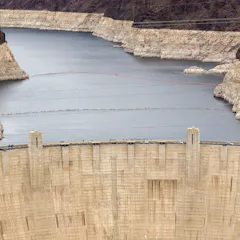
Long-standing water-use agreements allocate more water than the river and its basin actually contain, forcing users to cut back and face future shortages as well.
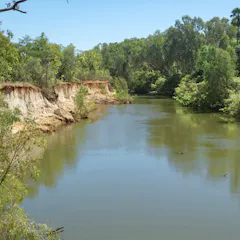
The NT government has given billions of litres of water from the Roper River to irrigators. When will Australia start managing our rivers for the future?

Despite its importance, water management has been largely absent from the election campaign. But using trading markets to improve freshwater quality in smaller catchments deserves wider debate.
Once again, First Nations in the Murray-Darling Basin have been shortchanged in water reform and shortchanged in the water market. It’s time to listen and actually deliver tangible outcomes.
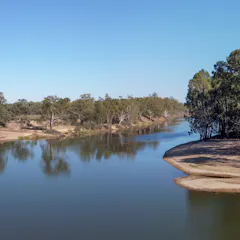
Water rights are beginning to be allocated to Indigenous Australians – but there’s a long way to go to reverse the legal fiction of aqua nullius.
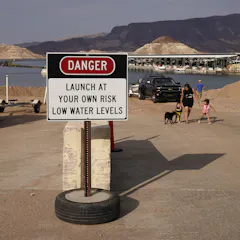
A Western scholar proposes allocating water from the Colorado River based on percentages of its actual flow instead of fixed amounts that exceed what’s there – and including tribes this time.
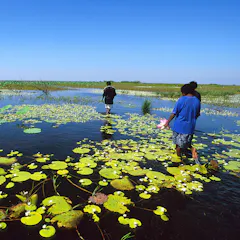
History is being repeated with the Northern Territory government finding ways to stop Aboriginal people from gaining access to water to use or trade.
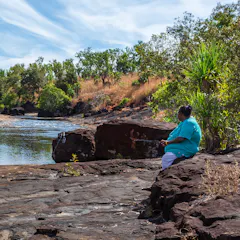
First Nations people have almost no say in how water is used in Australia. The Productivity Commission’s latest report does little to address that.

The decision recognises that water rights are critical for Indigenous people to restore customs, protect their culture, become economically independent and heal Country.
Top contributors
-

Senior Lecturer, Melbourne Law School, The University of Melbourne
-
Indigenous knowledge holder, Indigenous Knowledge
-
Indigenous Knowledge
-
Professor, Australian Rivers Institute, Griffith University
-
Adjunct Research Fellow, Australian Rivers Institute, Griffith University
-
Chair of the Board for Community Circle
-
Associate Professor, Head of Resources, Environment and Development Department, Crawford School of Public Policy, Australian National University
-
Australian Laureate Professor of Economics, Crawford School of Public Policy, Australian National University
-
Senior Research Fellow, Australian Research Council Centre of Excellence for Children and Families over the Life Course, The University of Melbourne
-
Enterprise Principle Fellow in Cultural Economies and Sustainability, The University of Melbourne
-
Senior Lecturer | School of Government, Te Herenga Waka — Victoria University of Wellington
-
Director of Environment for Chiefs of Ontario
-
Professor Emeritus of Political Science, University of Utah
-
Foundation Chair in Australian Indigenous Studies, The University of Melbourne
-
ARC DECRA Fellow, Australian National University