

The High Court has long said it can’t hear cases about Indigenous sovereignty, but new research shows that may not be the case.
Articles on Indigenous sovereignty
Displaying all articles

After the Second World War, Canadian work in global literacy campaigns helped elaborate Canada’s image as benevolent and innocent regarding internal colonialism.

Native American lands contain 30% of the nation’s coal, 50% of its uranium and 20% of its natural gas, as well as copper, lithium and rare earth elements.

Indigenous people are more than stories. We deserve a future where our identities are not commodities, and accountability is measured by actions that build trust and repair harm.

Catholic missionaries sent thousands of Indigenous belongings to Rome for a 1925 exhibition. Beyond what the Vatican has now committed to repatriating, many more belongings must be returned.

Tribal governance takes a long view based in Native peoples’ deep history with these lands.

The agreement between the Haida Nation and B.C. is laudable. However, Canada’s history of false promises means the federal government is unlikely to enact similar deals any time soon.

Indigenous media have rapidly expanded over the last 30 years with Indigenous media makers gaining greater control of their narratives.

Improving the intercommunity mobility of First Nation Peoples is a road to more inclusive and safer futures. This calls for recognizing Indigenous agency and sovereignty when developing solutions.

In order to meet its 2030 biodiversity targets, Canada is heavily relying on Indigenous Protected and Conserved Areas, which could do more harm than good for First Nations, Inuit and Métis.
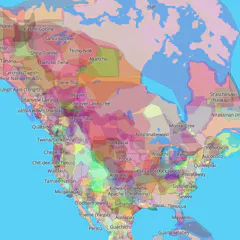
Land acknowledgments state that activities are taking place on land previously owned by Indigenous peoples. They’re popular – but they may harm more than they heal, say three anthropologists.
Top contributors
-

Associate Professor, Department of Anthropology, McGill University
-
President of the Association of Indigenous Anthropologists; Associate Professor of Anthropology, University of North Carolina at Chapel Hill
-
Assistant Professor, Sociology Department, University of Lethbridge
-
Associate Professor, Department of Indigenous Studies, Simon Fraser University
-
Professor of Criminology, Associate Member of Dept. of Indigenous Studies, Simon Fraser University
-
PhD Candidate, School of Criminology, Simon Fraser University
-
Associate professor in the School of Communication, Simon Fraser University
-
Professor of Anthropology & Director for Undergraduate Research, College of Arts and Letters, San Diego State University
-
Professor of African Studies and Anthropology, University of North Carolina at Chapel Hill
-
Professor in History, University of Birmingham
-
Assistant Professor of History, University of Idaho
-
Associate Professor of Art History, McGill University
-
Associate Professor, Department of English, Carleton University
-
Associate Professor of Law, Melbourne Law School, The University of Melbourne