

More Indigenous sports stars are speaking their mother tongues in TV interviews and elsewhere. The challenge now is to develop truly bilingual commentary teams to keep the ball alive.
Articles on Indigenous languages
Displaying 21 - 40 of 83 articles
A new, extensive database of language grammars from around the world indicates an alarming trend of global language loss.

AI technology holds promise for education, but it will also likely exacerbate the digital divide and increase the online dominance of English.

Some have claimed the proposed new Indigenous names for Winnipeg streets are too difficult to pronounce. But what does it mean when we say a word is hard to pronounce?

There’s a new wave of indigenous language podcasts that could attract big new audiences.

A recurrent theme in the testimonies of Residential School survivors is how their cultural and linguistic identities were adversely affected.

This new agreement finally allows First Nations to decide for themselves how the funding will revitalize their language and culture independently of the government.
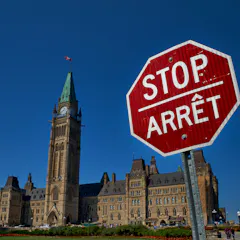
Canada’s population is more diverse than ever, with many different languages represented. Government policy must reflect that diversity and offer meaningful support to minority languages.

People in the Gurindji community of Kalkaringi in northern Australia call their sign language ‘Takataka’.
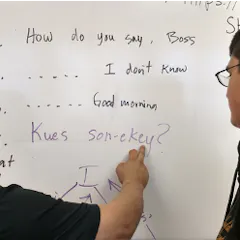
Indigenous language instructors struggle to keep their languages from becoming lost.
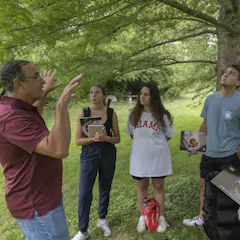
Indigenous people’s languages were largely lost as a result of forced assimilation efforts in the U.S. Here’s why one tribal leader says the languages should be brought back.

Multilingual teaching was a challenge under emergency remote learning conditions: computer systems weren’t adapted to indigenous languages.

Banned 45 years ago, and its author detained, the Gikuyu language play Ngaahika Ndeenda profoundly shaped the literary legend.

For most Québec residents, there is broad consensus that French should be protected. But many of us believe that multilingualism need not threaten French.

This National Indigenous Languages Day, let’s celebrate the community-led initiatives that focus on building capacity and sustainability for future generations.

Linguistic rights are human rights that apply to majorities and minorities alike, not just at the discretion of those who hold power.
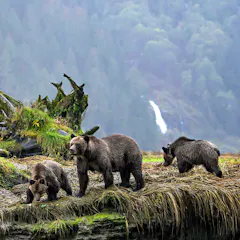
Genetic analysis of grizzly bear populations in British Columbia has revealed a connection in how bear and human cultures may have responded to the landscape.
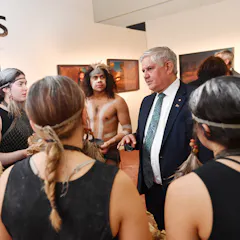
The Closing the Gap dashboard includes data on the 17 socioeconomic targets in the national agreement. But this information isn’t enough on its own to bring real change.
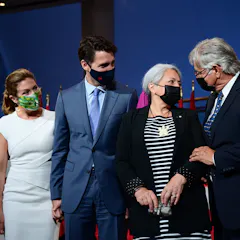
Which languages get to “count” as bilingual in Canada? And who gets to be the “right” kind of bilingual?

Australian Indigenous languages use a fascinating array of expressions drawing on body parts to describe emotions. Here is a guide to some of the most intriguing ones.
Top contributors
-

Professor of Linguistics, The University of Queensland
-
Professor emerita, Australian National University
-
Professor of Linguistics, Yale University
-
Professor of Education, Charles Darwin University
-
PhD Candidate, Faculty of Law, L’Université d’Ottawa/University of Ottawa
-
Professor of Elementary Literacy, Ontario Institute for Studies in Education, Department of Curriculum, Teaching and Learning, University of Toronto
-
Professor and Canada Research Chair in Language Interactions, University of Manitoba
-
Associate Professor and Reader, ARC Centre of Excellence for the Dynamics of Language, Research Unit for Indigenous Language, School of Languages and Linguistics, The University of Melbourne
-
Professor, Charles Darwin University
-
ARC DECRA Fellow, Australian National University
-
Professor of Economics and Public Policy, ANU College of Arts and Social Sciences, Australian National University
-
Associate professor, University of the Western Cape
-
Honorary Senior Lecturer, Australian National University
-
Senior Fellow, National Centre for Indigenous Studies, Australian National University
-
Project manager - Living Archive of Aboriginal Languages, Charles Darwin University