
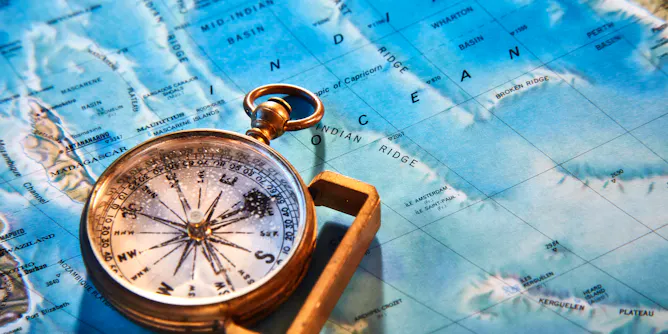
The Indian Ocean provides a new way of looking at world history that has been dominated by European accounts.
Articles on Indian Ocean
Displaying 41 - 60 of 78 articles
Unless we know what is in the ocean, we can’t protect the biggest part of the planet.
The absence of climate drivers – specifically, the Indian Ocean Dipole and La Niña – explains why Australia has gone so long without heavy rains.
Malawi must change its diplomatic approach and align its national interests with Mozambique’s
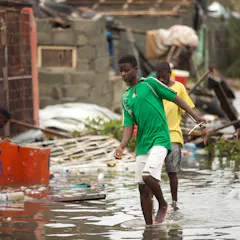
As storm directions change, countries that are outside the usual tropical storm zones need to ready themselves.
The Southern Ocean, as artists have uncovered, is also a treasure trove of cultural narratives.
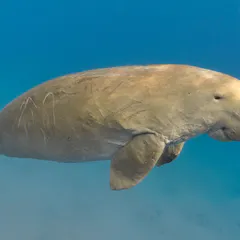
While the other members of the Sirenia are found in the Atlantic, the dugong is the only sea cow found in the Indian Ocean and south-western Pacific. This highlights its deep African connections.

A significant change in political mentality is required to shore up one of Africa’s leading lights.
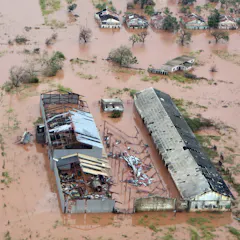
The spate of high intensity tropical cyclones making landfall in Southern Africa has been tied to very warm sea surface temperatures.
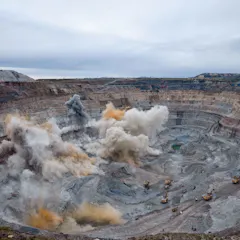
Much of the devastation of our globe’s natural resources traces its origins to early colonialism. These relationships continue to define the extraction of resources that severely impact ecosystems.

Data from hydrophones in the Indian ocean has raised new questions about what happened to MH370.
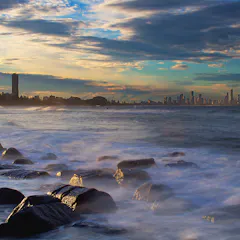
If you’ve ever wondered where the ocean currents flow around Australia’s coastline then we have a great map for you.
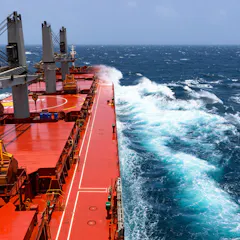
Around 80% of the world’s maritime oil trade passes through the Indian Ocean. And the economic and political might of the region is growing.
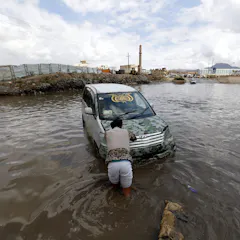
The frequency of intense tropical cyclones is increasing in the South Indian Ocean, a region that previously didn’t have these.

The UK is increasingly isolated in its claim to the Chagos Islands. If an international court finds in Mauritius’s favour, the implications could be huge.
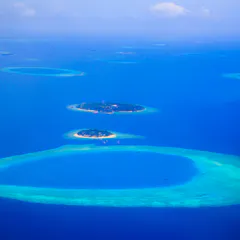
A new project takes a different look at the role of oceans.
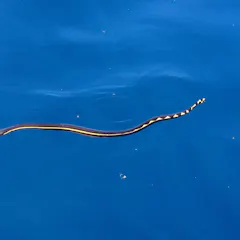
Sea snakes spend their lives in the water, giving birth to live young at sea, so why are they only found in some of the world’s oceans? The answer lies in a combination of climate and geography.
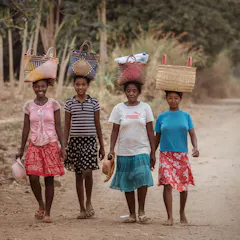
This research reconciled data and hypotheses from linguistic, archeological and genetic research on the settlement of the Comoros and Madagascar.
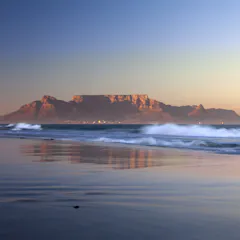
Histories of the North Atlantic have had a preponderant influence on scholarship about race. But, for scholars in the humanities and social sciences who study southern Africa, this is changing.
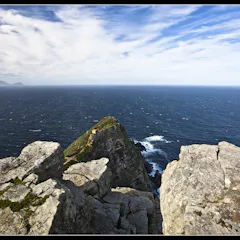
The Agulhas Current plays a critical role in global ocean circulation that influences climatic conditions across the world.
Top contributors
-

Professor of Coastal Oceanography, The University of Western Australia
-
Professor of Physical Geography, University of the Witwatersrand
-
Professor of African Literature, University of the Witwatersrand
-
Senior Lecturer, University of Pretoria
-
Research Coordinator, Security Institute for Governance and Leadership in Africa, Stellenbosch University
-
ARC Future Fellow and Associate Professor in Climate Science, ARC Centre of Excellence for 21st Century Weather, The University of Melbourne
-
Professor of Marine Biology and Head of School of Ocean Sciences, Bangor University
-
Lecturer, School of Ocean Sciences, Bangor University
-
Assistant Professor, UWA Oceans Institute, The University of Western Australia
-
Reader of Applied Mathematics, Cardiff University
-
Postdoctoral researcher in genetics and epigenetics of human populations, Université de Toulouse
-
Postdoctoral Fellow in International Law, Lund University
-
Professor, School of the Environment, The University of Queensland
-
Post-doctoral fellow, Mammal Research Institute, University of Pretoria
-
Associate Professor in Social and Maritime History, University of Reading