

Characteristics that would come to define Mau Mau camps – neglect, forced labour and ill-health – were ingrained long before 1952.
Articles on Imprisonment
Displaying 1 - 20 of 28 articles
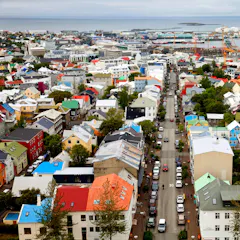
In Iceland’s few open prisons, prisoners benefit from benign conditions, rural settings and internet access. This makes being imprisoned as a foreigner much easier than in other western Europen countries.
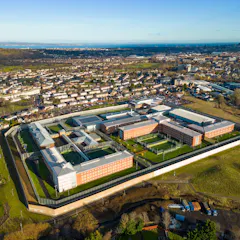
The UK imprisons more people than most of its western European neighbours and the conditions in its prisons are getting worse.
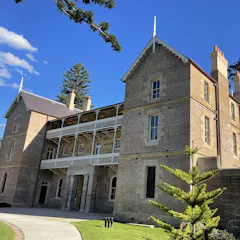
Built in 1821 to house and provide productive employment for the New South Wales colony’s growing population of female convicts, the Parramatta Female Factory was also the site of countless horrors.
One in three wrongfully convicted women were convicted of crimes that involved harming children. Once pardoned or exonerated, they experienced significant psychological and practical challenges.
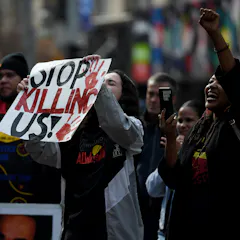
Russell Marks’ Black Lives, White Law is not about solutions; it’s about identifying the problems with Australia’s criminal legal system, and the injustice it does to First Nations people.

As a young child, Amy Thunig, a Gomeroi/Gamilaroi/Kamilaroi woman, moved with her family to be near her father, who was incarcerated in Adelaide. It was a difficult time, but he has taught her much.
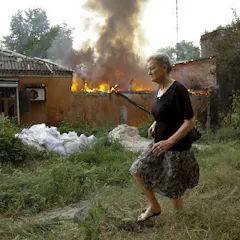
Russia and other countries and political regimes have a long history of forcing people to move, mostly for security and economic gains.
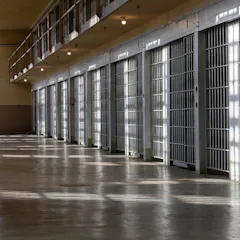
Elections Ontario must ensure imprisoned people are provided information on their candidates, registration assistance and facilitation by Elections Ontario employees on voting day.

The Conversation’s best graphs have removed doubt, surprised, and told entire stories.
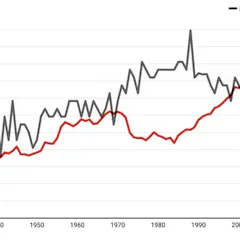
A new Productivity Commission report finds prisoners cost Australian taxpayers more than $5 billion per year. The numbers are climbing while offences are falling.

The Productivity Commission is examining Australia’s incarceration rates, arguing our jails are not providing value for money.

With 350 artworks created by 320 Indigenous artists who are in or recently released from prison, The Torch is making a difference to how people are seen and how they see themselves.

The proportion of prisoners awaiting trial in Nigeria is disturbing, and prolonged imprisonment can have a damaging effect on their mental functioning .

Programs designed to enhance legal access for people with cognitive disabilities accused of a crime are more humane and could be more cost effective than long-term detention.
Despite the UN’s Universal Declaration of Human Rights, it remains difficult to measure governments’ performance. A new data tool gives countries a scorecard on how well, or badly, they are doing.
Less than 15% of the most disadvantaged people in Australia exit poverty from one year to the next. We need to design policy to tackle this.

Colten Boushie’s death and the subsequent acquittal of his killer has fuelled loud calls for reforms to Canada’s criminal justice system and its treatment of the Indigenous. Why has it taken so long?

If we are serious about rehabilitating prisoners and reducing reoffending, then education and integration back into the community are vital. Today, internet access is essential to achieve that.

The UK government’s move to electronically track criminals on parole shows how wearable technology can become a virtual prison.
Top contributors
-

Professor of Law, University of Technology Sydney
-
Professor of Law, Swinburne University of Technology
-
Professor and Program Head, Justice Health Research Program, UNSW
-
Lecturer and Tutor in Critical and Cultural Studies, City Campus., Macquarie University
-
Health Services Researcher, The University of Melbourne
-
Academic Director/ Clinical Ethicist, Children’s Bioethics Centre at the Royal Children’s Hospital, and Associate Professor in Health Ethics at the Centre for Health and Society, The University of Melbourne
-
Professor of Contemporary Philosophy and Literature, Brunel University of London
-
Research Fellow, School of Population Health, UNSW
-
ARC Future Fellow and Professor of Criminology, The University of Melbourne
-
The University of Melbourne
-
Senior Lecturer in Social Policy & Undergraduate Programme Lead for Criminology, Sociology and Social Policy Programmes, Loughborough University
-
Professor, Urban Housing and Homelessness, RMIT University
-
Professor of Psychology; Member of the Strategic Research Centre for Social and Early Emotional Development, Deakin University
-
Nicolas Herault is a Friend of The Conversation.
Professor, Bordeaux Schoool of Economics, Université de Bordeaux
-
Executive Dean of the Faculty of Law, Queensland University of Technology