

Prisons cost data should facilitate comparisons of relative performance, value for money and efficiency. But limitations on the quality of the data mean that, more often than not, they don’t.
Articles on Beyond Prison
Displaying all articles

It is claimed ‘tough on crime’ policies reflect public opinion, but a properly informed public, via models such as citizens’ juries, is likely to arrive at different views on prison and its alternatives.

Education is one of the most important factors in giving prisoners options upon release, reducing the chance of re-offending.

The days of prison, an 18th-century industrial institution, as the justice system’s dominant form of punishment may be numbered. Electronic monitoring of offenders is one promising alternative.

Women coming out of jail require forms of assistance that are not simply directed at technologies for prevention or elimination of recidivism, but rather that are focused on health and well-being.

The success of probation programmes based on swift and certain sanctions has led to more than 160 such schemes operating in the US. Australia should consider whether the model might work here too.

The creation of veterans’ courts could be part of a fundamental shift to a criminal justice system that genuinely tackles the causes of crime.

Approaches to crime that rely on punitive methods have proved to be ineffective and counter-productive. Rehabilitation programmes not only prevent crime, but are cost-effective and practical.

A new generation of Indigenous youth is being separated from their families and culture – this time by the force of criminal law that ignores the proven alternative of community-based justice.
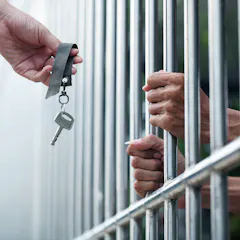
Sentencing policy is a mixed bag of approaches: punishment, deterrence, protection and rehabilitation. The system will remain costly and ineffective until punitive instincts give way to a more rational approach.

We simply don’t know how many prisoners are released each year, nor their demographic characteristics. As a result, we cannot tailor services that would reduce ex-prisoners’ risks of re-offending.

Education has been found to reduce prisoners’ re-offending, but how can they be properly educated today without internet access?

Our research suggests one in three people taken into police custody are likely to be receiving psychiatric treatment at the time.

Some claim rising crime rates justify jailing more people, others that such policies cut crime. Evidence from around the world shows those claims are wrong and that we should be looking at inequality.
Top contributors
-

Lecturer, University of Southern Queensland
-
Lecturer and Tutor in Critical and Cultural Studies, City Campus., Macquarie University
-
Professor of Criminology, Australian National University
-
Professor and Program Head, Justice Health Research Program, UNSW
-
Senior Lecturer in Education (Curriculum and Pedagogy), University of the Sunshine Coast
-
Health Services Researcher, The University of Melbourne
-
The University of Melbourne
-
Associate professor, Monash University
-
Research Fellow, School of Population Health, UNSW
-
Associate Professor (Digital Futures), University of Southern Queensland
-
Professor of Criminal Law, University of Sydney
-
Professor of Psychology; Member of the Strategic Research Centre for Social and Early Emotional Development, Deakin University
-
University Distinguished Professor of Forensic Behavioural Science & Dean, School of Health Sciences, Swinburne University of Technology
-
Victoria University
-
Director, Sir Zelman Cowen Centre, Victoria University