

Western Australia could be home to the country’s newest large-scale oil refinery, if a government proposal goes ahead.
Articles on Imports
Displaying 1 - 20 of 84 articles

Authorities have recalled a cake decorating powder, after an Australian child inhaled it and ended up in hospital.

Nigeria’s reliance on imported medicines is the outcome of a policy vacuum that has entrenched interests in commercially attractive, low-risk imports.
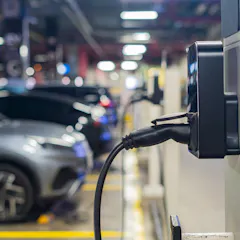
If China sets the international rules for the global green economy it could be in a very strong position. That’s not far off.

Agoa’s effectiveness was limited even before US tariffs started changing unpredictably.

On Friday, Trump said ‘great certainty’ had been brought back to the United States and the world. In truth, the uncertainty is far from over.

The new agreement will affect the lives of 2 billion people across economies representing about a quarter of global GDP.

Despite a record-breaking trade surplus of US$1.2 trillion, China faces some stubborn economic headwinds.

With a trillion-dollar trade surplus, is China’s goal really to make everything ‘better and cheaper’ at home? The reality is not so simple.
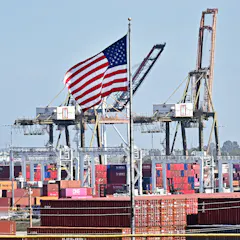
Tariffs are taxes on imports, but the costs don’t stay at the border.
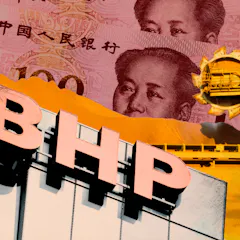
The US dollar still dominates trade for now. But new research suggests Australia’s banks are unprepared for a world where China’s currency plays a much larger role.

Once a modest fall festivity, Halloween has transformed into a monthslong commercial phenomenon. You can hardly blame retailers.

The EU and national governments have proposed legislation to curb the industry’s environmental impacts.

New trade barriers are set to go into effect in July 2027.
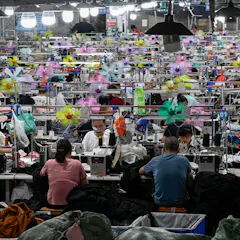
High US tariffs on Chinese-made goods didn’t halt the fast fashion industry. They just rerouted it, and the Australian market has been flooded.
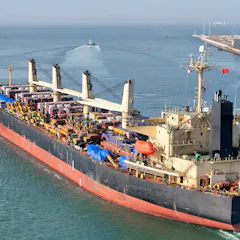
Chinese products that would have gone to the American market might be diverted to developing countries such as Nigeria.
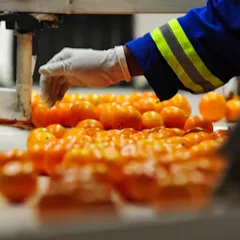
Diversifying exports takes time; what needs to be in place to achieve this?

Trump’s tariffs shine a light on New Zealand’s supply chain vulnerabilities. Is it time to revisit the idea of ‘import replacement’?

The trade war is likely to lead to more energy-intensive goods produced in the US, and dampen international investment in renewable energy.

Canada’s decision to retaliate was not just about responding in kind; it was a strategic move aimed at pressuring key U.S. export industries.
Top contributors
-

Associate Professor of Business, Boston University
-
Associate Professor of Agri-Food Trade and Policy, University of Guelph
-
Professor of Trade Law and Taxation, Queensland University of Technology
-
Professor of Economics, University of Minnesota Duluth
-
Lecturer, Business School, University of Sydney
-
Senior lecturer, Law, Monash University
-
Research Affiliate, School of Social Sciences, Monash University
-
Emeritus Professor of Economics (Griffith University) and Teaching Associate (University of Queensland), Griffith University
-
Professor of International Conflict Analysis, School of Politics and International Relations, University of Kent
-
Directeur, CEPII - Institut français d'économie (IFE)
-
Lecturer, Queensland University of Technology
-
OIC-Manager for Macroeconomic Policy, Debt Sustainability and Forecasting at the African Development Bank and Lecturer (on leave of public service) at the Department of Economics, University of Uyo
-
Professor of Enterprise, Warwick Business School, University of Warwick
-
Fellow in Energy and Global Oil, Baker Institute for Public Policy, Rice University
-
Senior Director, Transformation Strategies Department, International Food Policy Research Institute (IFPRI), CGIAR