
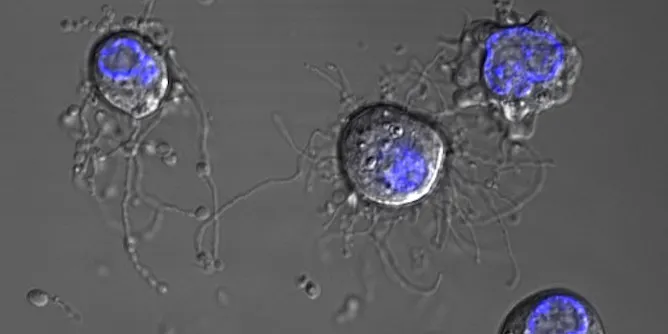
The survival of the human body is a fine balancing act between cell growth and cell death. Understanding our cells’ complex “licence to die” could give us new ways to combat disease.
Articles on Immune system
Displaying 121 - 140 of 341 articles

Invisible to the eye, the microbial life in the air around us can vary depending on our environment.
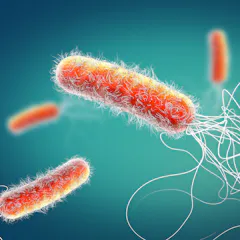
Observing the progression of an infection in real-time allows us to better understand how antibiotic resistance develops.
It’s normal for different people to mount stronger or weaker immune responses to a vaccine, but post-shot side effects won’t tell you which you are.

Research shows that the gaps in physical exercise have widened substantially between men and women, whites and non-whites, rich and poor and educated and less educated: especially during the pandemic.
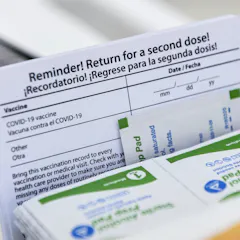
An immunologist explains that you get some protection from the first dose of the mRNA vaccines but you need two to build up strong immunity, particularly to newer coronavirus variants.

During a raging pandemic it is obviously worthwhile to use hand sanitisers, particularly when we are unable to wash our hands. But we should minimise their use when cases drop.
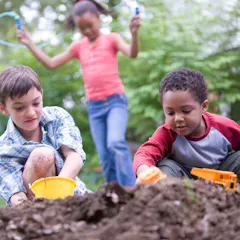
COVID-19 prevention measures are at odds with guidelines for healthy development of children’s immune systems. The result may be a cluster of youth with more allergies, asthma and autoimmune disease.

Until now, researchers haven’t quite known why the immune systems of breastfed babies are better equipped.

Children in the study seemed to display a very strong “innate” immune response.
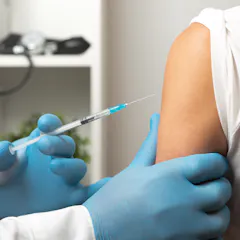
We mapped the genes of B cells to better understand why some develop immunity and others don’t.
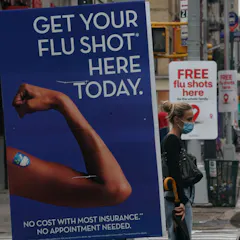
You need a new shot every year because current flu vaccines provide limited and temporary protection. But researchers’ new strategy could mean a one-and-done influenza vaccine is on the way.
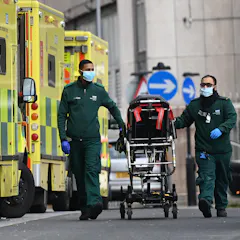
Cambridge study finds blood markers that could help predict, very early in the disease, who will get severe COVID.
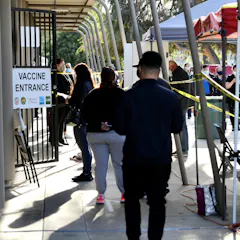
With vaccine shortages looming, experts are debating whether it is important to receive two doses or whether it’s better to give one dose to more people and give a second when the supply is better.
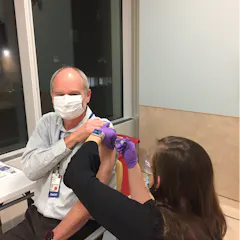
With vaccines forthcoming for most Americans, many groups, including expectant mothers, are wondering if the vaccine is safe for them and their babies. A physician-scientist explains.

The development of multiple vaccines against the virus that causes COVID-19 has been hailed as the breakthrough of 2020. But there were many more supporting discoveries that made this possible.
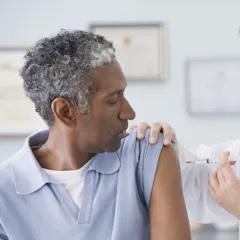
The side effects of new SARS-CoV-2 vaccines are a result of immune system activation. While uncomfortable, they are both normal and expected. They are a sign that the vaccine is working.
Several new studies show our immune responses to the virus can last at least eight or nine months, and probably longer.
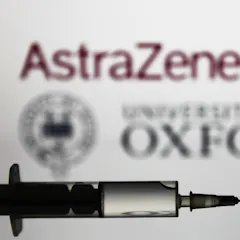
There is now a third vaccine that prevents COVID-19 infections. It isn’t quite as effective as the other two vaccines but it has advantages that may make it the frontrunner.
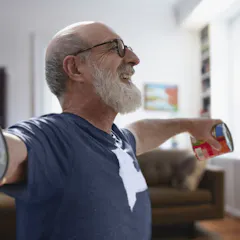
Older adults, who are at a higher risk for COVID-19 complications, can strengthen their immune systems by exercising.
Top contributors
-

Professor of Medicine, University of Virginia
-
Professor in Immunology, University of Manchester
-
Instructor of Human Immunology, Emory University
-
Associate Pro Vice-Chancellor: Innovation and Knowledge Exchange, University of Nottingham
-
Ecologist and Researcher, Flinders University
-
Professor of Pathology, Microbiology and Immunology, University of South Carolina
-
Research Fellow, Institute for Molecular Bioscience, The University of Queensland
-
Professor of Immunology, Imperial College London
-
Research associate, Warren Alpert Medical School, Brown University, Brown University
-
Senior Research Fellow; Rheumatology Research Group, Centre for Inflammatory Diseases, Monash University
-
Lecturer, Biochemistry & Immunology, Swansea University
-
Honorary Associate Professor
-
Associate Professor of Immunology and Microbiology, University of Colorado Anschutz
-
Professor of Pathology, Microbiology and Immunology, University of South Carolina
-
Principal Scientist and Canada Research Chair in Zoonotic Virus and Animal Reservoirs at the Vaccine and Infectious Disease Organization and Co-Lead of One Health at the University of Saskatchewan, University of Saskatchewan