
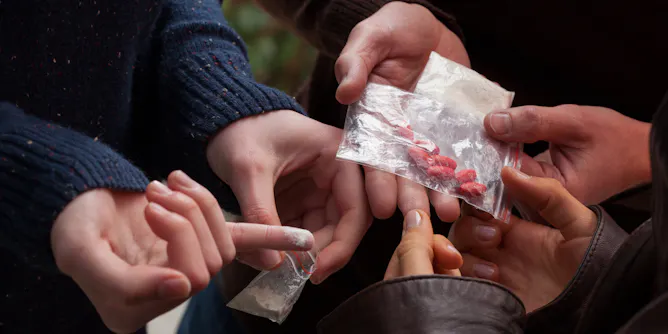
There is a potential for significant harm in Australia if we don’t have adequate systems in place to monitor our drug markets and respond rapidly when specific dangers are detected.
Articles on Illicit drug use
Displaying 21 - 34 of 34 articles

Around 2.3% of Aboriginal and Torres Strait Islander Australians 15 years and over report using speed or amphetamine in the past year. This is similar to the general population.

With use of drugs such as ice on the rise, drug consumption rooms are now being set up in Europe to provide supervised inhalation.

Many untested drug therapies are expensive at best and potentially dangerous at worst. So what treatments do work for ice and other drug users?

Naloxone, commonly known as Narcan, is a medicine that temporarily reverses the effects of opioid drugs such as heroin, morphine and oxycodone.

Are addicts sick and helpless victims with little control over their own behaviour, or brazen criminals who deserve to be punished accordingly?

There is no evidence to suggest mandatory treatment outside of the criminal justice system would work. Instead, we need to increase funding for treatment programs, including early intervention.

The government’s “blanket ban” on legal highs goes against the evidence.

International evidence suggests “awareness” campaigns are not the best way to address harmful methamphetamine use. Fear-based approaches can increase stigma and drive people from treatment.

There is no doubt methamphetamine can cause harm. But when politicians hijack drug issues and overplay them for political purposes, that too can cause harm.

Prime Minister Tony Abbott today launched a taskforce to tackle the growing problem of ice. But while Australia certainly has a problem with ice, it’s hardly an epidemic.
How does the ACC report help inform the debate around methylamphetamine, and what practical lessons can Australian society and law enforcement draw from it?

Over the past decade, drug use in the US has risen dramatically, with heroin use reaching epidemic proportions. The country’s policy for combating abuse has involved incarceration, abstinence-only treatment…

The death of 19-year-old Georgina Bartter at a music festival on the weekend from a suspected ecstasy overdose could possibly have been avoided with a simple harm-minimisation intervention. Pill testing…
Top contributors
-

Adjunct Professor at the National Drug Research Institute (Melbourne based), Curtin University
-
Lecturer, RMIT University
-
Professor, National Drug Research Institute, Curtin University and Burnet Institute, Burnet Institute
-
Professor, Deakin University
-
Sessional psychology lecturer, Australian Catholic University
-
Professor of Emergency Medicine, UMass Chan Medical School
-
Research Fellow, National Drug and Alcohol Research Centre, UNSW
-
Senior Research Fellow, Monash University
-
Professor, Crawford School of Public Policy, Australian National University
-
Professor & Specialist in Drug Policy, UNSW
-
Senior Lecturer in Criminology, University of Kent
-
NHMRC Senior Research Fellow, Burnet Institute
-
Emeritus Consultant, St Vincent's Hospital, Darlinghurst
-
Professor of East/Southeast Asian History, Boise State University
-
Senior Lecturer of Addiction, Edith Cowan University