
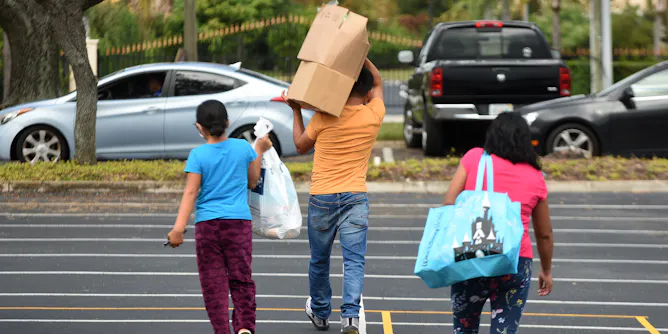
While the food insecurity rate held steady in 2020, the racial hunger gap increased.
Articles on Hunger
Displaying 121 - 140 of 276 articles
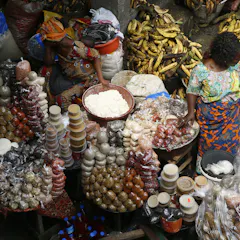
Globally, experts are beginning to recognise that focusing on one aspect of food overlooks the trade-offs or sacrifices people make.

An economist explains what it would cost to give SNAP benefits to all Americans in households earning up to about $100,000 per year – and why it would be worth it.
Basic income must be embedded within a broader strategy of economic reform, aimed at increasing the social wage and improving working conditions.
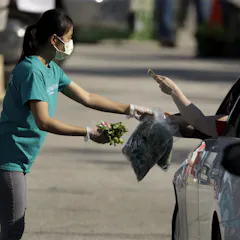
Farmers markets aren’t just for yuppies – they are increasingly serving customers at all social and economic levels, especially during the COVID-19 pandemic.

The violence wreaked its damage because South Africa’s journey to democracy remains incomplete. It sends a sharp message that the country must look its past far more squarely in the eye.
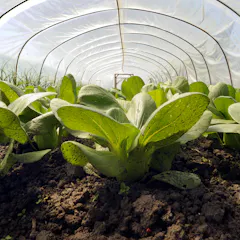
A new report calls for a greener and fairer food system in England.

Hunger is not the cause of the current social upheaval. But, taken along with other deep-rooted structural inequalities, it provides additional fuel for socio-political conflagration.

Expanding free lunch programs could also reduce stigma for students, lower administrative burdens for schools and create jobs for communities.

For many of the children who don’t get enough to eat, the consequences could last a lifetime.

South Africans should not panic about the food system. But authorities will need to act swiftly and assertively to restore stability.

Newer measures of poverty may do a better job of counting America’s poor, which is necessary to helping them.

New data shows how high prices and low incomes prevent 4 in 10 people worldwide from buying enough nutritious foods for a healthy diet.
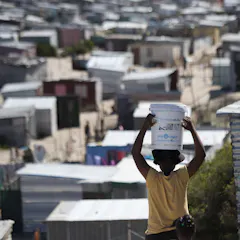
Harsh socio-environmental factors, especially when they happen in the early years of a child’s life, can establish a developmental “biology of misfortune”.

As the global South transitions to a predominantly urban future, food offers a way to understand the role of cities in future development.

Shakuntala Haraksingh Thilsted, a native of Trinidad and Tobago, is the winner of the 2021 World Food Prize for her work identifying small fish as valuable nutrition sources for developing countries.

While long lines and food shortages are frustrating for most consumers, they can be physically and emotionally grueling for people with disabilities.
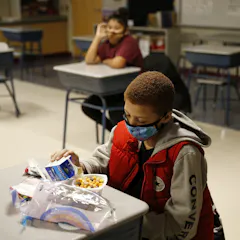
Chronic absenteeism is a pressing issue in high-poverty schools, but research suggests that serving students breakfast during class can help keep kids in school.
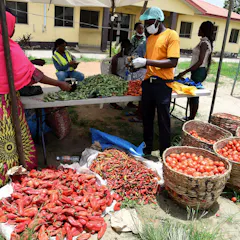
To overcome food insecurity, especially in a pandemic, Nigeria’s emergency preparedness requires a total overhaul of it’s agri-food supply chain.

New research shows both adults and kids are eating more nutritious food. But minorities and low-income populations still lag behind the rest.
Top contributors
-

Professor of Social Development Studies, University of Johannesburg
-
Professor in Food Security; Head of the Department of Agricultural Economics, Extension and Rural Development, University of Pretoria
-
Professor of Economics, Baylor University
-
researcher, University of Cape Town
-
Assistant Professor of Public Health, Indiana University
-
Network and Research Manager: ARUA – UKRI GCRF FSNet Africa, University of Pretoria
-
Principle dietitian at the Nutrition Information Centre, Stellenbosch University
-
Associate Professor of Nutrition Science, Purdue University
-
Professor Emeritus of Food Security, Tufts University
-
Senior Lecturer in Nutrition and Dietetics, University of Wollongong
-
Professor of Nutritional Sciences, University of Toronto
-
Professor of Economics, University of Michigan
-
Professor and Head of Division Human Nutrition at the Faculty of Medicine and Health Sciences, Stellenbosch University
-
Research Program Coordinator, Food Insecurity, University of Toronto
-
Research associate at African Centre for Cities, University of Cape Town