

The mystery of how the brain creates consciousness still puzzles scientists, but the mechanics of waking up are starting to be understood.
Articles on Human brain
Displaying 21 - 40 of 50 articles

Whether in the form of a discreet titter or a full-on roar, laughter comes with many benefits for physical and mental health.
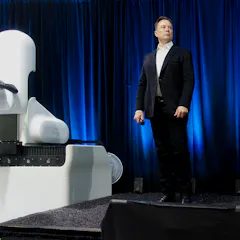
Decades of research have shown that the brain does not yield its secrets easily.

Journalists use real people’s stories to ‘humanize’ the news. But these tales – whether harrowing or heartwarming – can be misleading about the pandemic’s greatest threats.
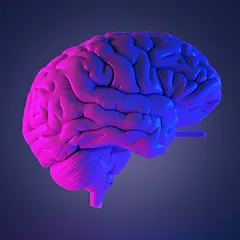
Attempts to find brain structures responsible for supposed cognitive sex differences have not succeeded.

Many scientific concepts, including bushfires and climate change, happen at scales outside human perception. So how can we ever understand them?

Current research suggest it can be both helpful and harmful to memory – here’s why.

How does the brain distinguish between the “self” and the “other”? A new study gives a clue.
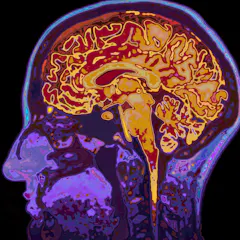
Even though the brain controls virtually everything we do, we often know very little about it.
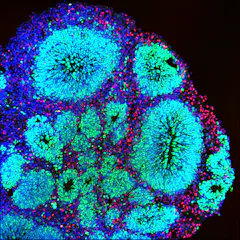
Brain organoids are tiny models that neuroscientists use to learn more about how the brain grows and works. But new research finds important differences between the model and the real thing.
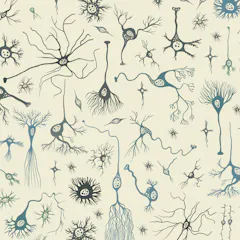
We have more neurons in our cortices than any other species, courtesy of an early technology – and along with them came our long, slow lives, with plenty of chances to gather around the dinner table.
This World Philosophy Day we remember three female philosophers who are largely unknown, yet made important contributions to idealism
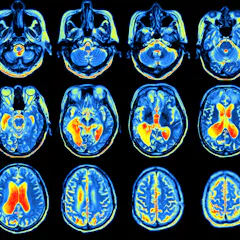
One day we will have a science of consciousness, but it won’t be science as we know it today
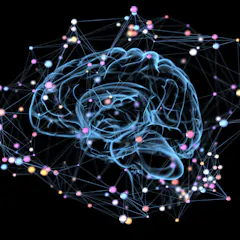
Sections in the brain called “senders” and “receivers” are responsible for directing neural traffic, and we are now a step closer to understanding how they work.

Some animals, like rats, learn linguistic patterns better than humans can.

Happiness is a human construct, an abstract idea with no biological basis. But this is something to be happy about.

Knowing how the brain prepares for sequences of movements can help us better understand disorders such as stuttering and dyspraxia.
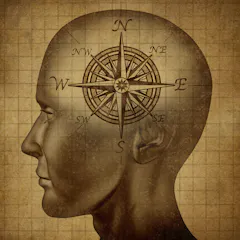
Your brain’s sensory talents go way beyond those traditional five senses. A team of geoscientists and neurobiologists explored how the human brain monitors and responds to magnetic fields.

The brain itself can’t actually feel pain. It can’t sense damage to itself the way your finger can. We know this because people can have brain surgery while they are totally awake.

New study sheds light on the mystery of how people can experience and control phantom limbs decades after losing a body part.
Top contributors
-

Professor of Biomedical Engineering and Psychiatry, The University of Melbourne
-
Postdoctoral Research Fellow, Indiana University
-
Lecturer in Psychology, Arden University
-
Professor of Physiology and Biochemistry, University of South Wales
-
Postdoctoral Researcher in Cognitive Neuroscience, University of Pennsylvania
-
Postdoctoral Researcher in Cognitive Neurosciences, The University of Queensland
-
Assistant Professor of Communication Sciences, Case Western Reserve University
-
Professor Physiology, Endocrinology, Muséum national d’histoire naturelle (MNHN)
-
PhD Candidate in Neuroscience, UCL
-
Professor of Paleontology and Paleoecology, University of Naples Federico II
-
Assistant Professor of Habit Change, Bond University
-
Associate Professor in the School of Psychology, University of Birmingham
-
PostDoc fellow, Institute of Marine Sciences
-
Professor of Neurology, UCL
-
Senior Lecturer, School of Psychology and Centre for Human Brain Health, University of Birmingham