
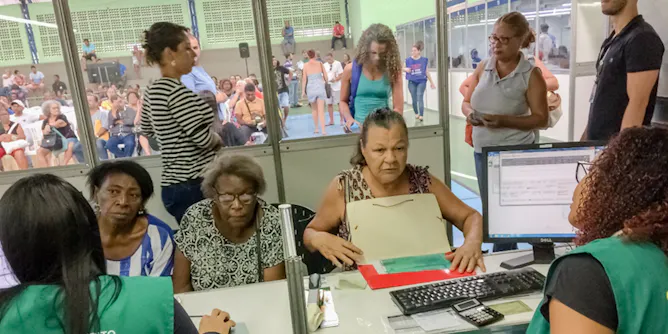
In different parts of the world, managing debt on a day-to-day basis is a real job, and one that is mainly taken on by women.
Articles on Household debt
Displaying all articles

Personal debt in New Zealand is growing. But instead of hiding the true extent of what we owe, New Zealanders should be talking about how we got here – and what needs to change.
Research shows household debt plays a role in workers’ deciding to strike.

At the margin, more compulsory super will mean less equity in homes and more borrowing for homes. Australia already has one of the world’s highest household debt ratios.

The concept of Universal Credit reveals something wider about the UK’s current political fixation on debt.

Single women borrowed heavily in the run-up to the financial crisis, ensuring they suffered the most in its fallout. Will history repeat itself?
The collapse of an obscure corner of the financial market a decade ago foreshadowed the Great Recession. The stock-market swoon in February should offer a similar warning.

Low wage growth isn’t just bad for households - it’s also bad for the overall economy. Research shows that increasing wages would take some of the risk out of the housing sector.

It’s not just individuals who pay for low financial literacy. It also increases financial risks and holds back the economy.

More than half of American families aren’t able to save a dime to cover the cost of college, and the 529 college savings plan has done almost nothing to change that.

Modesty in your spending (and half an eye on the future) could make you very cheerful indeed.
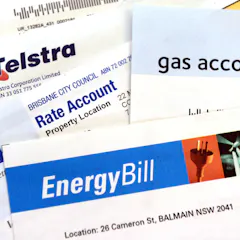
A new report finds two million Australians lack the resources to bounce back when difficult circumstances arise.
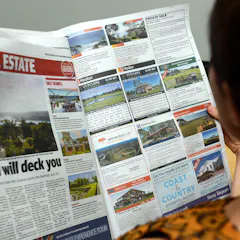
New analysis shows low-income earners, particularly in Tasmania and South Australia, face the most mortgage stress.

In the first of our series, On Happiness, the question is whether unsustainable consumption and debt can ever bring us happiness. The global financial question was a chance to take stock, yet did we learn anything?

A continent in shock; a country on the brink; and a model for punitive debt negotiations that serves no one but the banks.
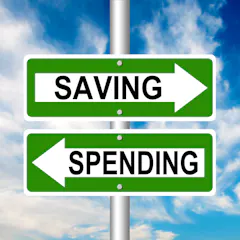
We know saving is good and not all debt is bad. Where is our relationship to both?

I co-teach a freshman seminar at the University of Texas called “Debt: the Good, Bad and Ugly” that examines the different ways consumers borrow and spend. Do they reflect wise investments in the future…

Top contributors
-

Professor & Greenbaum/Ferguson/NJAR Endowed Chair in Real Estate Policy, Monmouth University
-
Part-Time Professor of Economics, The New School
-
Professor of Social Policy / CEO, Centre for Social Impact, UNSW
-
Professor of Public Ethics, Charles Sturt University
-
Professor of Law, The University of Texas at Austin
-
Senior Lecturer in Finance, University of Sydney
-
Senior Research Fellow, Yuwaya Ngarra-li, UNSW
-
Visiting Fellow at the School of Education & Lifelong Learning, University of East Anglia
-
Director, Bankwest Curtin Economics Centre (BCEC) and John Curtin Distinguished Professor at Curtin Business School, Curtin University
-
Associate Professor, Bankwest Curtin Economics Centre, Curtin University
-
Reseach Fellow, School of Government, The University of Melbourne
-
ethnographe et sociologue de l'endettement des milieux populaires, Cessma, Université Paris Cité
-
Associate Professor, Queen Mary University of London
-
Leverhulme Early Career Fellow, University of East Anglia
-
Professor, Centre of Policy Studies and the Impact Project, Victoria University