
The loss of the central role of people in today’s complex global systems is the greatest danger of all. In Kenya and Amdo Tibet, it can be rediscovered.
Articles on Financial crises
Displaying 1 - 20 of 67 articles

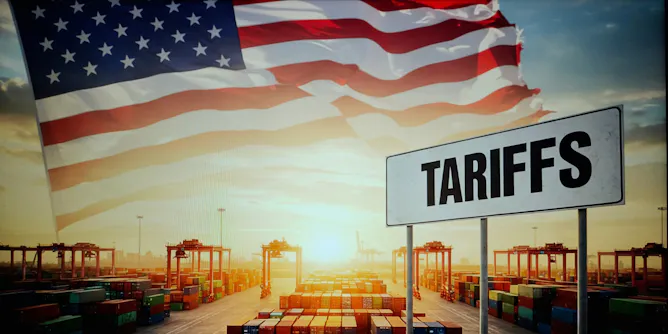
Uncertainty is far worse for the economy than a fixed, high tariff.
A lack of political will is to blame for failing to find a suitable funding model for the SABC’s public mandate.

Almost two-thirds of low-income countries are at risk of debt distress – in part because of higher borrowing costs. And that isn’t the only problem.

Major players in the financial system are pondering the unthinkable as the US inches closer to an unprecedented default.
Big interest rate hikes could cause more market turmoil, while doing too little could have the same effect.

The Fed, Treasury and FDIC acted swiftly to protect depositors and stem any panic, but anxiety continues to grow about the state of the global financial system.

The speed of SVB’s collapse was a surprise but central bankers can learn lessons from this failure.
The Fed is also beginning to reduce its massive balance sheet, which is beginning to cause disruptions in the $24 trillion Treasury market.
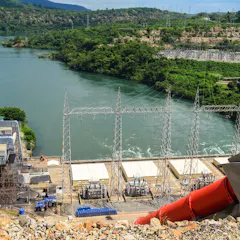
Ghana’s power sector is mired in debt and excess production.
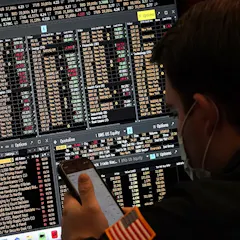
The regulatory apparatus designed to oversee investment banking is structurally flawed. To spawn ethical behaviour within traders will require nothing less than a sector-wide cultural change.
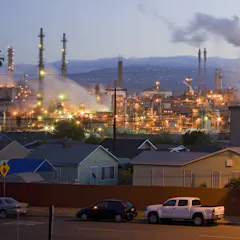
It isn’t just the effects of climate change that could destabilize the financial system, it’s also fossil fuel assets losing value. The good news is that central banks can fix it.

Market prices are supposed to reflect a company’s fundamental value. When they no longer do, bad things can happen.

The higher education sector has to re-think what the future of higher education looks like and take steps towards this.

This week, our experts are looking at the major trends in post-crisis globalisation.
The current pandemic could be the undoing of globalisation if countries fail to cooperate and choose isolationism over a common purpose.

Governments can staunch the current economic collapse without returning to the status quo.

On October 23 Google announced that it built a quantum computer thousands of times faster than classic computers. This could have immense impacts on finance, cryptography and other fields.

A toxic mix of ugly politics and structural economic problems is threatening to tip debt over the edge.
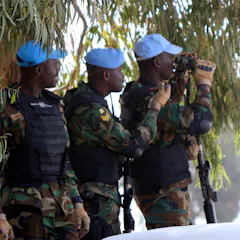
The world body spends more than US$6 billion a year on peacekeeping operations, most of which are in Africa
Top contributors
-

Professor of Finance and Fred T. Tattersall Excellence in Finance Research Chair, West Virginia University
-
Professor of Finance at l’ESILV et à l'EMLV, member of De Vinci Research Center, Pôle Léonard de Vinci
-
Associate Professor of Finance, Mississippi State University
-
Post Doctoral Researcher, Graduate School of Business (GSB), University of Cape Town
-
Lecturer of English, University of the Witwatersrand
-
Director of Institutional Planning, University of Pretoria
-
Assistant Professor in Economics, Georgia State University
-
Senior Lecturer in Economics, MIT Sloan School of Management
-
Canada Research Chair in Economy and Environment, Queen's University, Ontario
-
Lecturer in International Business, University College Cork
-
Lecturer in Social Anthropology, University of St Andrews
-
Senior Lecturer in Law, Liverpool John Moores University
-
Professor of Public Policy and Public Affairs, UMass Boston
-
Open Evidence Research, UOC - Universitat Oberta de Catalunya
-
Honorary Research Fellow, City Political Economy Research Centre, City St George's, University of London