
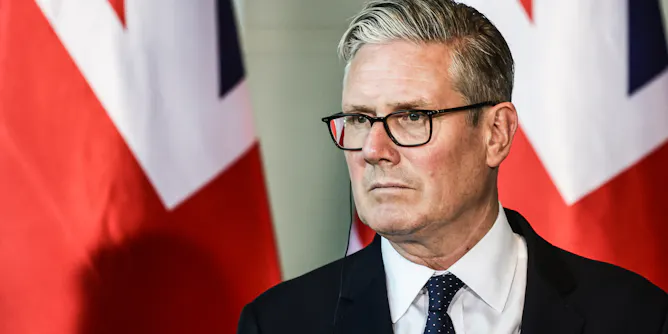
In the post-2008 world, the political climate is often determined by emotion rather than ideology.
Articles on 2007-08 financial crisis
Displaying 1 - 20 of 80 articles
With no single dominant power waiting to take over from the US, the impacts of the next financial crisis could have catastrophic impacts around the world.

The warning signs are loud and clear: we’re headed into a crisis, thanks to the growing interdependence of digital and economic systems — with no safety nets.
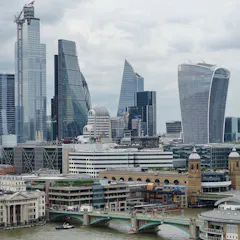
The sector risks repeating the mistakes which led to huge tax-payer funded bail outs.

Over the past 15 years, the world has seen a financial crisis, the rise of populist politics and a fracturing of the world economic order. Sounds all a bit pre-WWII, right?
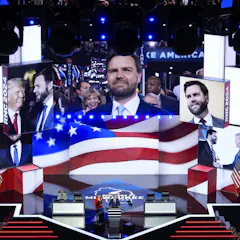
The choice of Ohio Senator JD Vance as his running mate will help Donald Trump. One reason has to do with an ideological shift in the American electorate; the other relates to Trump’s personality.
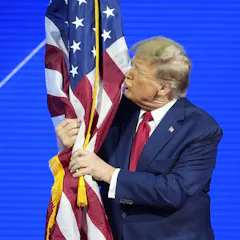
A second Donald Trump presidency would not necessarily implement a foreign policy any more destructive than what is normal for the United States.
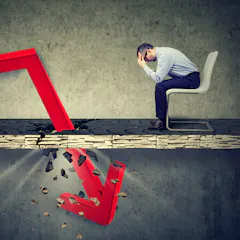
Our global review of research into the link between financial crises and mental health highlights three key challenges: stigma, stress and social roles

Concerns about a decline in lending to small businesses are growing as the Fed raised rates for the 10th time in a little over a year.
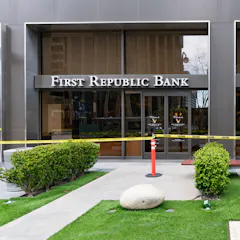
The cause of banking crises since the debacle in the 1980s remains unchanged. Incentives encourage executives to take excessive risks, with few consequences if bets turn bad. It’s happening again.
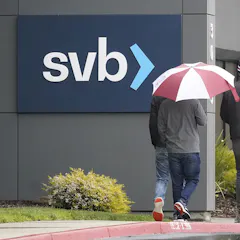
SVB, as it’s known, collapsed with lightning speed following a run on its deposits.
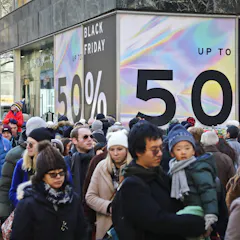
A new survey suggests three ways consumers are behaving like the US economy is in crisis, which may become a self-fulfilling prophecy.
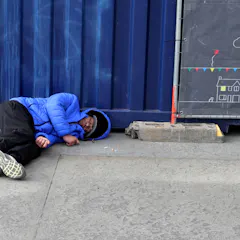
Cuts to public spending do not actually result in efficiency savings because they cause more problems for people than they solve.
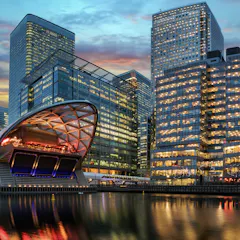
Research suggests that big bonuses encourage big risks.

Overconfidence is often a contributing factor to market crashes, like the financial crisis of 2008.

Decentralized finance makes it easier for virtually anyone to take advantage of financial markets without the need for a bank, but there are new risks as well.
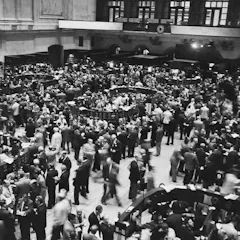
Market prices are supposed to reflect a company’s fundamental value. When they no longer do, bad things can happen.

The global economy is currently experiencing its severest contraction since the 1930s. While capitalism will survive, its fundamental structure can change at critical historical junctures.

New data shows the Great Recession hurt older, poorer Blacks and Hispanics the most. The pandemic downturn is likely to be even worse for them.
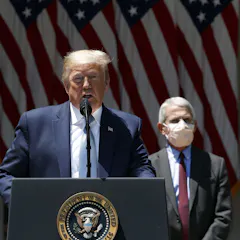
The Trump administration has revised CDC health guidelines and undermined its own experts, making it harder for science to prevail over politics in US’s coronavirus strategy.
Top contributors
-

Head of Department of Economics, Finance & Accounting, Brunel University of London
-
Reader in Economics and Finance, University of Portsmouth
-
Professor of Law, St. Mary's University
-
Professor of Finance and Fred T. Tattersall Excellence in Finance Research Chair, West Virginia University
-
Professor of Law, University of Oregon
-
Professor of Finance, Washington University in St. Louis
-
Professor of Political Science, INSEAD
-
Associate Professor of Public Administration, West Virginia University
-
Professor, Université de Lorraine
-
Assistant Professor of Finance, New York University
-
Professor of Geography, Durham University
-
Économiste à l’Observatoire français des conjonctures économiques (OFCE), Sciences Po
-
Professor of Agricultural and Resource Economics, La Trobe University
-
Associate professor, University of Surrey
-
Professor of Agricultural and Regional Economics, Penn State