

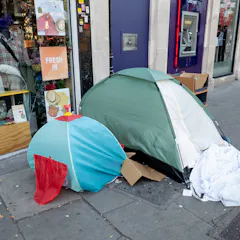
In the 1940s, tent cities and ‘shanty’ settlements appeared across Australia, as families struggled to find homes. The government acted then – and needs to now.
Articles on Homelessness
Displaying 21 - 40 of 371 articles

The study found that regularly getting cash made it easier for many homeless people to meet their immediate and personal needs.

Supervised consumption sites have real shortcomings. But the government’s case for closing them relies on a narrow definition of success and abandons the people the sites were designed to reach.

A pilot program in Los Angeles reduced the rate of homelessness among homeless people with pets.

Detroit’s homelessness response system could lose millions of dollars in federal funding for permanent supportive housing as the city’s homelessness rates increase.

Many cities are considering involuntary substance use treatment as a solution to drug use among the homeless. But research doesn’t support this strategy.

Women make up half of the people experiencing homelessness in New Zealand. A study shows access to permanent housing improves their health and lifts their income.

An estimated 22.5 per cent of people experiencing homelessness live with moderate or severe brain injuries — a rate nearly 10 times higher than the general population.
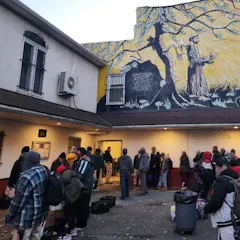
For 50 years, St. Francis Inn in Philadelphia has served the poorest and most vulnerable people in Kensington.

“Compassion fatigue” wrongly explains public hostility toward homelessness, masking a failure to recognize shared vulnerability, responsibility and justice in a shared world.

The government’s homelessness strategy has some positives – but ‘business as usual’ is a false economy.

New Zealand compares well on global measures of freedom, happiness and transparency. But rankings in some important areas, including climate, drag the averages down.
It’s important that policies work for the people who need them, without wasting money on untested approaches.

A new study has revealed how many homes would be needed to end rough sleeping in three major Australian cities – and the costs.

Supportive housing combines subsidies with wraparound social services to help people stay off the streets. But demand far outstrips supply in Philadelphia.

The State Library of Victoria’s ‘major’ proposed cuts include slashing the number of reference librarians and free computers for public access. Some staff are shocked.

Homelessness is solvable through affordable and supportive housing. Hospitals should be part of the solution.

In hot housing markets, buyers who outbid rivals often overpay – and face higher risks of loss and foreclosure.

Whether left or right, practising the politics of cancellation is always a mistake. Inclusion is always the antidote and the best method of problem-solving.

The Health To Go machines in Pennsylvania are in a YMCA in Reading and outside an emergency department in Harrisburg.
Top contributors
-

Professor, School of Social Science, The University of Queensland
-
Emeritus Professor of Housing, UNSW
-
Associate Professor, Adelaide University
-
Reader in Social Policy, Nottingham Trent University
-
Professor of Housing and Social Inclusion, Nottingham Trent University
-
Adjunct Senior Research Fellow, Gonski Institute for Education, UNSW
-
Senior Research Fellow, Housing, Homelessness & Urban Studies (HHAUS) research group, Swinburne University of Technology
-
Associate Professor, Geography and Urban Studies, Western Sydney University
-
Alan Morris is a Friend of The Conversation.
Professor, Institute for Public Policy and Governance, University of Technology Sydney
-
Senior Research Fellow, City Futures Research Centre, UNSW
-
Professor of Housing Research, Adelaide University
-
Adjunct Lecturer at the Centre for Justice, Queensland University of Technology
-
Professor of Sociology and Director of the Housing and Community Research Unit, University of Tasmania
-
Researcher, Aging In the Right Place | M.A. student, Gerontology, Simon Fraser University
-
Assistant Professor of Law and Director of the Medical-Legal Partnership Clinic, University of Memphis