

Gambling during homelessness is sometimes motivated out of desperation and in the hope of financial gain.
Articles on Homeless
Displaying 41 - 60 of 150 articles
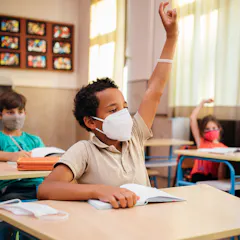
When it comes to helping students who are homeless during the pandemic, identifying who they are is crucial, says a researcher studying the issue in one of the largest US school districts.
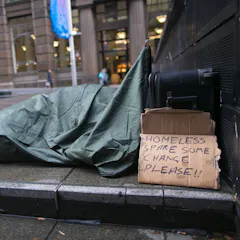
To really reduce homelessness we need to prevent those at risk from ever becoming homeless in the first place.
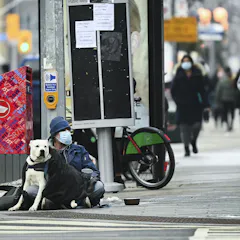
This approach would cause an outcry, but when it comes to homelessness, addressing only the symptoms has been the norm.

While public libraries and faith-based organizations may not be able to solve the issue of social stigma, looking at how they provide spaces for homeless people is a good place to start.
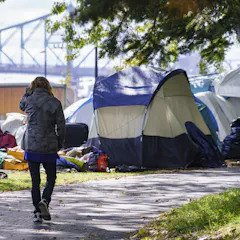
Women, girls and gender-diverse people have unique experiences of housing and housing loss.
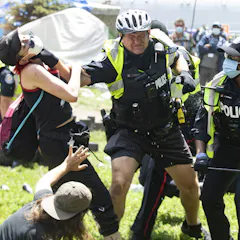
A year after historic protests for police reform, it’s clear that the Toronto Police aren’t sincere about changing how they treat historically over-policed and criminalized communities.
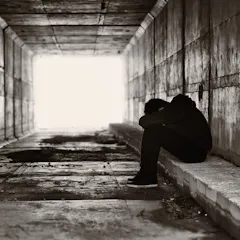
Nurse practitioners can be the missing link between homeless children, housing services and schools, our study shows.
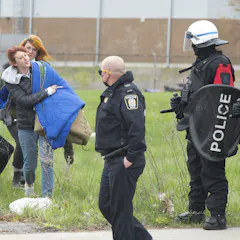
A key component in any planning around encampments is the voice of people with lived experience. It is clear the go-to response of policing is not working.

JobKeeper, the COVID boost to JobSeeker, and moratoriums on rent increases and evictions all ended this month. Only smarter policies will prevent homelessness, as a landmark Victorian report explains.
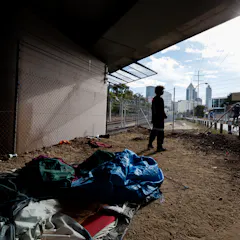
More people than expected needed help, and the states have found stable housing for less than a third of rough sleepers who were put up in hotels. A hands-off federal government simply isn’t helping.
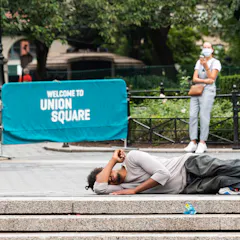
What happens to unhoused people who get COVID-19?

In some cases, women are left without food or anywhere to live for the duration of their pregnancy.

‘Homeless Jesus’ exemplifies how faith-based organizations can use public art to communicate religious ideas in a respectful and accessible way.
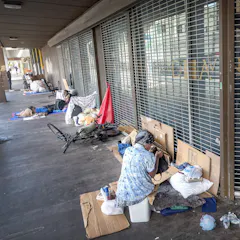
Australia found shelter for more than 33,000 rough sleepers and other homeless people during the pandemic, but a coming surge in homelessness demands a comprehensive national housing strategy.
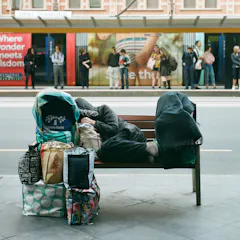
When the moratorium on evictions ends, even more Australians will face housing insecurity and homelessness. Beyond the moral and health cases, there’s a powerful financial reason to end homelessness.
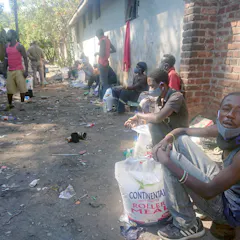
The story map reveals that like any part of society, street youth are both subject to and willing to conform to rules and conventions, in this case for their own and others’ safety.

High rents and insecurity are constant sources of financial and emotional stress for low-income women. They describe what it’s like struggling to survive and being one step away from being homeless.

Older women have been the fastest-growing group of homeless people in recent years. New research shows about 240,000 women aged 55 or older and another 165,000 women aged 45-54 are at risk.
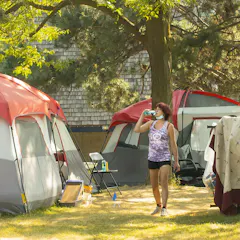
Suspending homeless camp evictions during the COVID-19 pandemic is a start, but it is not enough. The problem is failed housing policies, not the pandemic.
Top contributors
-

Professor, School of Social Science, The University of Queensland
-
Associate Professor, Adelaide University
-
Reader in Social Policy, Nottingham Trent University
-
Honorary Fellow in Criminology, The University of Melbourne
-
Adjunct Senior Research Fellow, Gonski Institute for Education, UNSW
-
Emeritus Professor of Housing, UNSW
-
Senior Research Fellow, Social and Global Studies Centre, RMIT University
-
Vice Chancellor's Postdoctoral Fellow, RMIT University
-
Francine V. McNiff Professor of Criminology, The University of Melbourne
-
Adjunct Associate Professor, University of New England
-
Professor of Medicine, University of California, San Francisco
-
Emeritus Professor of Housing and Housing Studies, RMIT University
-
Professor of Social Policy, University of York
-
Senior Research Fellow, Housing, Homelessness & Urban Studies (HHAUS) research group, Swinburne University of Technology
-
Postdoctoral research fellow, Swinburne University of Technology