

Increasingly insecure pathways to home ownership are not just a problem for property markets. The fallout is likely to hit retirement incomes, the welfare base, gender equity and the broader economy.
Articles on Home ownership
Displaying 81 - 100 of 116 articles

A new report by the Institute for Fiscal Studies shows home ownership rates have collapsed: today, just one in four middle-income millennials will own their own home.

There is a risk that affordable housing policy may be colonised by for-profit interests if Australia imports the wrong rental housing ideas from overseas.

A change in South African law promises to protect defaulting home owners from abuse by unscrupulous operators who snap up people’s homes for a song.

Wall Street landlords are living the American Dream – but what about their tenants?

Between 1982 and 2013, the share of home owners among 25-34 year olds shrunk, by more than 20%. On the other hand, the share of home owners among those aged 65+ years has risen slightly.

If the gap between the wealth of the billionaires and that of the average residents continues to widen dramatically, there is likely to be discontent.

New research reveals outdated concepts and thinking are shaping Australia’s troubled housing system.

The promotion of home ownership as a way of funding care in later life is part of a broader policy trend toward making people individually responsible for the opportunities they have.

The 2016 Census reveals that Australia is becoming much more diverse – in terms of language, country of birth, Indigenous status, and religion.

Justifying Sydney’s ranking as a liveable city requires greater recognition of the inequality of Sydneysiders’ access to jobs, wealth, transport and housing.

Owning a home has deep cultural and economic connotations. A home owner is a member of a street, a community. They are a successful adult human. They own a piece of the pie, the dream.
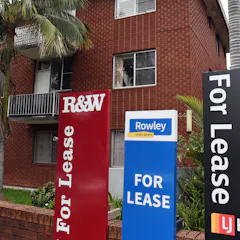
For renting to become a truly viable, long-term alternative to home ownership, greater rental affordability and security is needed.
Think it’s hard for first-home buyers? Ask people with an intellectual disability about it.

Those whose parents own a home are able to take advantage of a wider set of opportunities than others.
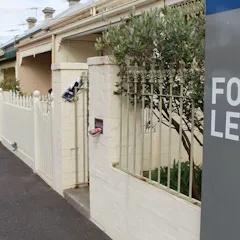
Any attempt to improve security for tenants should not deprive them, or their landlords, of the flexibility that many also want. The key problem is landlords’ ability to give notice without a reason.

Renting makes financial sense in a number of circumstances; it’s time to move away from the obsession with home ownership.

Shared ownership schemes can unlock access to suitable housing, although these are less common in Australia than overseas. And most are not specifically tailored for people with disability.

Home owners and first time buyers are right to be confused, so how should you play expected changes to a low rates environment?
By focusing on intergenerational inequalities that will eventually be reversed, we are framing the housing affordability question the wrong way.
Top contributors
-

John Curtin Distinguished Professor, Curtin University
-
Emeritus Professor of Housing and Housing Studies, RMIT University
-
Associate Professor and Discipline Lead Property, Curtin University
-
Professorial Fellow, University of Canberra
-
Program Director, Housing and Economic Security, Grattan Institute
-
Ronald Henderson Senior Research Fellow, The University of Melbourne
-
Senior Research Fellow, City Futures Research Centre, UNSW
-
Emeritus Professor of Housing, UNSW
-
Associate Professor, Geography and Urban Studies, Western Sydney University
-
John Curtin Distinguished Professor, Curtin Business School, Curtin University
-
Honorary Professor of Geography, University of Cambridge
-
Professor of Housing & Social Policy, HHAUS Housing, Homelessness & Urban Studies, Swinburne University of Technology
-
Research Fellow, School of Accounting, Economics and Finance, Curtin University
-
Emeritus Professor, Urban Planning and Policy, University of Sydney
-
Associate Professor & Associate Investigator ARC Centre of Excellence for Automated Decision Making + Society, Swinburne University of Technology