
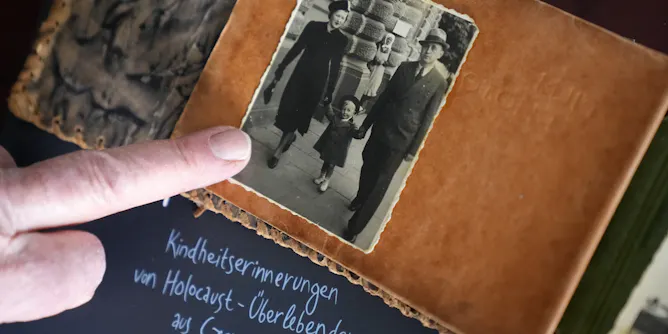
AI poses serious risks to Holocaust memory through denial, distortion and clickbait. AI-literate younger generations may be our best tool for combating the misinformation it enables.
Articles on Holocaust denial
Displaying all articles

Holocaust denial is connected to antisemitism, and exploring life prior to the Holocaust illustrates a trajectory of antisemitc expression.

Evidence suggests that high-school students visiting Auschwitz-Birkenau may increase their empathy towards Jewish people.

The Gaza war has complicated issues in Ukraine, with Putin looking to exploit events in the Middle East to garner support among the Global South.
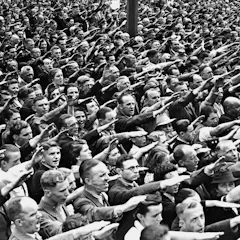
The German population was transformed under Nazism into a “bystander society” – even before the conditions of wartime normalised acts of excessive violence.
Many conspiracy theories and disinformation are rooted in antisemitic tropes which spread harm and undermine our democratic institutions.

Efforts to prohibit Holocaust denial will prevent hate speech and fascism, and protect the history of the Holocaust.
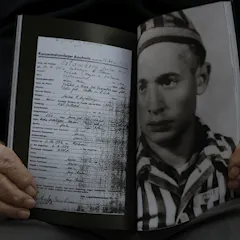
As social media platforms fight Holocaust denial and anti-Semitism, online archives offer another possible approach: direct links to the historic truth.
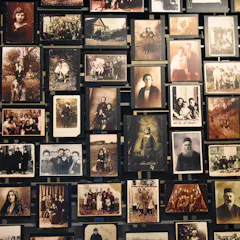
Many young people learn about the Holocaust in school, but their knowledge and understanding of the subject can be limited and based on inaccuracies and misconceptions.
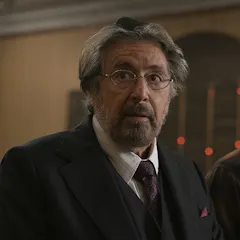
Amazon’s new TV series series divided the critics, but almost everyone agrees that it takes problematic liberties in its representation of Auschwitz.
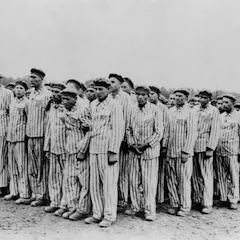
The Never Again Education Act is meant to make Holocaust education more prominent in America’s schools. A scholar of Holocaust studies explains why that’s necessary.
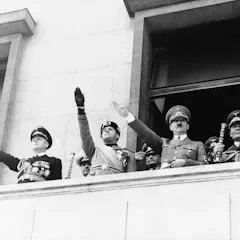
A scholar’s efforts to learn how textbooks in New Jersey were portraying the Holocaust leads her to testify against a history teacher who taught his students to question if the Holocaust took place.
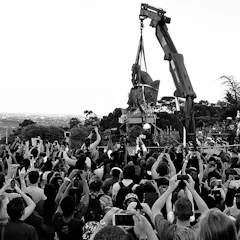
Would an academic work that makes a case for genocide be fair game for publication, or is it beyond the ethical bounds of legitimate scholarly debate?
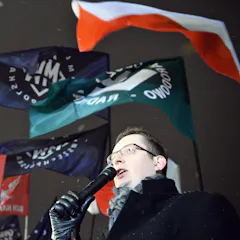
Criminalising suggestions that Poland was complicit in German atrocities during World War II denies history and will hinder scholarship.
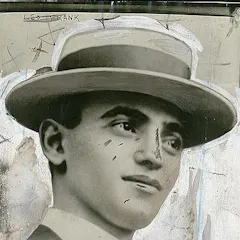
Fake news has been used in the past to feed into people’s fears and prejudices. A particularly poignant story from 1913 relates to the wrongful conviction of an innocent man named Leo Frank.
Top contributors
-

Professor of Sociology, Rowan University
-
Faculty, Holocaust and Genocide Studies, Gratz College
-
Assistant Professor of Comparative Literature and English, MacEwan University
-
Professor Emeritus in Contemporary German History, Nottingham Trent University
-
Professor of Government, Wesleyan University
-
Associate Professor in Modern European History, University of Leicester
-
Professor of Geography, University of Victoria
-
Associate Professor of Communication and Media Studies, Pace University
-
Associate Professor of Psychology, Lund University
-
Director, Relwar Project, Senior Research Fellow, King's College London
-
Professor of psychology, Lund University
-
PhD in History, Durham University
-
Associate Director of Jewish Studies, Lecturer, Arts & Sciences Writing Program, Boston University
-
Lecturer in German and Translation Studies, University of Reading