
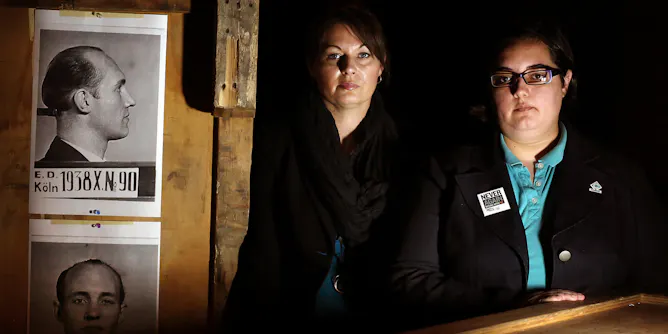
Tens of thousands of gay men and lesbians were persecuted by the Nazis but stigma and a lack of research funding has kept their history hidden.
Articles on Holocaust
Displaying 141 - 160 of 258 articles
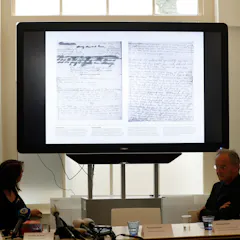
Information about the Holocaust may be easy to find online, but the best sites offer artifacts and authentic accounts from people who survived the experience, a Holocaust scholar argues.

The US faces many of the same problems Germans faced after World War II: how to reject, punish and delegitimize the enemies of democracy. There are lessons in how Germany handled that challenge.
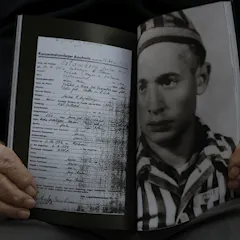
As social media platforms fight Holocaust denial and anti-Semitism, online archives offer another possible approach: direct links to the historic truth.
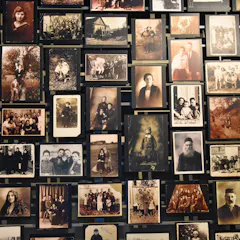
Despite considerable support, concerns over plans for a new UK Holocaust Memorial range from location and cost, to how it should look and whether we need such a building at all.
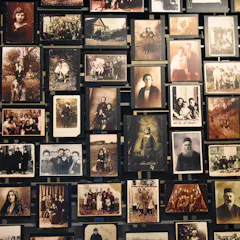
Many young people learn about the Holocaust in school, but their knowledge and understanding of the subject can be limited and based on inaccuracies and misconceptions.
A scholar who studies Holocaust survivors sees an explanation for why women change their stories of sexual assault, even now in the
MeToo era.
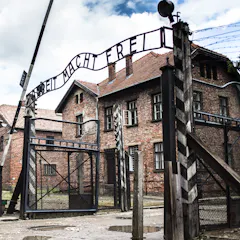
A recent TikTok trend involved people impersonating Holocaust victims. This has sparked questions about how to ethically use testimony in digital media.

Sound and its subtle, malleable possibilities for interpretation can be a valuable tool for those trying to capture pasts that have been erased, marginalised or forgotten.
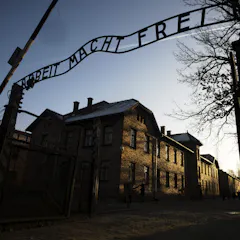
After half of all European Jews were killed by the Nazis, the post-Holocaust credo of Jews around the world has been “Never again!” But there’s been a surge in anti-Semitism since 2017.
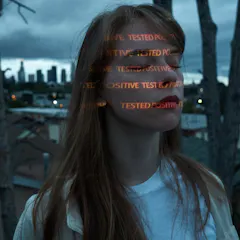
Dark tourism can help shine a commemorative light on the pandemic that has gripped society.
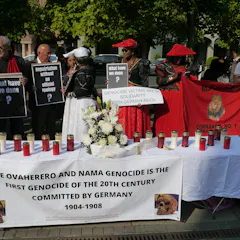
The culture of remembrance in Germany is viewed by many as exemplary. But it has some grave shortcomings.

After World War II ended in Europe, millions of ethnic Germans faced an uncertain future. The political repercussions of their expulsion continue even today.
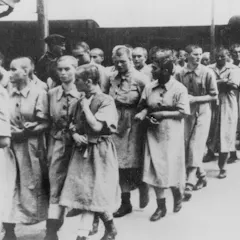
While male and female prisoners at Auschwitz faced the same ultimate fate – torture, forced labor and near-certain death – women sometimes reacted differently to Nazi captivity.

Amazon’s new TV series series divided the critics, but almost everyone agrees that it takes problematic liberties in its representation of Auschwitz.

It seems that former president FW De Klerk continues to find it hard to accept that apartheid was a crime against humanity.
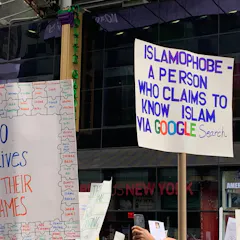
In retweeting a doctored image of Nancy Pelosi standing in a hijab in front of an Iranian flag, Trump is playing into fears that Iran and Islam are evil and anti-American.
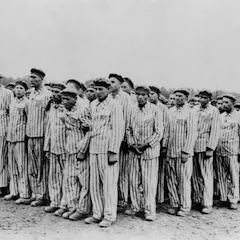
The Never Again Education Act is meant to make Holocaust education more prominent in America’s schools. A scholar of Holocaust studies explains why that’s necessary.
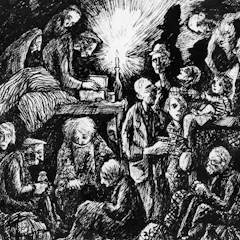
Holocaust poetry has been written for the last 90 years by people all over the world, in many different languages and by many different groups.
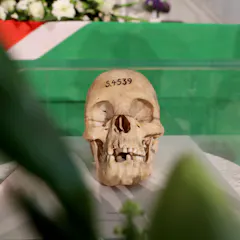
An oral history based biography of a survivor of colonial genocide in Namibia indicates instances of humanity during an entirely inhumane era.
Top contributors
-

Associate Professor in Modern European History and Jewish History, UNSW
-
Professor Emeritus of Modern European History, University of Essex
-
Professor of Sociology, Rowan University
-
Professor of Post-Soviet Cultural History and Film, Queen Mary University of London
-
PhD in History, Durham University
-
Assistant Professor of Comparative Literature and English, MacEwan University
-
Distinguished Professor of Anthropology; Director, Center for the Study of Genocide and Human Rights, Rutgers University - Newark
-
Professor Emeritus in Contemporary German History, Nottingham Trent University
-
Faculty, Holocaust and Genocide Studies, Gratz College
-
Professor of History, USC Dornsife College of Letters, Arts and Sciences
-
Assistant Professor of Jewish Studies, College of Charleston
-
Casual Academic, Faculty of Arts and Social Sciences, University of Technology Sydney
-
Professor of German Historical Studies, University of Liverpool
-
Professor of Film Studies, Bangor University
-
Rosalinde and Arthur Gilbert Foundation Professor of Israel Studies, University of California, Los Angeles