

A second author has come forward to accuse Brooke Bellamy of reproducing one of her recipes. Cookbooks are big business – and no stranger to scandals.
Articles on Hoaxes
Displaying 1 - 20 of 31 articles

The Netflix series follows the rise and fall of Gibson, as Aussie blogger who claimed natural methods had helped her overcome ‘malignant brain cancer’.
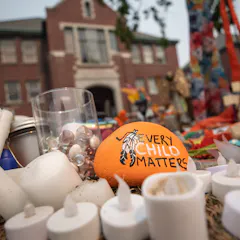
Contrary to what some ‘denialists’ believe, research shows that Canadian media outlets did not help circulate a ‘mass grave hoax’ regarding unmarked graves at former Indian Residential Schools.
Most fact-checking focuses on social media, yet misinformation can also spread quickly through messaging apps like Whatsapp. Personalised push notifications – sent directly to your phone – could help.
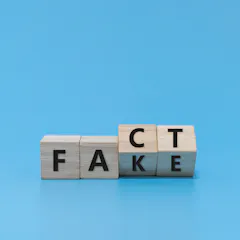
Fact-checking is important, but the contents need to be more visual to be able to attract more public audiences.
A romance writer’s bizarre fake death has gone viral. That her being alive stayed undetected for 2.5 years reminds us that our online and published personas are still separate from real life.
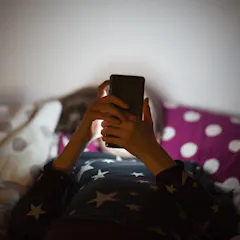
What’s true and what’s not? An expert in media literacy explains how to evaluate information.
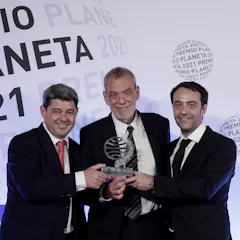
A true hoax provokes. It questions cultural biases, shattering conventions. But the curious case of the three men writing as a female author Carmen Mola does none of this.

Though many people are just paying attention to these problems now, they are not new – and they even date back to ancient Rome.
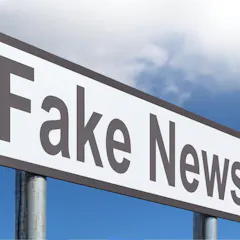
With a limited number of fact-checkers in Southeast Asia, fact-checking content becomes a challenging task to complete.
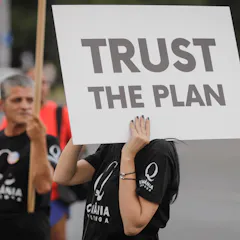
The QAnon conspiracy movement is the latest in a long line of moral panics that emerge as a response to change. False theories are used to undermine claims to social justice raised by marginalized groups.

Hospitals have requested that people avoid non-emergency visits, and conspiracy theorists are posting images of empty parking lots online as false proof that COVID-19 is an elaborate hoax.

Why have conspiracy theories so easily circulated during the COVID-19 pandemic? What do these theories tell us about societies and what challenges do they present?
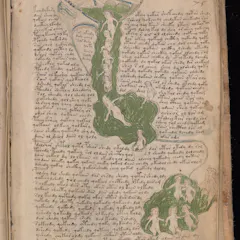
The Voynich Manuscript has researchers, the media, and the public hooked. But pseudo-explanations for the book’s ‘code’ reveals a serious problem with society’s relationship with science.
Lifestyle gurus define themselves in opposition to experts — but can we really trust what they tell us?

Six tips on how to check out that latest online threat that’s targeting your children. How you can easily tell if it’s real or just another hoax?
It’s not just the media who fuel unnecessary concern about so-called suicide games.

Research in Indonesia shows that people’s age, education levels and gender do not determine their likelihood to share fake news. Internet spending does.

Errol Morris’s new series is not a traditional documentary, but it’s doggedly committed to discovering what happened to Frank Olson.

Dozens of voluntary researchers in nine Indonesian cities mapped digital literacy activities and they found the country needs much more to solve their digital media problems.
Top contributors
-

PhD Candidate at the News and Media Research Centre, University of Canberra. Researcher in journalism, Universitas Multimedia Nusantara
-
Professor of History, UMass Amherst
-
Lecturer of Research Methodology of Communication Studies & Media Studies. Member of PhD Program at Universiti Sains Malaysia (USM) Pulau Pinang, S, Universitas Islam Bandung
-
Center for Communication, Media, Culture, and Information Science (CMCI), Universitas Padjadjaran
-
Associate Professor, UNSW Art & Design, UNSW
-
Emeritus Professor of Government, Northumbria University, Newcastle
-
James P. Jimirro Professor of Media Effects, Co-Director, Media Effects Research Laboratory, & Director, Center for Socially Responsible AI, Penn State
-
Associate professor, Universitas Padjadjaran
-
Honorary Research Associate, Evolutionary Studies Institute, University of the Witwatersrand
-
Associate Professor, Department of Communication Science, Universitas Gadjah Mada, Universitas Gadjah Mada
-
Senior Lecturer in Networking, The Open University
-
Senior Lecturer in Film Studies, University of St Andrews
-
Dr/Head of Centre for Study of Communication, Media and Culture, Universitas Padjadjaran
-
Senior Lecturer, Australian National Centre for the Public Awareness of Science, Australian National University
-
Professor of Informatics and Computer Science, Indiana University