
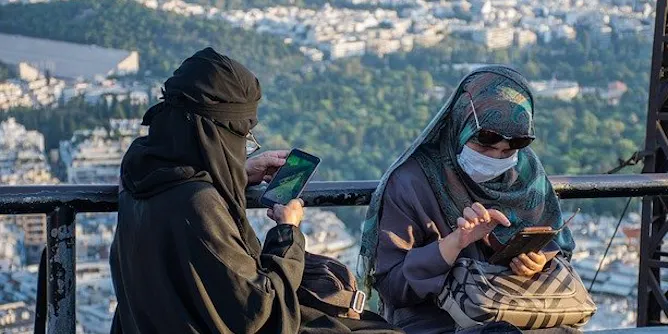
Muslim women say the practice of wearing masks has given them more confidence to wear face coverings in public.
Articles on Hijab
Displaying 41 - 60 of 77 articles
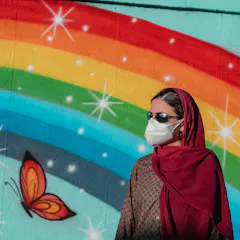
Now that face masks are being used to help fight the spread of COVID-19, it has caused some to look anew at discrimination against Muslim women who wear niqabs.

As people everywhere don face masks, scarves and bandanas to protect against coronavirus, Muslim women who wear the niqab, or Islamic veil, are feeling a lot less conspicuous.
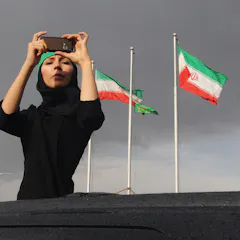
The conflict between Iran and the US has gone on for decades. A scholar of social movements in Iran asks why the US has consistently failed to support that country’s activist reform movements.
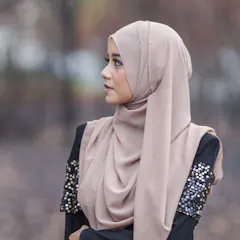
Muslim women are often perceived as oppressed and self-segregated, but many contemporary Muslim women reinterpret Islam to express their sense of style and fashion.
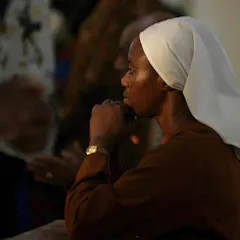
Neither French nor American, Senegalese secularism stands midway between these two models

The proposed secular law (Bill 21) in the province of Québec appears to be directed primarily against Montreal and Québec City, and reflects a fear of strangers in Québec’s more homogeneous regions.

Hijab-wearing model Halima Aden will be featured in Sports Illustrated’s annual swimsuit edition. Here’s why her success needs to be viewed in context of a long history of black Muslim women’s fashions.

The language of the neutral and secular state in Bill 21, like its precursors, presumes an invisible Christian default for the rules around public expressions of religiosity.
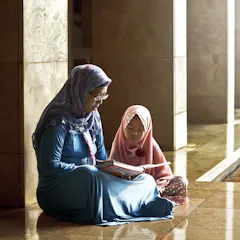
Hijab-wearing culture in Indonesia has changed over time. The hijab is becoming much more popular, so why does it remain a source of controversy?

For Muslim women, the hijab is not simply about religion. They may wear it for a variety of reasons. On World Hijab Day. women – Muslim and non-Muslim, are invited to experience this head covering.
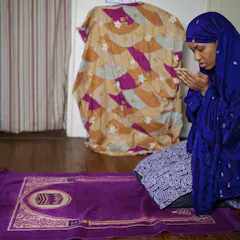
Trump recently tweeted about prayer rugs being left along the border. Many may not know the role and history of Muslim prayer rugs and why they are not likely to be left behind.
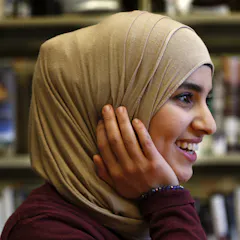
Hijab is not simply about religion – women wear it for a variety of reasons.

Powerful forces in Québec have long kept tabs on women’s dress codes, and therefore women’s bodies.

The Québec government’s push to ban the hijab is ‘sexularism’ and also basic nationalism – one that pits an ‘us’ against ‘them,’ where the ‘them’ represent multiple threats to the nation.
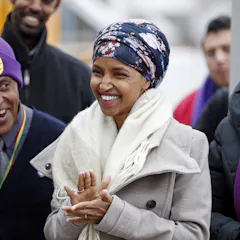
The de Young Museum of San Francisco recently opened an exhibit devoted to the Islamic fashion scene. Here’s how Muslim women’s fashions challenge popular stereotypes.
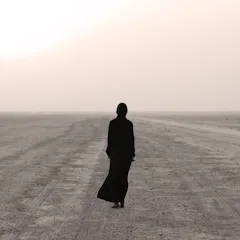
From Turkey to Saudi Arabia, Muslim women are battling for their rights - but religion is not at fault.
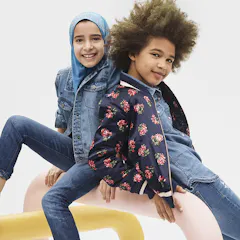
Gap’s recent back-to-school ad campaign was praised for its portrayal of the diversity of children. One of the girls in the ads was wearing a hijab: this raised a huge debate on social media.
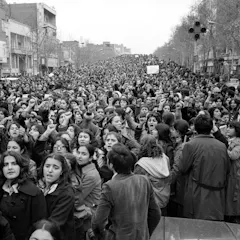
Iran’s young “daughters of the revolution” are protesting hijab laws and demanding equal rights. They’re the ultimate symbol of female resistance on this International Women’s Day.
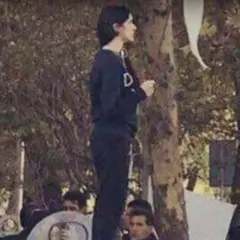
Protests against mandatory hijabs have a clear goal, and if successful, would be a victory for Iranian civil society.
Top contributors
-

PhD Candidate, Feminist and Gender Studies, L’Université d’Ottawa/University of Ottawa
-
Associate Professor (Senior Lecturer) in Middle East Politics & International Relations at Keele University, Keele University
-
Visiting Scholar in Religious Studies and Gender, Northwestern University
-
Professor of Communication Studies; Research Chair on Intersectionality, Violence and Resistance, Concordia University
-
Director, Executive Leadership Academy, University of California, Berkeley
-
chercheure associée au LEGS de Paris 8 spécialiste de genre et conflits armés, Université Paris 8 – Vincennes Saint-Denis
-
PhD Candidate, Lancaster University
-
Reader in International Development, University of Westminster
-
Professor and Chair of Department, University of Sydney
-
PhD Candidate, Digital Media Research Centre, Queensland University of Technology
-
Senior Lecturer in Politics, King's College London
-
Associate Professor of Media and Communication at Monash University, Malaysia., Monash University
-
Professor of Philosophy and Religion, Northeastern University
-
Associate Professor, School of Criminology, University of Leicester
-
Professor, Université Sidi Mohammed Ben Abdellah