
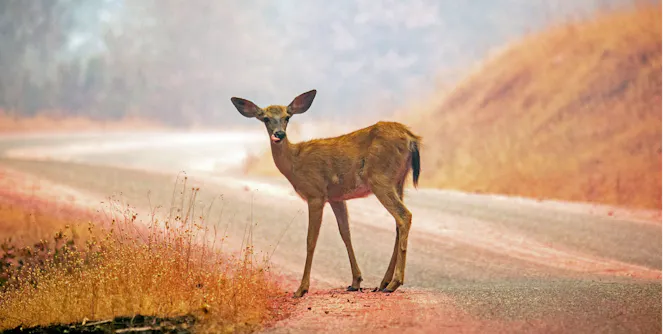
Avoiding hitting deer on the road is as much about when you drive as where. An animal behavior expert explains why.
Articles on Highways
Displaying 21 - 34 of 34 articles

Two urban policy experts explain why taking down highways that have isolated low-income and minority neighborhoods for decades is an important part of the pending infrastructure bill.
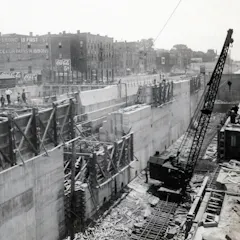
The lasting problems of infrastructure aren’t of need or construction, but of overbuilding, delayed costs and the challenges of thinking ahead.

In track and field, it’s a common belief that middle lanes are the fastest. But according to the data, middle lanes aren’t better, and in the 200-meter sprint, outside lanes might even be faster.

Government investment in roads, railroads and other public services has always involved social programming, both for good and for ill.
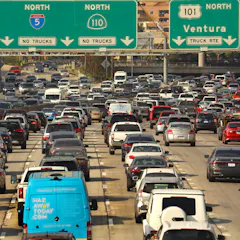
The pandemic offered a tantalizing look at city life with fewer cars in the picture. But with traffic rebounding, there’s limited time to lock in policies that make streets more people-friendly.
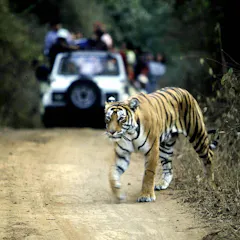
An infrastructure boom threatens endangered tigers across Asia. Scientists want to know more about how tigers behave near roads so they can design wildlife-friendly transportation networks.
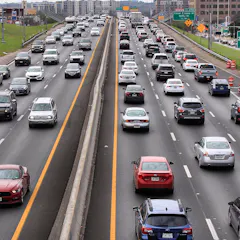
Living next to a highway is not great for health, but a new study shows that running air filters indoors can remove tiny particles of pollution and lower blood pressure.
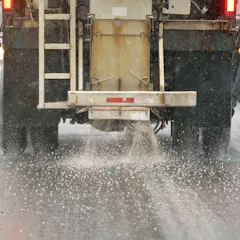
De-icing salts help us get around in winter, but they corrode cars, crack roads and contaminate rivers and lakes. Scientists are working to develop better options by imitating natural antifreezes.
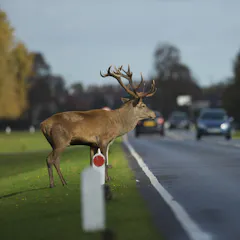
Roads and traffic are causing massive mortality of wild animals worldwide and the road network is rapidly expanding. Can the wildlife death toll be stopped?

Canada needs to reform budgeting and reporting methods to recognize the true underlying nature and value of expenditures on social infrastructure.

Road and rail construction is booming in sub-Saharan Africa, but the pandemic has brought a welcome pause for reflection.
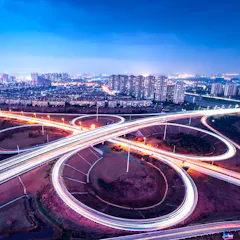
The sweeping introduction of driverless cars could see more vehicles on the road, driving longer distances. But smart planning could solve some of transit-associated environmental and social problems.
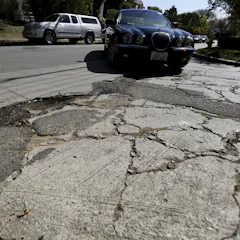
At the moment, fuel taxes pay for most of the maintenance of US roads, bridges and highways. What happens when the majority of cars no longer run on gasoline?
Top contributors
-

Professor of Biology, Clarkson University
-
Associate Professor of Business, Boston University
-
John Rennie Short is a Friend of The Conversation.
Professor Emeritus of Public Policy, University of Maryland, Baltimore County
-
Professor of Public Policy and Urban Affairs, Northeastern University
-
Professor of Urban Policy and Planning, Hunter College
-
Professor of Urban and Environmental Policy and Planning, Tufts University
-
Post Doctoral Researcher, Human Geography, University of Toronto
-
PhD Candidate, Political Science, Queen's University, Ontario
-
Assistant Professor of Economics, Middlebury College
-
Presidential Distinguished Professor of Energy Policy and City Planning, University of Pennsylvania
-
Director of Energy Studies, University of Florida
-
Professor, Environmental and Urban Change, York University, Canada
-
Research Assistant Professor, University of Alaska Fairbanks
-
Associate Professor of Economics, University of California, Davis
-
MSc student in Environmental Science, ETH Zurich