
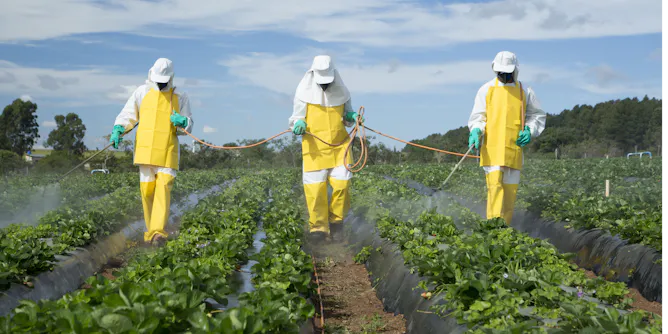
Most studies on the use of pesticides are funded by those that produce the chemicals but only independent research can inform us about the best agricultural practices.
Articles on Herbicides
Displaying 21 - 39 of 39 articles

What is proof? In both law and science, it’s basically a consensus of experts – but they work at very different speeds. That means juries may reach verdicts on an issue before the science is settled.

Possible causes of limb malformations in babies born in rural areas of France.

Research shows that managed honey bees may pose a threat to free roaming honey bee populations.
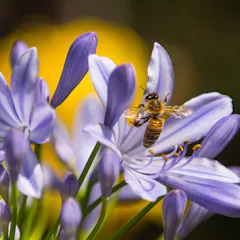
The world’s most widely used herbicide poses a threat to honey bees.
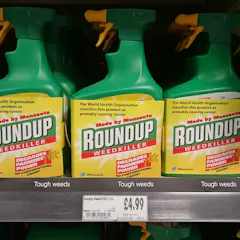
Thousands of people are suing Monsanto, claiming that its Roundup herbicide gave them cancer. A California judge has reduced the first damage award but let the verdict against Monsanto stand.
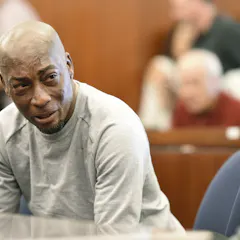
A jury concluded on Aug. 10 that exposure to the herbicide Roundup caused Dewayne Johnson’s cancer and ordered the company to pay $289 million in damages. Thousands more claims are pending.
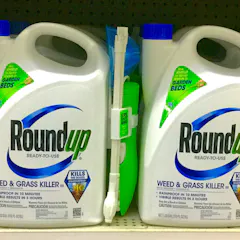
Hundreds of lawsuits against Monsanto contend that its popular Roundup weed killer gave users cancer. But proving this kind of connection is challenging in both science and law.
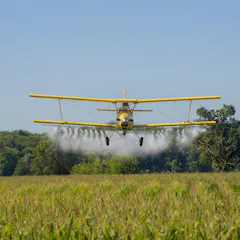
Chemical companies touted synthetic insecticides and herbicides as miracle products in the 1940s and 1950s. But farmers and cropdusting pilots didn’t always buy the sales pitch.
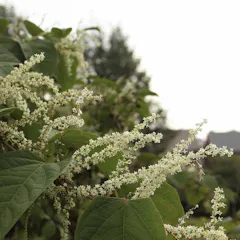
It’s nearly impossible to kill, so we need to start working with Japanese knotweed to control it.
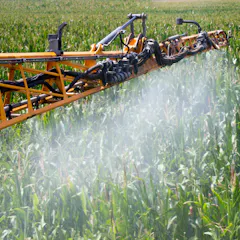
Improper use of antibiotics is one reason for the rise in antibiotic resistance, but new research shows that ingredients in common weed killers can also cause bacteria to become less susceptible.
Inserting a random DNA mishmash into a plant or bacterium directs it to make a novel protein. Sifting through the resulting molecules, researchers may find ones have medical or agricultural uses.
When working with garden chemicals, always make sure you are wearing gloves. Apply sprays and dusts downwind and wear goggles if necessary. Always follow the directions.

Governments often have limited knowledge of chemical production as it is the preserve of the private sector. Often these facilities are not as well secured as government facilities.

Advocates have argued for years about whether genetically engineered crops are safe to grow and eat. Plant pathologist and geneticist Pamela Ronald calls for a more nuanced discussion.
Are genetically engineered crops safe for human health and the environment? A new report says yes but points out problems and regulatory gaps. Three members of the study panel offer their takeaways.
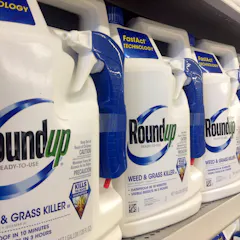
The World Health Organization classifies the common herbicide glyphosate as “probably carcinogenic to humans”. But this doesn’t mean using it to kill weeds in playgrounds will hurt children.

A recent study by the organisation Moms Across America claims to have found a pesticide at harmful levels in human breast milk and urine. Moms Across America is an organisation concerned with the use of…
At least seven species of weed have evolved to resist the most commonly used weed killers in Queensland’s wheat and sorghum…
Top contributors
-

Professor, School of Medicine, University of Connecticut
-
Senior Lecturer in Pharmacology, Adelaide University
-
Associate professor, University of Nebraska – Kearney
-
Emeritus Professor of Environmental and Occupational Medicine, Rutgers University
-
Director, Institute of the Environment and Sustainability, University of California, Los Angeles
-
Senior Research Associate, University of South Africa
-
Professor of Molecular Biology and Genetics, University of Canterbury
-
Professor of Rural Sociology and Science, Technology, and Society, Penn State
-
Associate Professor of Physiology, Millikin University
-
Professor, Paediatrics and Child Health, UNSW
-
Professor of Zoology, University of Pretoria
-
Professor of History, The Ohio State University
-
Associate professor, Anthropology, Athabasca University
-
Professor of Biology, University of Dayton
-
Professor of Horticultural Sciences and Plant Molecular and Cellular Biology, University of Florida