
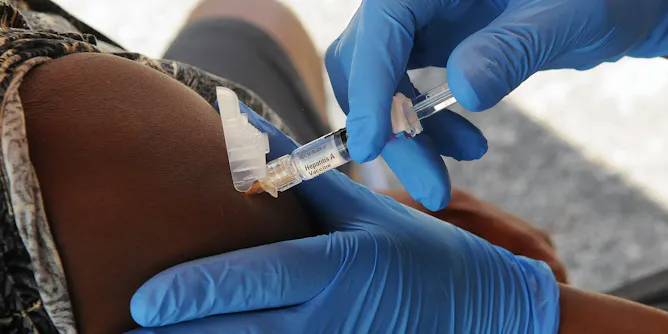
About 19 million Nigerians have hepatitis but most of them don’t know it.
Articles on Hepatitis C
Displaying 21 - 40 of 69 articles

Proposals in NSW to force someone who spits at or bites a frontline worker to be tested for HIV and other blood-borne viruses are a real problem - for workers and the public.

New research reveals a link between a diagnosis of cancer and a lifetime number of 10 or more sexual partners. But there are some flaws in the research we need to consider in interpreting the results.
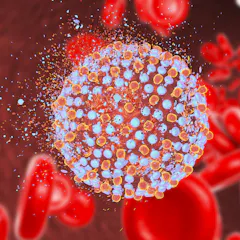
Curing thousands of Australians with hepatitis C is one of the public health success stories of recent years. We can take lessons from this as we continue in the fight against hepatitis B.

A new test which capitalises on existing knowledge and technology will increase diagnoses, speed up the process and save the NHS millions of pounds.

As concern grows for the escalating prices of prescription drugs, a novel approach to lower the price of drugs to treat hepatitis C in Louisiana holds promise, a policy expert says.

A better understanding of CFS could lead to new treatments.

Somewhere along our evolutionary path, we lost the ability to defend against hepatitis C. But not all humans lost this ability.

July 28 is World Hepatitis Day, and with an effective cure for hepatitis C there is much to celebrate. But homelessness and the opioid epidemic are driving a surge in hepatitis infections.

To prevent the epidemic of liver cancer that looms on the horizon, we need to tackle hepatitis B, hepatitis C and obesity.
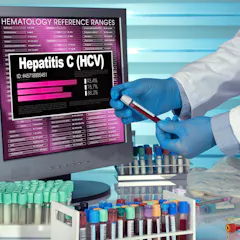
In the run up to the Global Hepatitis Summit 2018, new guidelines for the management of hepatitis C should come under scrutiny – for financial conflict of interest and quality of evidence.

Victoria should implement a new report’s recommendation to allow peers to distribute clean injecting equipment, but it needs to go further to ensure safe drug use in prison.

If England eliminates hepatitis C, it will be the first country to do so. But how feasible is it?

HIV has no boundaries. Men and women in almost every country are affected. Yet strides have been made, so much so that many are able to think of living with AIDS rather than dying from it.

Maybe it’s time the government listened to the advice offered by its Advisory Council on the Misuse of Drugs.

Gonorrhoea has seen a sharp increase in diagnosis rates, of up to 94% in some groups.

Hepatitis viruses are serious infections that damage the liver. There is an urgent need to deal with increased Hepatitis B infections in Kenya.

HIV, STIs and other dangerous infections are feeding off of the opioid epidemic, creating an even more complicated threat to public health.

NSW has changed its laws imposing criminal penalties on someone with an STI who doesn’t take “reasonable precautions” to not infect their sexual partner.

Australia has been subsidising drugs to cure hepatitis C since March 2016. Unlike in many other countries, these are available to everyone with the disease and are much cheaper for our government.
Top contributors
-

Infectious Diseases Physician, St Vincent's Hospital, Sydney; Scientia Professor, Kirby Institute, UNSW
-
Professor of Viral Hepatitis, University of Glasgow
-
Director, WHO Collaborating Centre for Viral Hepatitis, The Peter Doherty Institute for Infection and Immunity
-
Professor and Director of the Centre for Social Research in Health, UNSW
-
Professor, Deakin University
-
Senior Lecturer, Gastroenterology & Hepatology Unit and Consultant Gastroenterologist & Hepatologist, University of Ibadan
-
Research Fellow, Australian Research Centre in Sex, Health and Society, La Trobe University
-
Deputy Director, Burnet Institute, Adjunct Professor, Monash University, Burnet Institute
-
Emeritus Consultant, St Vincent's Hospital, Darlinghurst
-
Associate Professor of Epidemiology & Program Head of Surveillance Evaluation and Research, UNSW
-
Professor of Internal Medicine, University of Michigan
-
Adjunct Professor, School of Psychology, Curtin University and College of Health and Medicine, Australian National University
-
Assistant Professor of Public Health and Community Medicine, Tufts University
-
Medical Director, Viral Hepatitis Centre, Johns Hopkins University
-
Professor and Executive Dean of School, Medical and Health Sciences, Edith Cowan University