

No two people will react to the same smell in the same way.
Articles on Headaches
Displaying 21 - 40 of 49 articles
Research suggests that alternative treatments for migraine, including physical therapy, massage and vitamin supplements, can make a difference.
In some cases, fever reducers and extra fluid intake can weaken the body’s response to infection.
As a GP, bad headaches are among the most common topics I’m asked about. Here’s how you can assess whether to stay home, see a doctor — or head straight to emergency.

The negative effects are likely caused by the same mechanisms behind why sugar makes us feel so good.

Researchers are piecing together clues to better understand the puzzling array of symptoms in those who never seem to fully recover from COVID-19.

Barometric pressure headaches are often the result of pressure changes in our sinuses.

When headaches strike, many people reach for a painkiller. Probing the reasons behind the pain is often a better idea.

Itchy skin? More aches and pains? Unusual rash? Headaches? Pimples? If you’ve been experiencing unusual physical symptoms recently, the stress of the COVID-19 pandemic may be the reason.
Our study found that many GPs aren’t even aware of cluster headache, and often give patients the wrong treatment.

But there is an answer.

Many migraine headaches are triggered by certain foods. Recently, a lot of attention has focused on gluten. An expert explains how a piece of bread can cause pain in your head.
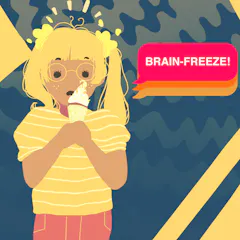
There are several different science ideas around why, but the answer may have something to do with what happens when we cool down the roof of our mouth.

The brain itself can’t actually feel pain. It can’t sense damage to itself the way your finger can. We know this because people can have brain surgery while they are totally awake.

In one sense, the brain feels no pain. In another sense, it feels all the pain.

We’ve all experienced that tense pain in our heads when we’re withdrawing from caffeine. But why?

Getting rid of this scourge is nothing to be sneezed at.

A new preventive drug for migraines was approved recently by the FDA. Here’s how it works, and how others in the pipeline might be able to help the millions who suffer from migraines.

In short, pain medicine is able to block the processes that cause the feeling of pain. To understand why, you need to know a bit about how pain works.
That flicker in the corner of your eye isn’t your imagination.
Top contributors
-

Assistant Professor of Neurology, University of Colorado Anschutz
-
Professor of Neuroscience, Durham University
-
Conjoint Clinical Associate Professor, Deakin University School of Medicine and Specialist Pain Medicine Physician, Deakin University
-
Researcher, The University of Melbourne
-
Professor of Psychology, University of Essex
-
Lecturer in Cognitive and Experimental Psychology, University of Bath
-
Clinical Assistant Professor of Neurology, University of Southern California
-
Professor of Medicine, Monash University
-
Senior Lecturer in Physiology, Swinburne University of Technology
-
Assistant Professor of Neurology, University of Florida
-
Professor, National Drug Research Institute, Curtin University
-
Researcher, Department of Neuroscience, Karolinska Institutet
-
Associate Professor of Neuroscience, Karolinska Institutet
-
Professor of Anatomy, Lancaster University
-
Honorary Professor of Pharmacology, UNSW