

Twitter pile-ons, online celebrity bashing, or knee-jerk reactions are part of an increasingly toxic environment children are being exposed to that risks normalising hate.
Articles on Hate
Displaying 21 - 38 of 38 articles
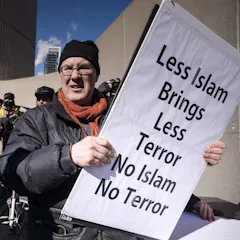
The need for security agencies and the media to view and present Islam and Muslims as constant potential threats feeds into a dangerously violent and deadly Islamophobia.
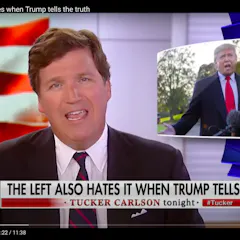
The conservative cable news channel particularly favors the term when explaining opposition to Donald Trump. This framing of the news can lead Fox viewers to see the world as us versus them.

A psychologist explains how to reestablish civil political conversation in your own life.
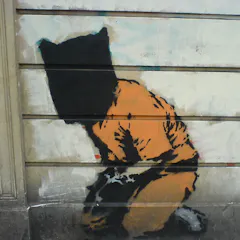
Michael Haneke’s allegorical 2009 film showed how a peaceful society can be shattered within a single generation. It’s a lesson for us now in a world drifting toward populism and violence.
What can social media platforms do after terrorist attacks?

Researchers have put together a toolkit for countering Islamophobia.
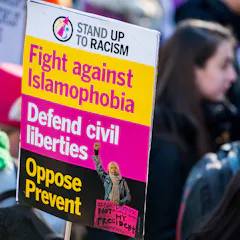
For the first time the UK has a working definition for Islamophobia.
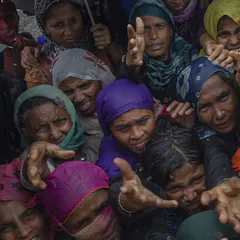
Facebook is unwittingly helping fuel a genocide against the Rohingya people in Myanmar. Does Cuba’s internet model provide lessons to manage social media amid political chaos?

There has been a 600 per cent increase in online hate speech since Nov. 2015. The solution to stop the tide lies in both anti-hate laws and self-awareness education for audiences.

Efforts to kick extremists off the internet can’t succeed and might even have the unintended side effect of bolstering support for radical groups.

Two websites, one taken offline, the other still active, raise hard questions about how prepared Americans are to deal with free speech about white supremacy, in both monuments and domain names.
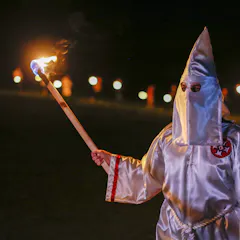
Far from the millions-strong mass movement of years gone by, today’s ‘Klan’ is really just a smattering of assorted local hate groups.

The right-wing extremist group La Meute recently held a rally in Québec City that put Canadian racism in the spotlight. Is Donald Trump emboldening hate groups in Canada?

After violence in Charlottesville, internet firms are erasing bigoted content. But should private companies serve as unaccountable regulators and be responsible for policing complex social issues?
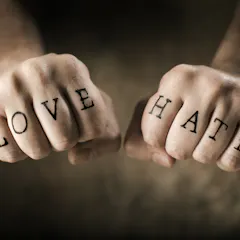
Could it be all just a terrible misunderstanding? Researchers are increasingly turning to love to understand hate.
Today’s radical right is remaking its profile, using online communications to spread its message farther and deeper into our society than ever possible before.

The first US Truth and Reconciliation Commission was set up in 1999. Here’s why truth commissions matter today.
Top contributors
-

Faculty, Holocaust and Genocide Studies, Gratz College
-
Associate Professor and Co-Director of the Tackling Hate Lab, Deakin University
-
Professeur, Université du Québec à Montréal (UQAM)
-
Professor of Criminal Justice, Michigan State University
-
Associate Professor, Educational Technology, Université Laval
-
Professor of Geography and Senior Research Associate in the Rock Ethics Institute, Penn State
-
Professor of Criminal Justice, Michigan State University
-
Researcher, Dalhousie University
-
Senior Lecturer in Psychology, University of the Sunshine Coast
-
Research Officer, Monash University
-
Associate Professor, School of Criminology, University of Leicester
-
Full Professor, Department of Theological Studies, Concordia University
-
Professor of Criminal Justice, City University of New York
-
Associate Professor of Communication and Media Studies, Pace University
-
Associate professor US History, University of Exeter