

The scientific explanations might not be definitive, but your brain is largely responsible.
Articles on Hallucinations
Displaying 21 - 32 of 32 articles

Just ask Céline Dion – and countless others.

A study in the 1960s brought together three people who believed they were Christ – the results still tell us much today about how well we recognise our own delusions.
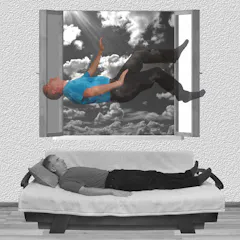
Brain chemicals could explain some of these experiences, but so could bullying and social isolation.

Have you ever checked your phone thinking you had felt it vibrate or heard it ring, only to see that no one tried to reach you? One researcher decided to study this phenomenon.

Delirium is a neurological (nervous system) condition where a person becomes suddenly confused. Around one in five elderly people in hospital suffer from delirium.

Shaman have used the psychoactive effects of ayahuasca for spiritual and healing purposes for hundreds of years. But a new breed of tourist has discovered this plant-based drug.

When human contact is cut off, the brain begins to act in strange ways to preserve its sanity.

Our study published this week shows a new method to induce and measure visual hallucinations in anyone at any time.

During the 1950s and 1960s, LSD was used more for psychotherapy than recreation. Between 1950 and 1965, many were treated with LSD for alcoholism, depression, schizophrenia, autism and homosexuality.

A new study of the brain structure of schizophrenics has revealed an important clue that could help treat hallucinations.

Back in the early 1990s, I used to play the video game Tetris on my Nintendo Game Boy. I was really good at it – if I do say so myself – and I used to play for hours every day. When I went to bed I would…
Top contributors
-

Research Fellow (Informatics), School of Engineering and Informatics, University of Sussex
-
Director of the International Gaming Research Unit and Professor of Behavioural Addiction, Nottingham Trent University
-
Cornelia H. Dudley Professor of Psychology, Knox College
-
Senior Lecturer of Psychology, University of Westminster
-
Senior lecturer, Australian National University
-
Associate Dean of School for Psychology and Humanities, University of Lancashire
-
Reader in Cognitive Neuroscience, Director of the Sheffield Autism Research Lab, University of Sheffield
-
Sackler research fellow in clinical medicine, University of Sussex
-
Consultant Geriatrician, PhD Candidate, The University of Melbourne
-
Research Assistant Professor, University of Michigan
-
Associate Professor in Clinical Psychology and Neuropsychology, Trinity College Dublin
-
Professor of Cognitive Neuroscience, UNSW
-
Lecturer in Bioethics, Monash University; The University of Melbourne
-
Associate Professor of Developmental Psychology & Psychopathology, University of Leeds
-
Senior Lecturer of Addiction, Edith Cowan University