

You can build resilience that will work with the changing rhythms in your life.
Articles on Grit
Displaying all articles

Push through, stay strong, fight back – people often think of resilience as being tough and having grit. But research suggests it’s more about acknowledging the scars as you continue to move forward.

Perseverance helps people achieve goals and is linked with well-being. But combined with chronic societal stressors, it can lead to cognitive overload that puts a strain on brain health.

Seeing grit as a panacea among historically disadvantaged students can be a dangerous distraction from other barriers to student retention.
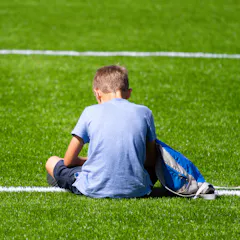
As adults, we can reflect on experiences we’ve had in life that have helped build our resilience. But kids and adolescents are still developing grit and the ability to work towards a goal.

One longitudinal Australian study found children who drop out of sport between eight and ten years are at greater risk for social and emotional problems compared to those who continue in sport.

By investing in learning, believing in your capabilities and vision, harnessing failure as fuel for growth and leaning on social support, anyone can become a psychologically resilient entrepreneur.

The quality of grit – passion and sustained persistence – is a useful predictor of burnout and exhaustion for doctors and maybe the rest of us too.

Research shows that grit is a strong predictor of reading achievement. This suggests that socio-emotional skills are important for student achievement, even in high-poverty contexts.

We like to think there’s a silver lining to tragedy – and this may be influencing both how studies on post-traumatic growth are constructed and how subjects are responding.

Literacy researchers analyze cross-Canada favourite books for kindergarten to Grade 2 readers, and suggest great “gritty” reads that can help normalize conversations surrounding failure and growth.

Persistence and self-control are valuable traits that can help kids succeed in school and beyond. A new study suggests infants can learn stick-to-itiveness by watching adults persist in a difficult task.

Surfing can strengthen your ability to persevere.

Two researchers set out to find out why some people might be better at achieving goals than others. The answer, they found, could lie in implicit beliefs.

Because we all have it in us to be strong and courageous.

One of the newest trends in education is teaching students how to develop grit. But what’s even meant by ‘grit’? And what if grit means something different for everyone?

Many students are in the process of deciding whether to take a gap year – a year between high school and starting college. What does evidence tell us about taking a gap year?

People who think their willpower is unlimited do better under pressure.

A new study has found that having perseverance and long-term goals won’t boost a child’s exam results.
Top contributors
-

Professor of Psychology, Cornell University
-
Study Director at the Institute for Survey Research, Temple University
-
Sir Henry Wellcome Postdoctoral Fellow, King's College London
-
Associate Professor of Marketing, Cognitive Science, & Psychology, University of California, Berkeley
-
Visiting Research Fellow, Liverpool John Moores University
-
Ph.D. Student in Brain and Cognitive Sciences, Massachusetts Institute of Technology (MIT)
-
Lecturer in Education, Cardiff Metropolitan University
-
Director of Undergraduate Research and Academic Engagement, Florida State University
-
Professor of Writing and Liberal Arts, Savannah College of Art and Design
-
Postdoctoral research assistant at the Welsh Institute of Physical Activity, Health & Sport (WIPAHS), Swansea University
-
Senior Researcher, University of South Africa
-
Assistant Professor, Entrepreneurship & International Management, Old Dominion University
-
Head of Department of Management, Deakin Business School, Deakin University
-
Adjunct Associate Professor, Bond University
-
Postdoctoral fellow, Stellenbosch University