
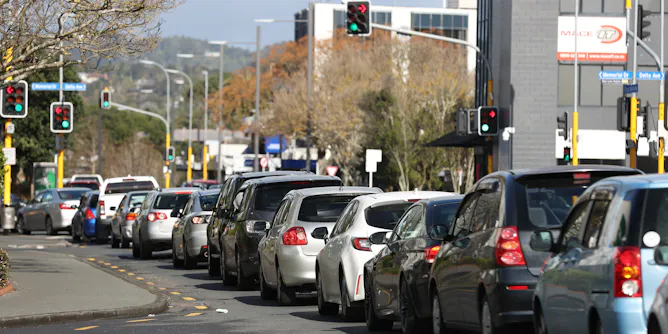
How we design our cities can make it harder to be healthy. City planners are now able to quantify the different elements that are affecting our health and well-being.
Articles on Green spaces
Displaying 21 - 40 of 48 articles
The promised £39 million is not enough to ‘level up’ park provision in the UK.
Despite their good intentions, cities rarely have the full set of skills and capabilities to turn their plans into a reality. Our research looks at what needs to change.
As we look beyond a world besieged by Covid-19, the relationship between humans and nature in our cities must be shaped and reclaimed.

A study showed that, on average, more greenery around primary schools was associated with better NAPLAN scores. Higher exposure to traffic-related pollution was associated with poorer scores.
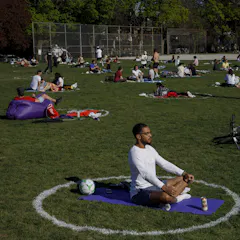
Green spaces can be part of the plan to ‘build back better’ after COVID-19. But city officials and policy-makers must address systemic racism for urban green spaces to benefit public health.
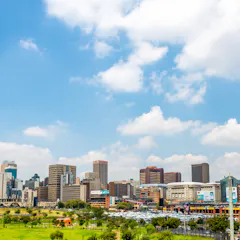
There’s ample evidence that colonial imprints and mindsets in many cities and towns around the world today still dominate the availability of green spaces and how they’re managed.

To protect urban trees, it’s important to reduce the impact from construction. Advance planning and close supervision can help.
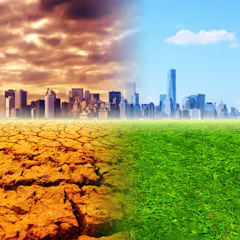
The built environment plays a pivotal role in lowering residents’ exposure to climate change driven risks.
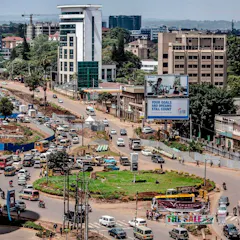
Parts of Nairobi are already dealing with temperature increases and reduction in humidity. These conditions are associated with increases in mortality, especially in children and the elderly.
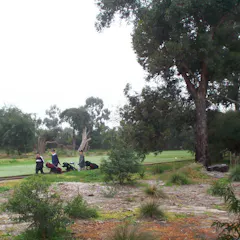
COVID-19 restrictions led to calls to open up golf courses to the public. But these are such precious refuges for native flora and fauna that access will have to be carefully managed.

Nature is a promise of escape, a moment of relief and a relationship worth cherishing.
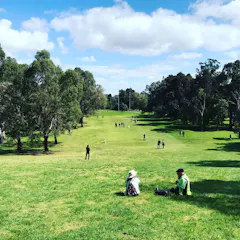
All parks are not equal. The response to the opening of golf courses to the public during the COVID pandemic shows the quality of green open space is a big issue for city residents.
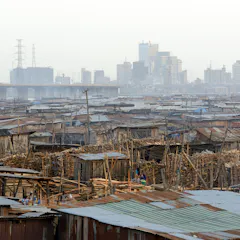
If we learn from COVID-19, there are three key areas to tackle to make cities safer from outbreaks of future infectious diseases.

The design of a campus and its buildings and dorms can be crucial to a student’s overall well-being.
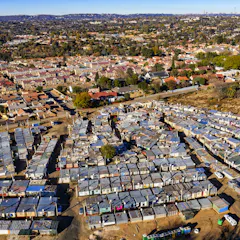
In South African cities there’s an uneven distribution of trees, greenery and parks across racial and income geographies.
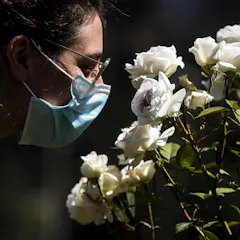
Human encroachment on the environment is increasing the threat of diseases like COVID-19, but spending more time in nature could also be part of the solution to this pandemic.

The release of a roadmap for green roofs, walls and facades in Australia can help our cities catch up with the world leaders in urban greening.
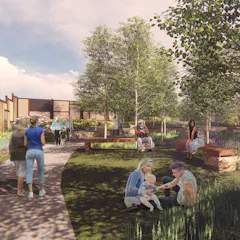
About half of incarcerated women in the United States are mothers to children under age 18. Natural spaces within a prison can help maintain their mother-child bonds.
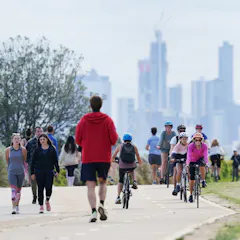
COVID-19 has upturned uses of public spaces that we took for granted. Will shifts in the regulation of these spaces lead to a change in thinking about who “owns” the city?
Top contributors
-

Professor, Urban Ecology and Biodiversity, The University of Melbourne; RMIT University
-
Associate Professor of Environmental Anthropology, Rhodes University
-
Lecturer in Landscape Architecture, The University of Melbourne
-
Researcher Associate, Centre for Urban Research, RMIT University
-
Associate Professor & ARC Industry Fellow, Urban Ecology, Curtin University
-
Vice-Chancellor's Research Fellow, Centre for Urban Research, RMIT University
-
Associate Professor in Urban Ecology and Urban Horticulture, The University of Melbourne
-
Associate Professor, School of Planning, University of Waterloo
-
Researcher and lecturer in Spatial Data Science, University of Canterbury
-
Head of Environmental Vulnerability and Ecosystem Services, Institute for Environment and Human Security (UNU-EHS), United Nations University
-
Professor of Sociology, Rhodes University
-
Associate Professor. Deputy Director TeEACH Research Centre, Western Sydney University
-
professeur en sylviculture et en foresterie urbaine, Université Laval
-
Professor in Environmental & Landscape Planning, University of Manchester
-
Postdoctoral fellow, University of Pretoria