

Only a small share of the vehicles Americans buy are electric. Even if all of them were, it would take until 2040 to phase out the fossil fuels used to power personal travel and road-bound freight.
Articles on Green New Deal
Displaying 41 - 60 of 62 articles
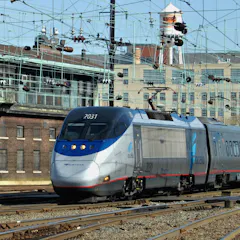
Rail advocates often make the case that trains are a cleaner mode of transportation, but why is that so? And what would it take to expand rail in the U.S.?

Imagine a world with climate action, where an army of volunteers work together to improve the environment and influence policies.

If society is serious about a Green New Deal, we’ll need universal basic income to implement it.

The 1930s New Deal created a civilian army of conservationists who planted forests and restored wilderness.
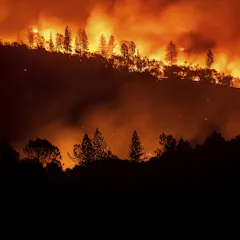
Increasingly severe losses for insurers due to climate change could result in a global financial crisis.

These youngsters have ample fervor, and they are dramatically photogenic. Dismissing them as being fake or lightweight can spell trouble for members of the establishment.
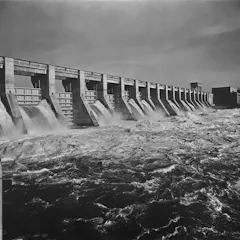
The original New Deal caused a “great acceleration” in carbon emissions. How will a Green New Deal forge its own legacy?

The Green New Deal has shifted the debate over what to do about climate change.

There are limits on how much governments can spend without earning, although increasingly politicians are behaving as if there are not.

By making people confront the scale of the climate challenge, the Green New Deal is a great leap forward.
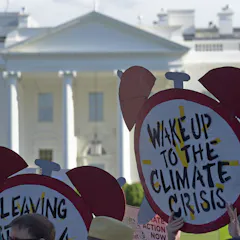
Democrats such as Rep. Ocasio-Cortez and Sen. Markey are proposing an ambitious decarbonization plan that critics are calling unaffordable. A green economist explains how the US could pay for it.
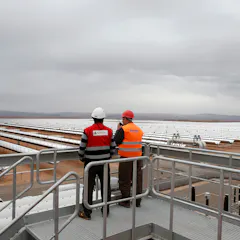
Climate justice policies could potentially double as tools of colonialism that harm people outside the US.
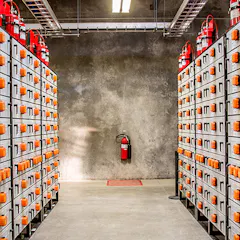
Energy storage could prove an inexpensive way for power companies to handle heat waves and other times when consumers use more electricity than usual.
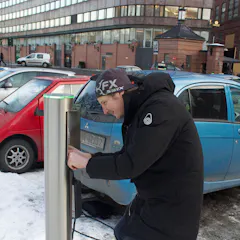
There are precedents regarding power generation and ethanol but no nation has ever achieved as comprehensive and dramatic this fast.
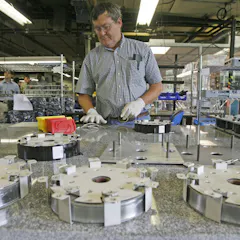
An Obama administration veteran offers some insights from his experience about driving massive increases in clean energy.
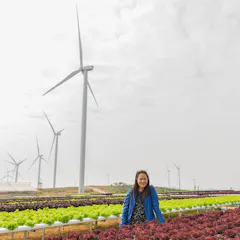
Agriculture needs to cut its greenhouse gas emissions, yet we must also find a way to produce more food if we are to feed 10 billion people by 2050. A “just transition” could help make that happen.
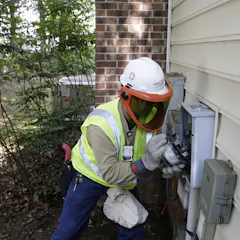
It’s often more effective, cheaper and less controversial than other efforts to confront climate change.

The coal, oil and natural gas industries are also connected with human rights violations, public health disasters and environmental devastation.
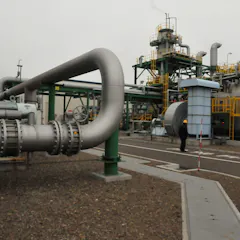
These technologies could turn into a powerful tool for fighting global warming, and they have the potential to address historical climate injustices.
Top contributors
-

Canada Research Chair in Economy and Environment, Queen's University, Ontario
-
Professor of Global Change Science at University of Leeds, UCL
-
Assistant Professor of Philosophy, Georgetown University
-
Professor of Innovation & Knowledge Exchange, University of Oxford
-
Professor of Climate Justice, Maynooth University
-
Professor of Economics, Colorado State University
-
Chief Research Officer: Climate and Development - Nelson Mandela School of Public Governance, University of Cape Town
-
Associate Professor of Geography, Salem State University
-
Lecturer in Energy Law, University of Dundee
-
Professor Emeritus of Political Science, University of Toronto
-
Professor of Green Political Economy, Queen's University Belfast
-
Associate Professor in Urban Infrastructure and Policy, UCL
-
Assistant Professor, Department of Political Science, McGill University
-
PhD Candidate in Bioeconomy, University College Dublin
-
Professor of Energy and Environmental Economics and International Affairs, Penn State