

The upgraded AI systems may even be able to undertake a form of reasoning.
Articles on GPT-3
Displaying all articles

Authors and publishers are worried about the threat of AI – and they’re fighting back. But there are still important ways human authors can’t be replaced with machines.

In a preprint study, researchers estimate training the model behind ChatGPT would have required somewhere between 210,000 and 700,000 litres of water.

Generative AI, those astonishingly powerful language- and image-generating tools taking the world by storm, come at a price: a big carbon footprint. But not all AIs are equally dirty.

Large language models can’t understand language the way humans do because they can’t perceive and make sense of the world.

There won’t be an easy tech fix for the questions about authorship raised by ChatGPT and other text generators.
Now that AI systems can generate realistic images and convincing prose, are creative and knowledge workers endangered or poised for productivity gains? A panel of experts says it’s not so clear-cut.

From ChatGPT to Lensa, it feels like AI is here to take over. But despite some impressive results, such systems still have plenty of limitations.
The newest OpenAI text-generator is a marked improvement over its predecessor – but it still has its pitfalls.

Linguists have long considered grammar to be the glue of language, and key to how children learn it. But new prose-writing AIs suggest language experience may be more important than grammar.

AI art tools like DALL-E, Midjourney and Stable Diffusion are starting a revolution in the way art is made.

Fluent expression is not always evidence of a mind at work, but the human brain is primed to believe so. A pair of cognitive linguistics experts explain why language is not a good test of sentience.
New software that can generate images and text on command may deliver ‘good enough’ creativity in advertising, copywriting, stock imagery and graphic design.
What’s judged to be plagiarism may shift as students rely on more sophisticated forms of technology for writing support.

Common sense is a broad and diverse set of abilities that help define what it means to be human. AI researchers are struggling to endow computers with it.

Endearing and amusing, AI’s faltering attempts at flirting show how far computer-generated language has come.
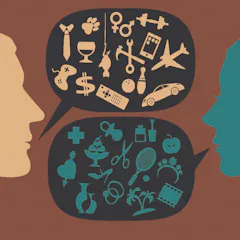
Even the Oxford English Dictionary contains traces of sexism – it’s little wonder that our translation tools do too.

Philosophers say now is the time to mull over what qualities should grant an artificially intelligent machine moral standing.
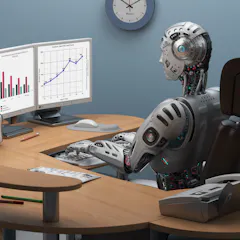
Text generators like GPT-3 can produce remarkably convincing writing, but they can’t do away with human supervision just yet.
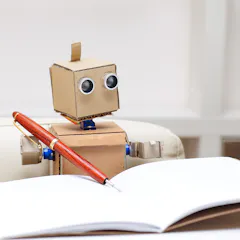
Elon Musk’s OpenAI has developed software that can produce human-like writing. Don’t mistake that for true intelligence.
Top contributors
-

Lecturer in Business Analytics, University of Sydney
-
Postdoctoral Research Associate, Centre for the Humanities and Social Change, University of Cambridge
-
Research Fellow, Centre for Urban Research, RMIT University
-
Associate Vice Chancellor Emerita, University of Tennessee
-
Professor of Cognitive Neuroscience, Massachusetts Institute of Technology (MIT)
-
Ph.D. Student in Psychology, Cornell University
-
Research Assistant Professor of Industrial & Systems Engineering, University of Southern California
-
Associate Professor of Neuroscience, Massachusetts Institute of Technology (MIT)
-
Executive Dean of the Faculty of Law, Queensland University of Technology
-
Senior Lecturer in Law and Emerging Technologies, Western Sydney University
-
PhD Candidate in Brain and Cognitive Sciences, Massachusetts Institute of Technology (MIT)
-
Senior research fellow, RMIT University
-
Professor of Cognitive Neuroscience, Bangor University
-
Professor and Director of Aston Digital Futures Institute, College of Engineering and Physical Sciences, Aston University
-
Senior Research Fellow in AI Accountability, Queensland University of Technology