
Debates about GMOs and gene-edited foods are multifaceted. There’s no evidence they’re not safe to eat, but no room for complacency either.
Articles on GMO labelling
Displaying all articles
Vermonters’ views on labels for genetically engineered foods shed light on consumers’ views, as the federal government considers mandatory labels.
Affluent consumers may have more access to information about food than lower-income earners, but they are just as vulnerable to misinformation and pseudoscience.

Companies are exploiting a knowledge gap with consumers and fears of the supposed health hazards of certain ingredients with so-called absence labels.

Insisting that science has a monopoly on the truth invalidates dissent and undermines what should be an open dialogue between science and society.
Lawmakers reach a deal on national labeling rules for foods that contain GMOs, but if passed, it won’t give consumers what research has shown consumers want.
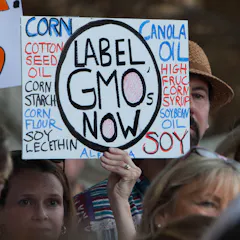
The Senate has just reached an agreement for a national system to label foods with genetically modified ingredients. What do consumers actually want from GM food labeling?
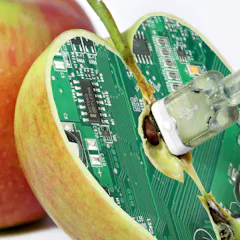
Everything from domesticated carrots to glow-in-the-dark tobacco fits somewhere on the spectrum. ‘Banning GM’ isn’t a simple yes-no decision.
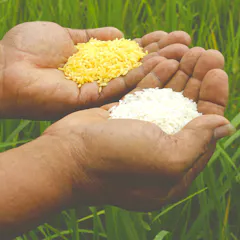
Over 20 years since GM crops reached the public consciousness, the industry has struggled to get off the ground. Had it played a better hand, it could all have been very different.

What explains the huge gap between US and European consumers on GMO foods? A short history helps explain.
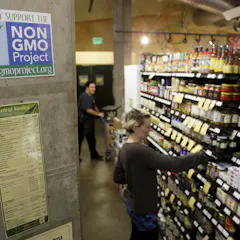
Statewide survey in Vermont finds GM food labels don’t scare consumers or indicate an inferior product. In some cases, labels built trust in the technology.
Top contributors
-

Professor and Chair Community Development and Applied Economics, University of Vermont
-
PhD researcher in Conservation Genetics, Queen Mary University of London
-
Professor for Plant Cell Biology and Biotechnology, University of Leeds
-
Professor of Public Relations, Michigan State University
-
Professor and Tyson Endowed Chair in Food Policy Economics, University of Arkansas
-
Open Evidence Research, UOC - Universitat Oberta de Catalunya
-
Fellow at Department of Environmental Studies Faculty of Social Studies, Masaryk University
-
Professor for Sustainability and Integrated Assessment, Universitat Autònoma de Barcelona
-
Assistant Professor of Science and Risk Communication, Washington State University
-
Professor of Communication, Cornell University
-
Professor & W K Kellogg Chair in Agricultural, Food and Community Ethics, Michigan State University
-
Director of AgBioResearch and Assistant Vice President of Research and Innovation, Michigan State University
-
Associate Research Scientist, Michigan State University
-
Research Fellow, Centre for Crop Science, The University of Queensland