
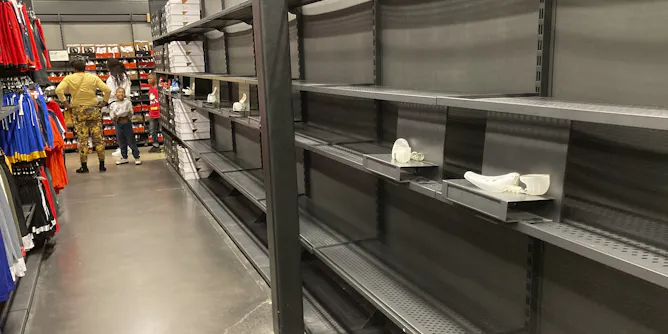
An expert on global supply chains explains why shortages of many products have persisted throughout the pandemic.
Articles on Global supply chains
Displaying 41 - 60 of 68 articles
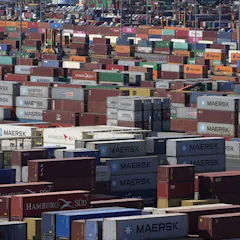
Before the container was standardized, loading and unloading goods was very labor-intensive, inefficient and costly.
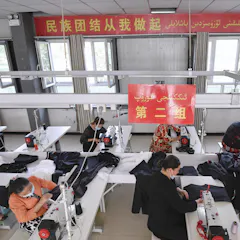
Australia’s Senate has voted to prohibit the import of goods made using forced labour. But without government support it won’t become law.

Notable events — including the COVID-19 pandemic — have revealed the weaknesses in global supply chains. Companies need to ensure the resiliency of the manufacturing and distribution systems.

Shutdowns at microchip factories, panic-buying by electronics manufacturers, and legions of workers and home-schoolers needing new devices, have put a global squeeze on the electronics market.

Skyrocketing demand coupled with shortages of vital components is leading to bottlenecks in the supply chain of Pfizer’s and other mRNA vaccines.
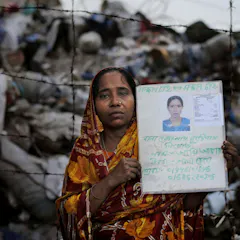
The 2013 Dhaka garment factory collapse is the clothing industry’s worst ever industrial incident. Not enough has changed for garment workers.
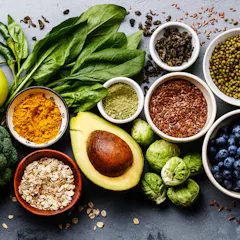
Food safety agencies have assessed the risk of acquiring COVID-19 from contaminated food or food packaging. They found that currently, there’s no evidence that the virus is a food safety risk.

How a veterinarian and a law professor joined a multidisciplinary team to help produce a made-in-Saskatchewan emergency-use ventilator during the COVID-19 pandemic.
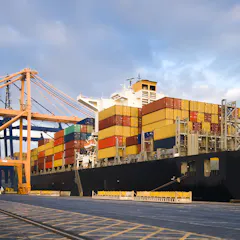
African policymakers should strenuously safeguard their right to choose from the widest possible range of technology options that suit their countries’ development needs.

The COVID-19 crisis has raised major questions about the viability of the economic, business and employment models that corporate and industry lobbyists are arguing for a return to.
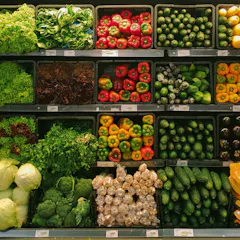
Food is essential to survival. It is also essential to identity. During times of national crisis like the coronavirus pandemic and in the historical landscape, food issues become prominent.

The rush to make personal protective equipment like facemasks and face shields using 3D printers shows that the technology can help circumvent global supply chain disruptions.
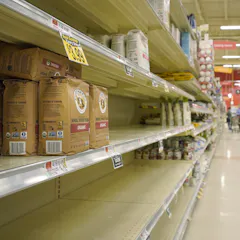
Modern supply chains have become increasingly efficient, but as a result are more susceptible to disruptions like the one caused by the coronavirus pandemic.
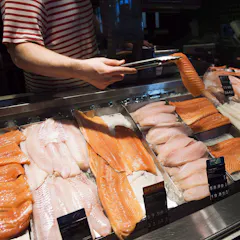
Trust in our global food supply chains remains a concern. For the foreseeable future, much of Canada’s food fraud remains hidden in plain sight, sitting right there on our grocery store shelves.

Combat modern slavery by spending your money in places that take the issue seriously.
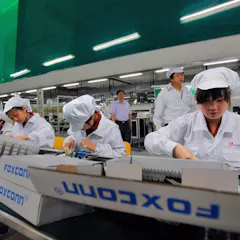
The company’s value exceeds the GDP of many countries, but Apple has human rights, ethical and environmental problems to match in its vast supply chain.
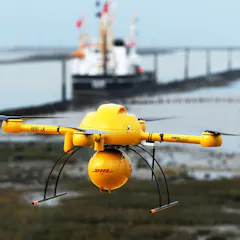
Supply-chain experts see reliable data, STEM education and smarter regulation as essential for Australia to succeed in an increasingly automated world under pressure to be environmentally sustainable.
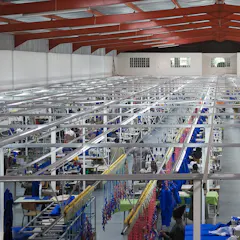
Businesses can play a major role in either facilitating modern slavery or eradicating it.
Flaws in manufacturing processes can cause chip flaws like Spectre and Meltdown – and blockchain technology may offer a solution.
Top contributors
-

Associate Professor, University of Sydney Business School, University of Sydney
-
Professor of International Relations and International Development, Department of International Relations, University of Sussex
-
Professor of International Security, School of Global Affairs, Lancaster University
-
Associate Dean, School of Business and Law, Edith Cowan University
-
Professor Emeritus, School of Labour Studies, McMaster University
-
Bernard T. Ferrari Professor of Business, Johns Hopkins University
-
Distinguished SFU Professor of Global Supply Chain Governance, Simon Fraser University
-
Distinguished Professor of Supply Chain Management, Northeastern University
-
Co-director of the NYU Center for Business and Human Rights and the Jerome Kohlberg Professor of Ethics and Finance at NYU Stern, New York University
-
Senior Research Fellow – Supply Chain Strategy, Deakin University
-
Professor, UTS Business, University of Technology Sydney
-
Professor, School of Journalism and Communication, Chinese University of Hong Kong
-
Director of Advisory Board, Centre for Risk Studies, Cambridge Judge Business School
-
Professor of Management, Farmer School of Business, Miami University
-
Professor of International Management & Sustainability, King's College London; Independent Social Research Foundation