
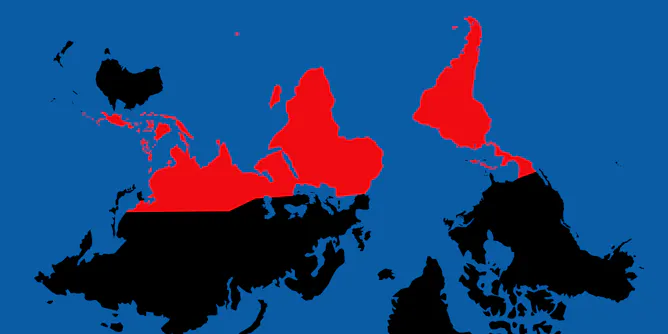
Terms like ‘Third World’ and ‘developing nations’ have long fallen out of fashion.
Articles on Global South
Displaying 61 - 80 of 145 articles
Why your understanding of who migrates (and why) might be wrong.

This week’s summit for a “New Global Financing Pact” will look to secure some much-needed climate cash for developing countries, while ensuring their debt remains manageable.
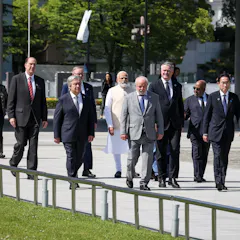
Brazil and India are among the countries pointedly not taking sides over the war in Ukraine. But this is not the nonaligned movement of yesteryear.
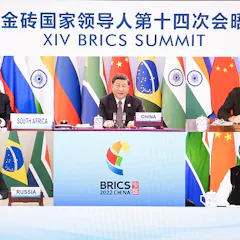
Geopolitics is forcing BRICS countries to balance respect for international law, self-determination, sovereignty and peaceful resolution of disputes with their friendly relations with Russia.
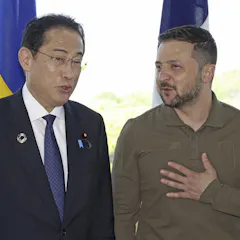
An ‘unscheduled’ visit by Ukrainian President Volodymyr Zelensky certainly raised the stakes for the summit at a critical time in the war.

We know industrial farming needs to change. But regenerative agriculture may not be the transformation our global food system needs.

The bottled water industry can undermine progress of projects aimed at creating safe-water systems for all, by redirecting attention to a less reliable, less affordable option.

In the Global South, opinions on the Ukraine war are mixed. One main reason for this: developing countries have more pressing issues to deal with.
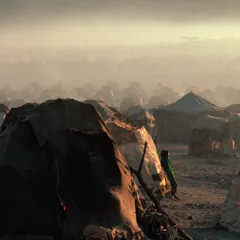
The treatment of Ukrainian refugees exposes a humanitarian double standard that has channelled vital funding away from equally deserving crises.

White saviourism is simultaneously a state of mind and a concrete unequal power structure between the Global North and the Global South.
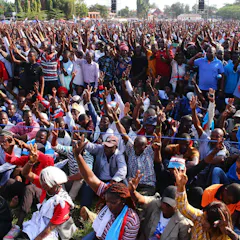
After years of censorship, opposition parties have to – all at once – rejoin public debates, reorganise and remotivate demoralised supporters.
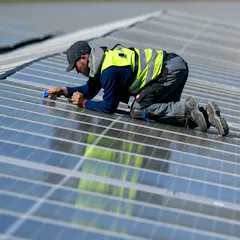
Look for significant progress in 2023 in two key areas, writes a veteran of international climate policy.

In order to meet its 2030 biodiversity targets, Canada is heavily relying on Indigenous Protected and Conserved Areas, which could do more harm than good for First Nations, Inuit and Métis.

Black Panther and its sequel are more than just good movies: they can be used as teaching tools.

Child sponsorship is often billed as a significant way of improving children’s lives. However, sponsorship is based on narratives that fail to address the role of rich countries in global poverty.
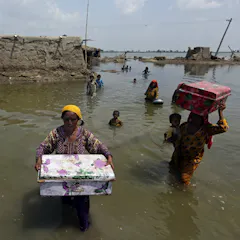
Does the Global North have a moral responsibility to protect and compensate those in the Global South that disproportionately bear the brunt of climate change devastation?

China is seen as Africa’s saviour and friend in the film - which is still full of racist stereotypes.

Armed conflicts today involve slavery in many different forms, from forced marriage to child soldiers.
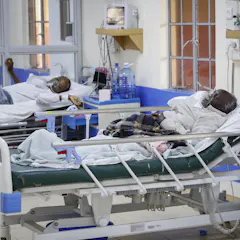
A major lesson from the COVID-19 pandemic is the need to decolonize transnational governance so that the world is better able to handle both future and current global crises.
Top contributors
-

Outgoing Interim Director of the Frederick S. Pardee Center for the Study of the Longer-Range Future, Boston University
-
Professor of International Relations and Political Science, St. Thomas University (Canada)
-
Pro Vice-Chancellor, Climate, Sustainability and Inequality and Director, Southern Centre for Inequality Studies, University of the Witwatersrand
-
Professor of Religious Studies, College of the Holy Cross
-
Professor/Senior Research Fellow, Centre for Advancement of Scholarship, University of Pretoria
-
Senior researcher, Agence Française de Développement (AFD)
-
Senior Lecturer in Urban Development & Transformation, University of Manchester
-
Associate Professor of Innovation Finance, Faculty of Business, Athabasca University
-
Extraordinary Professor, Department of Political Sciences, University of Pretoria
-
Professor of the Politics of Development, University of Oxford
-
Senior Fellow, Centre for Policy Research (UNU-CPR), United Nations University; Aston University
-
Lecturer - National Security College, Australian National University
-
Professor of Social Development Studies, University of Johannesburg
-
Professor emeritus of Sociology, University of Cambridge
-
Head of Politics, Sheffield Hallam University