

The exclusion of scholars based in the global South undermines their work.
Articles on Global South
Displaying 121 - 140 of 145 articles
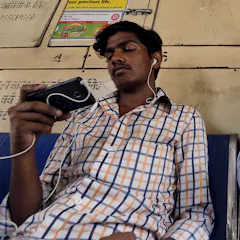
Three trends suggest people in less developed nations – who are coming online in greater numbers – use and trust the internet very differently those in more developed economies.
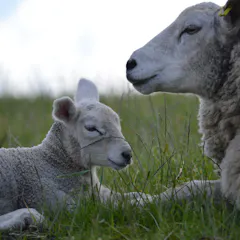
While the commitment of vegan businesses to animal well-being is laudable, is that where their ethical commitments stop? Are they reproducing bare-minimum labour standards, or aiming higher?

The movement against globalisation has shifted from developing to developed countries.
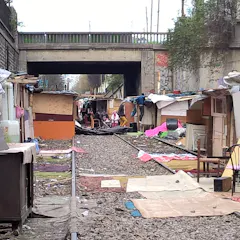
Slums are an increasing common phenomenon across the global North and global South. To what extent could they be seen as an inherent part of the urbanisation process?
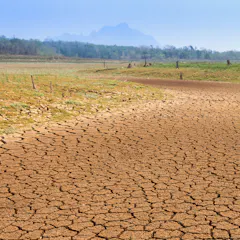
The Trump administration withdrew from the Paris Agreement. But U.S. cities and states are supporting climate change efforts in the developing world regardless.
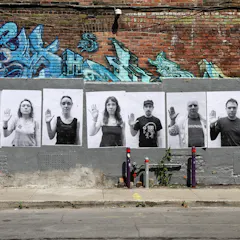
Humankind has today reached a historical peak in developing its strengths. It should use it to create a human community of nations inclusive on all fronts : scholars can help.

The world’s population has reached 8 billion and is expected to climb to nearly 10 billion by 2050. Why will population growth inevitably continue? Should we try to reduce or stop this growth?
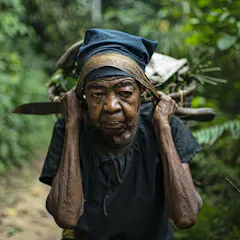
Leaving no-one behind is a catchphrase that seeks to ensure that all people benefit from the global development agenda set in the sustainable development goals.
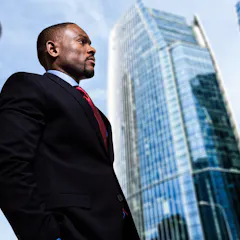
The middle class concept in Africa has remained vague and limited to number crunching. The minimum threshold for entering it in monetary terms was critically vulnerable to a setback into poverty.

This is what neo-colonialism looks like in the 21st century.
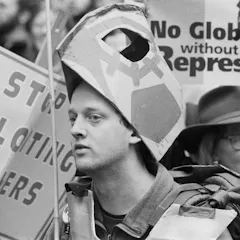
As the world pulls up its drawbridges, it’s time to revive the ideas of a remarkable and unfairly derided movement.

It’s important to create spaces where the global South’s problems can be presented, debated and solutions developed - including some that can be applied in similar economies.

Knowledge is power. If you own it, you can control those without it. Since so much knowledge about Africa doesn’t sit on the continent, it’s apparent that Africa lacks power in this regard.
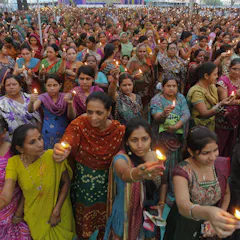
Racial violence has its parallels in other forms of violence in India. The prejudice runs across multiple channels from caste, region, religion to gender.

Seasons, stars, settler colonialism: the nations of the south – Australia, Argentina and South Africa – have much in common. And the 2003 Nobel laureate for literature, JM Coetzee, is helping reframe Australian writing within this southern context.
Africa’s universities must avoid collaborative programmes with the North that become mere tick-box exercises that only benefit Northern researchers and organisations.

Art events should encourage us to spark new thinking outside of our cloistered world, but Berlin risks being lost in technological navel gazing.
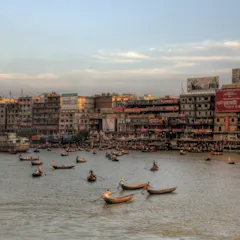
Bringing significant benefits to an emergent middle class, Dhaka’s cultural, economic, environmental and political landscapes are being rapidly but unevenly transformed.
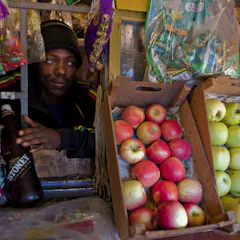
Some economists have touted the rising middle class as a panacea for Africa’s challenges. But a more realistic diagnosis of what makes up a middle class is needed.
Top contributors
-

Outgoing Interim Director of the Frederick S. Pardee Center for the Study of the Longer-Range Future, Boston University
-
Professor of International Relations and Political Science, St. Thomas University (Canada)
-
Pro Vice-Chancellor, Climate, Sustainability and Inequality and Director, Southern Centre for Inequality Studies, University of the Witwatersrand
-
Professor of Religious Studies, College of the Holy Cross
-
Professor/Senior Research Fellow, Centre for Advancement of Scholarship, University of Pretoria
-
Senior researcher, Agence Française de Développement (AFD)
-
Senior Lecturer in Urban Development & Transformation, University of Manchester
-
Associate Professor of Innovation Finance, Faculty of Business, Athabasca University
-
Extraordinary Professor, Department of Political Sciences, University of Pretoria
-
Professor of the Politics of Development, University of Oxford
-
Senior Fellow, Centre for Policy Research (UNU-CPR), United Nations University; Aston University
-
Lecturer - National Security College, Australian National University
-
Professor of Social Development Studies, University of Johannesburg
-
Professor emeritus of Sociology, University of Cambridge
-
Head of Politics, Sheffield Hallam University