

Tech is having a big effect on bond markets.
Articles on Global economy
Displaying 1 - 20 of 201 articles
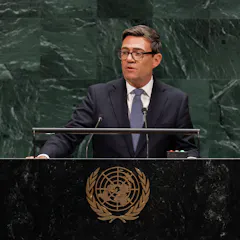
It signals a departure from the approach of the Starmer government.

It’s still more about ‘leave v remain’, rather than Britain’s place in a changing Europe

An economist weighs up some of the options that were left on the table.

Iran’s contribution to the global economy is not centred merely on oil, as the war has shown.

This week’s summit has revived a 20-year-old idea of the ‘Group of Two’ superpowers working together with global benefits. But we’re now living in a different world.

And a US blockade of the strait of Hormuz is unlikely to ease the situation.

The Iranian government uses the threat of sea mines to control access to the Strait of Hormuz, a narrow sea lane that is vital to the global economy.
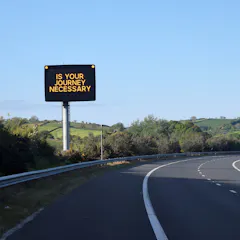
The world could be facing an unprecedented energy shock if oil supplies remain choked.

A small but powerful group of people do very well out of war.
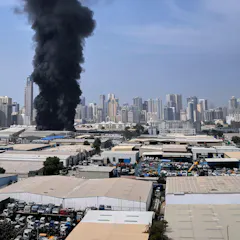
Sunshine and stability were major marketing tools.

The Strait of Hormuz is one of the world’s most important economic chokepoints, and it has just been closed off by the conflict in Iran.
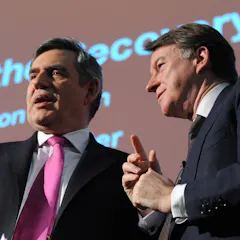
The 2008 financial crisis set in train many of the issues the world still struggles with today.
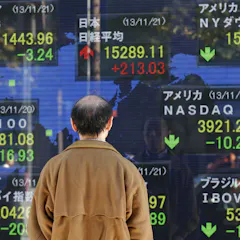
New research adds evidence to a common thesis offered after the end of the Cold War that globalization was making physical distance economically obsolete.

Businesses have been making short-term adjustments to absorb tariff shocks – it’s not an approach that can last forever.
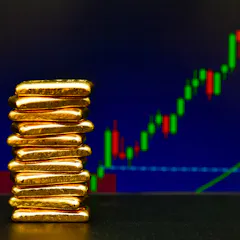
Global political turmoil has fed into the dramatic price swings.
It’s all about confidence (or the lack of it).

Consumers and companies need help engaging in reuse, repair and other circular practices, which have environmental and economic benefits.
The president wants to see low interest rates to boost economic activity – but a spending spree could leave Americans facing runaway prices.
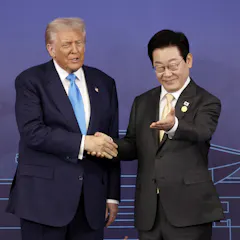
Middle power states are selectively granting and restricting access to their economic strengths to reshape markets and security relationships.
Top contributors
-

Distinguished Professor, Arthur J. Gosnell Professor of Economics, & Head, Department of Sustainability, Rochester Institute of Technology
-
Senior Lecturer in Economics | Freelance Consultant, Sheffield Hallam University
-
Dean of Business School, University of Southern Queensland
-
Scientia Professor of Economics, UNSW
-
Honorary Research Fellow, City Political Economy Research Centre, City St George's, University of London
-
Doctoral Researcher in Economic History, Lund University
-
Emeritus Professor of Finance, The University of Melbourne
-
Professor of Economics, Griffith University
-
Assistant Professor of Economics, University of California, Merced
-
Lecturer East Asian and International Political Economy, University of Bristol
-
Professor of Chinese Economic History (Emeritus), University of Nottingham
-
Senior Economist, IMD World Competitiveness Center, International Institute for Management Development (IMD)
-
Tony Walker AM is a Friend of The Conversation.
Director, La Trobe University
-
Visiting Faculty in Economics, Emory University
-
Professor of Political Economy, University of Sheffield