
The Fed’s recent rate hikes are contributing to higher prices and growing recession risks around the world, yet there are good reasons why the US central bank has to keep its focus domestic.
Articles on Global economy
Displaying 61 - 80 of 201 articles

The greenback is at its heftiest since 2002 and still rising fast.
A less inclusive approach may be the most practical.

We are at a dangerous tipping point in ‘inflationary psychology’, says the central bank for the world’s central banks.

What can China do to resolve a crisis that threatens not only the health and security of its people and economy, but the future of Chinese Communist Party and its leader Xi Jinping?
Opportunities for social mobility, rather than simply economic incentives, have generated emigration from China to countries like Ghana.
Ukraine was becoming increasingly linked with the global economy. Russia’s invasion puts its progress at risk.
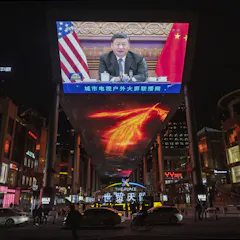
In the past, the lack of a succession plan for China has led to political unrest in the country. If it happens again, it will also affect the world.

The threat of COVID may be receding, but the fall-out will continue to affect business in the coming year, requiring strong leadership to navigate uncertain times.
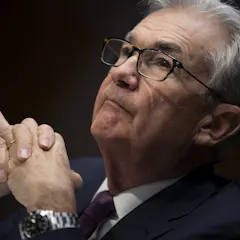
The economy doesn’t have a real inflation problem, and not recognising the difference is the biggest danger.
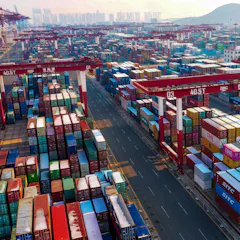
Large-scale job losses in the US due to trade with China will lead to enduring demographic and political aftershocks without the implementation of policies that promote widespread job growth.
Will we now see a proper pandemic recovery?
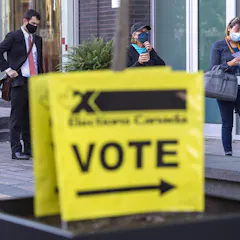
International relations, elections, climate change policies and the continuing pandemic are some of the political events to keep an eye out for in the upcoming year.
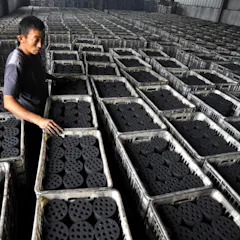
Xi Jinping has been talking tough on decarbonising China, but blinked after an energy crisis threatened to derail the world economy.

The fall-out from Evergrande’s problems will be widely felt.
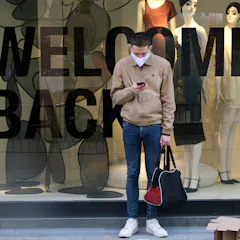
Some national economies will return to their pre-COVID levels this year, others not until 2025. What does this imbalance mean for the global economy?
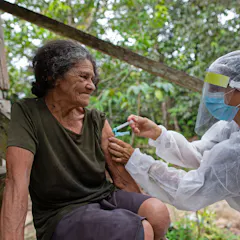
The world’s most advanced economies will incur half the total costs associated with a failure to vaccinate poorer nations, which could exceed $4 trillion if only half their citizens are inoculated.
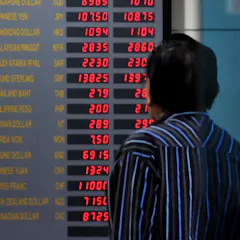
The agreement marks a key milestone in strengthening bilateral financial cooperation between the world’s largest exporter, China, and Southeast Asia’s largest economy, Indonesia.

Coronavirus has shown how damaging ill-health can be for the economy, and poor diet is the world’s leading cause of ill-health.
With half the global workforce facing job loss, massive stimulus packages are needed to revive emerging economies and reduce mass unemployment, poverty and starvation.
Top contributors
-

Distinguished Professor, Arthur J. Gosnell Professor of Economics, & Head, Department of Sustainability, Rochester Institute of Technology
-
Senior Lecturer in Economics | Freelance Consultant, Sheffield Hallam University
-
Dean of Business School, University of Southern Queensland
-
Scientia Professor of Economics, UNSW
-
Honorary Research Fellow, City Political Economy Research Centre, City St George's, University of London
-
Doctoral Researcher in Economic History, Lund University
-
Emeritus Professor of Finance, The University of Melbourne
-
Professor of Economics, Griffith University
-
Assistant Professor of Economics, University of California, Merced
-
Lecturer East Asian and International Political Economy, University of Bristol
-
Professor of Chinese Economic History (Emeritus), University of Nottingham
-
Senior Economist, IMD World Competitiveness Center, International Institute for Management Development (IMD)
-
Tony Walker AM is a Friend of The Conversation.
Director, La Trobe University
-
Visiting Faculty in Economics, Emory University
-
Professor of Political Economy, University of Sheffield