
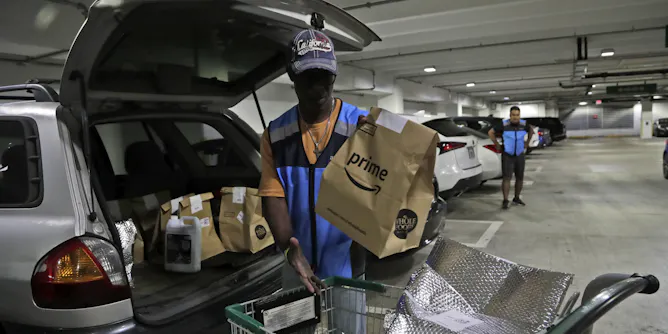
Delivery workers and others who ensure most people don’t have to go outside for essential goods are creating what economic theorists call an uncompensated ‘positive externality.’
Articles on Gig workers
Displaying 61 - 80 of 80 articles
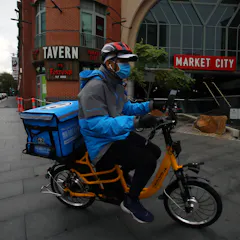
Food delivery workers are now essential workers. But they’re still not treated as employees.
A scholar of the American safety net explains how, through her own brother, she’s getting a personal window into what it means to face COVID-19 as a worker in the gig economy.

If government and business collaborate with workers, a scholar of labor relations writes, current economic problems could get less severe, the recovery smoother and lasting prosperity more likely.

We need to see uberisation in the context of all forms of precarious and insecure work becoming more acceptable.

Three federal public policy changes impacting employed and contingent workers could significantly buffer anticipated impacts of automation, Artificial Intelligence and a changing economy.

A growing number of jobs are becoming less stable, with fewer benefits and stagnating wages. This is taking a significant toll on the psychological health of workers.

Many Uber drivers do their job because the alternatives are worse. It’s an unhappy work choice faced by an increasing number of Australians.
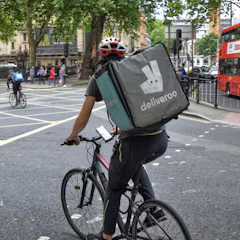
The tensions between platforms and their workers can be better understood by studying the mutual expectations of both parties.

Most workers are still employees, not casuals or gig workers. So what has changed to increase the insecurity of workers?
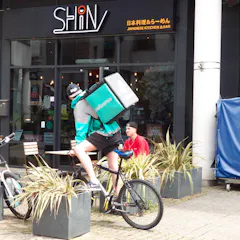
Many vulnerable workers aren’t covered for work-related injuries and illness. Employment law is largely a federal matter while compensation schemes are state-run, but there’s a way to fix the problem.

The Pakistani women who make the majority of the world’s high-quality soccer balls belong to one of the most vulnerable groups in the global economy.

It isn’t easy, but musicians build ‘portfolio careers’ by being adaptable, multiskilled and willing to learn, so they can pursue creative work that they believe in.
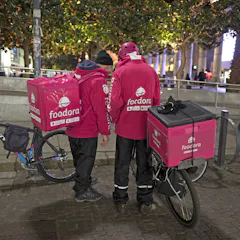
That the Fair Work Ombudsman brought a case against Foodora suggests its workers are most likely to be classified as employees. This could dissuade other platforms from offering similar benefits.

The California Supreme Court made it harder to classify workers as independent contractors. But it’s not quite the ‘game changer’ some observers claim it to be.

While disability carers are employed to work part-time hours, they often have long work days with short periods of work interspersed with non-work periods.
The Taylor Review and the subsequent UK government’s response do a bad job of proposing solutions.

Many gig workers are classified as independent contractors, leaving them without minimum wages and other workplace protections. Creating a new category of worker could fix that.
With more Australian workers joining the gig economy, questions about how these workers will fare in their retirement are becoming more pressing.
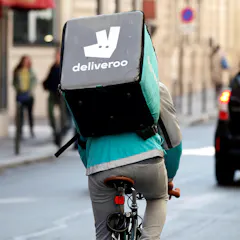
Whether or not food delivery workers feel exploited is irrelevant, because they have few other options.
Top contributors
-

Senior Lecturer, Management and Organisations, The University of Western Australia
-
Associate professor, University of Sydney
-
Senior Lecturer, Management and Organisations, UWA Business School, The University of Western Australia
-
Laurie Carmichael Distinguished Research Fellow at the Centre for Future Work, Melbourne; and Professor Emeritus, Griffith Business School, Griffith University
-
Associate professor, Human Resources & Management, McMaster University
-
Michael and Susan Jandernoa Professor of Management and Organizations, University of Michigan
-
Associate Professor of Entrepreneurship and Organization, L’Université d’Ottawa/University of Ottawa
-
Associate Professor of HR and Management, McMaster University
-
PhD candidate, Industrial Relations and Human Resources, University of Toronto
-
Professor of Sociology, Boston College
-
Associate Professor UTS Centre for Business and Social Innovation, University of Technology Sydney
-
Assistant Professor of Business Administration, University of Manitoba
-
Senior lecturer, University of the Witwatersrand
-
Associate Professor of Management, University of North Carolina – Greensboro
-
Canada Excellence Research Chair in Migration and Integration, Toronto Metropolitan University