
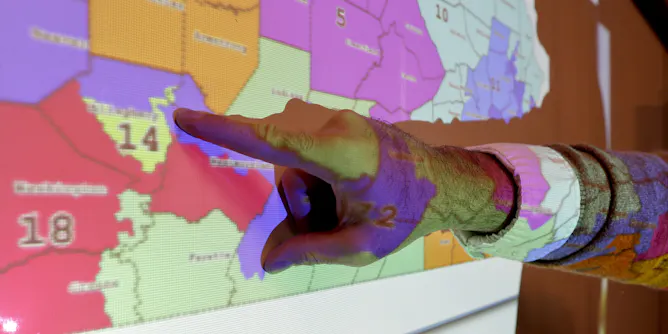
When voters in November pick among the candidates for state legislatures, they are choosing the people who will make the new electoral maps for congressional elections.
Articles on Gerrymandering
Displaying 41 - 60 of 72 articles

When the organization of a social network impacts political discussion on a large scale, the consequences can be enormous.
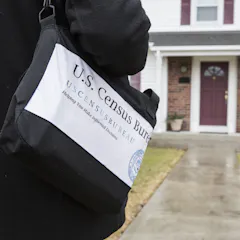
The 2020 census and congressional apportionment have dominated the headlines in recent months. What could it all mean for the average American voter?

Conflict made its way to the Supreme Court this past session with two cases – one about the census, the other about gerrymandering. A court scholar says the two cases are intimately connected.
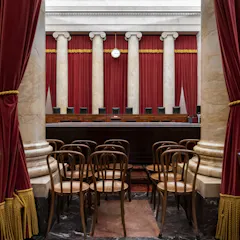
The Supreme Court has issued what’s likely to be its final word on partisan gerrymandering, saying it’s a political issue, not a legal one. That means reform lies in the hands of voters.
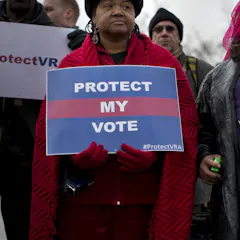
When no one in Mississippi wins a majority of votes in an election, the legislature chooses the winner. This has led to white men winning over and over.
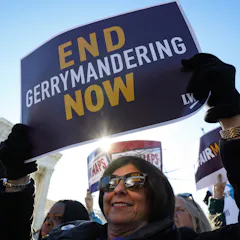
The US public is more aware than ever of partisan gerrymandering, and they’re pushing local governments to make reforms.
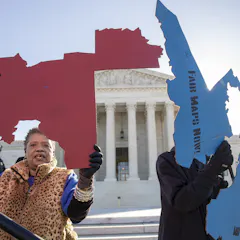
Supreme Court justices have previously called statistical methods of measuring partisan gerrymandering ‘sociological gobbledygook’ and ‘a bunch of baloney.’

The majority of US state legislatures are controlled by Republicans because legislative districts are drawn to favor them. Voters are catching on, but change will be slow.
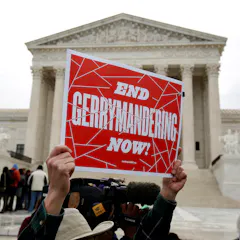
Many states are arguing over how to draw district lines. But drawing legislative district lines is an exercise in tradeoffs.

Record high Latino participation shows this growing voter segment will turn out for parties and politicians who tackle issues they care about. That’s a big lesson for 2020 – and not just for Dems.
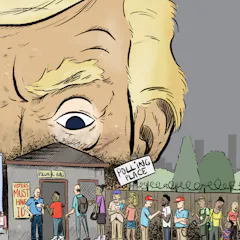
The Democrats are favoured to win control of the US House, but it may be closer than expected.
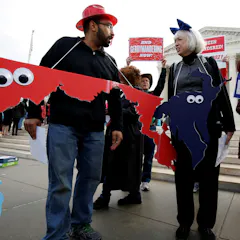
One of the main reasons polarization in the US is on the rise – the way congressional seats are drawn to favor parties – isn’t going away anytime soon.
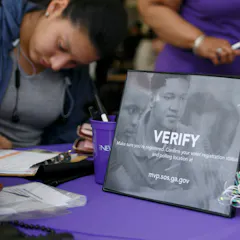
Georgia’s secretary of state has stalled voter registrations and accused Democrats of hacking. His tactics recall past efforts in the South to suppress black votes, from poll taxes to literacy tests
Doug Ford is invoking the province’s broad powers over municipalities in a manner that tramples on fundamental principles of fairness, reasonable notice and the right to effective representation.
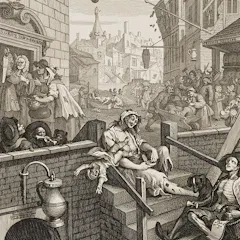
When the U.S. broke away from the “mother country,” the dream was to let the common good overruled selfish and private interests. Yet the federal government is arranged so this can never occur.

Many observers had hoped that the court’s decision on Gill v. Whitford would provide some clarity on whether gerrymandering is constitutional.

Malaysian voters tossed the corrupt Najib Razak out of office despite efforts by his party to sway the result. A former dictator is back in charge, about to free his onetime political foe from jail.

Judges in North Carolina just threw out the state’s congressional district map. The decision could have major implications for the future of partisan gerrymandering across the US.
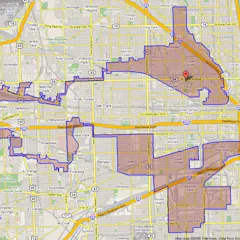
Gerrymandered districts are under fire across the US. But a weird district shape isn’t necessarily a bad one.
Top contributors
-

Professor of Law, University of Richmond
-
Associate Professor of Political Science, Boise State University
-
Professor of American Civics, University of Tennessee
-
Associate Professor of Political Science, Binghamton University, State University of New York
-
Associate Professor of Political Science, College of Charleston
-
John Rennie Short is a Friend of The Conversation.
Professor Emeritus of Public Policy, University of Maryland, Baltimore County
-
Professor Emeritus of Political Science, Indiana University
-
Professor of Law, Wayne State University
-
Associate Professor of Political Science, University of Dayton
-
Professor of Political Science and Public Administration, Kutztown University of Pennsylvania
-
Professor of Political Science, Coastal Carolina University
-
Professor of Political Science, University of California, Irvine
-
Vice Provost for Graduate Studies and Dean of the Graduate Division, Professor of Education, University of California, Berkeley
-
Associate Professor of Mathematics and Senior Fellow of Tisch College of Civic Life, Tufts University
-
Managing Director of the McCourtney Institute of Democracy, Associate Research Professor, Political Science, Co-host of Democracy Works Podcast, Penn State