
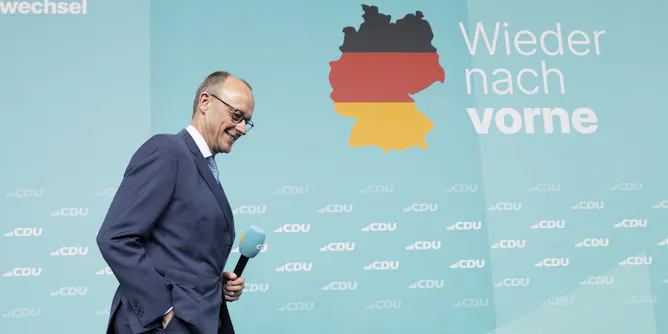
Friedrich Merz has expressed a desire to ‘strengthen Europe as quickly as possible’ in the face of a growing rift between EU countries and the Trump administration.
Articles on German elections
Displaying all articles

In a blow to the Albanese government, the latest polling has the two-party preferred gap widening, and Labor headed for defeat.
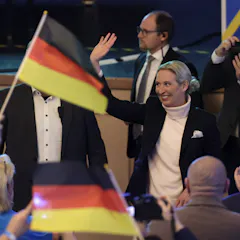
Until recently, the far right was consistently excluded by mainstream political parties.
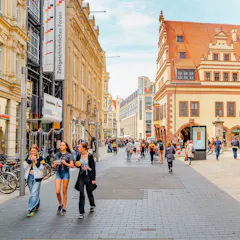
High energy prices, a weak labour force and low productivity growth are behind the ailing German economy – and voters are feeling the pinch.

Who will be chancellor and will the AfD enter government?
Results from NewsPoll, Morgan, YouGov and RedBridge all put the Coalition ahead.
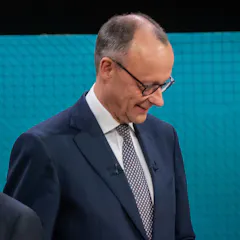
At the centre of the immigration debate is the notion of “welfare magnetism”: the idea that migrants are drawn to Germany by its generous welfare system.
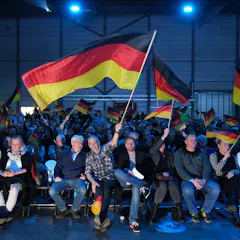
Spatial mapping shows votes for the AfD are concentrated in the east and in the most rural areas, while university towns turn away.

Rolf Frankenberger, an expert on right-wing extremism in Germany, talks to The Conversation Weekly about what kind of Germany the AFD wants to return to.
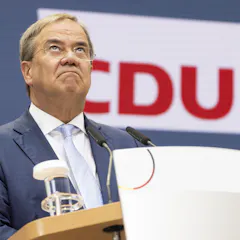
A look behind the long-term trends following the surprise victory for social democrats in Germany.

Plus, the health benefits of saunas and hot baths, particularly after exercise. Listen to The Conversation Weekly podcast.

Following the German election, all of the country’s major party leaders agreed that Germany needs to move forward. But if the electorate had had its way, it would have re-elected Angela Merkel.
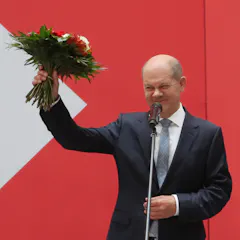
After beating the formerly biggest party to top the poll, the social democrats will enter complex coalition talks with potential partners, including the Greens and the liberal FDP.
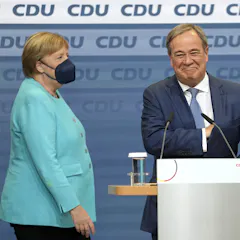
With a very close result as counting continues, it could be weeks or even months before a government is formed. But Sunday’s election has already delivered some significant results.

Germany’s imminent election may seem far away, but in an inter-connected world threatened by political and climate instability, the outcome will affect New Zealand in significant ways.

Grand coalitions and fragile alliances have become standard procedure in the Bundestag.
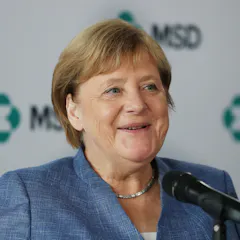
There is no clear frontrunner to replace Merkel as next German chancellor after this weekend’s election, but whoever succeeds her will have huge shoes to fill.
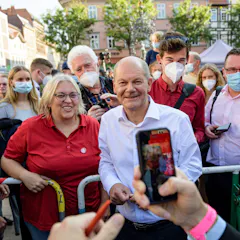
After a rocky start, the social democrats are on the up as polling day approaches.
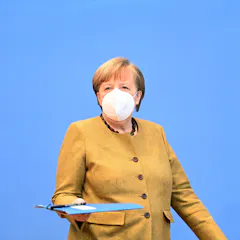
As her 16-year reign as German Chancellor comes to an end, Merkel will be remembered for her staunch centrism and her willingness to wait to sense the political mood - sometimes then changing course.
Top contributors
-

Managing Director Research, Institute for Research on Far-Right Extremism (IRex), University of Tübingen
-
Reader in Politics, Co-Director, Aston Centre for Europe, Aston University
-
Election Analyst (Psephologist) at The Conversation; and Honorary Associate, School of Mathematics and Statistics, The University of Melbourne
-
Professor at the School of Political Science, Diego Portales University
-
Professor. ADVCA, Academic, Federation University Australia
-
Senior Lecturer in Global Studies, Social Science & Planning, RMIT University
-
Professor of German Studies / Chair, Department of Germanic and Slavic Studies / Director, Waterloo Centre for German Studies, University of Waterloo
-
Lecturer in German Politics and Society, University of Bath
-
Visiting Professor for German Studies, University of Washington
-
Professor in International History, Flinders University
-
PhD Candidate, Centre for Sport, Exercise and Life Sciences, Coventry University
-
Professor for Political Science, Bundeswehr University Munich
-
Senior research associate, University of East Anglia
-
Host, Know Your Place podcast, The Conversation
-
Research Officer of Comparative Public Policy, University of Tübingen