
Even though young leaders and old leaders may have different approaches, one isn’t necessarily better than the other. But in order to succeed, a leader better be able to bridge generational divides.
Articles on Generations
Displaying 41 - 60 of 72 articles

Baby boomers didn’t all benefit from free education, and not all millennials are struggling to buy a home.

“Millennial snowflakes” are derided as weak and sensitive but this nastiness is patently false and actively harms progress on tackling mental health.
Over the past 20 years, the number of American households that have grandparents, their kids and their grandkids living under the same roof has nearly doubled.

Over the course of two years, a sociologist studied a group of affluent, white kids to see how they made sense of sensitive racial issues like privilege, unequal opportunity and police violence.

In 1980, 60 percent of 12th graders said they read a book, newspaper or magazine every day for pleasure. By 2016, only 16 percent did.

New research shows childhood in Europe lasts on average until age 25, while old age starts at 60.
Over the last 50 years, Americans have steadily gotten older, more bicoastal and less likely to move to a new city.
Recent news reports suggest that the US is experiencing a loneliness epidemic. But the research is a bit more complicated.
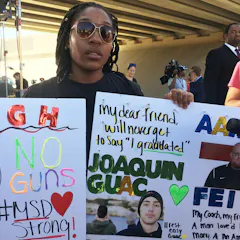
After Columbine, teens weren’t taking to the streets to call for more gun regulations. So what’s changed?
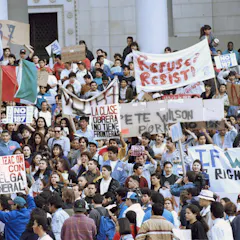
In the 1990s, older Californians struggled to make way for a younger, more diverse generation. Here’s how that ‘racial generation gap’ transformed the state – and what it means for the rest of the US.
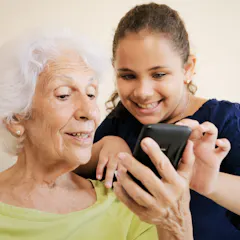
Older relatives often object to younger people using their smartphones and tablets during family gatherings. But digital devices can connect distant relatives year-round.

According to a new analysis, the number of US teens who felt “useless” and “joyless” grew 33 percent between 2010 and 2015, and there was a 23 percent increase in suicide attempts.
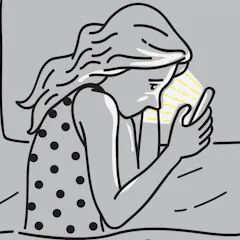
The amount of time teens have spent working and participating in extracurricular activities has held steady in recent years. There has, however, been one big change in their lives: smartphones.

Should parents be worried that many teens are putting off traditional rites of passage like working, driving and dating?
Move over millennials, there’s a new generation in town. Dubbed ‘iGen,’ they differ from their predecessors on a range of measures, from mental health to time spent with friends.
The “Xennials” are supposedly a group born between the late 1970s and early 1980s, who were born analogue and became digital adults. But the evidence for their existence isn’t as clear-cut as we might hope.

The anxiety that young people are messing things up goes back centuries.
How has the first generation of kids to grow up with the iPhone been affected?

It’s become fashionable to suggest that generational designations are arbitrary or a ‘myth.’ But social scientists can pinpoint generational and cultural changes with a surprising degree of accuracy.
Top contributors
-

Professor of Psychology, San Diego State University
-
Lecturer in Government, Jeff Bleich Centre for Democracy and Disruptive Technologies, Flinders University
-
Professor of Sociology, School of Social Sciences, Monash University
-
Professor of Management, Farmer School of Business, Miami University
-
Senior Lecturer, University of Sydney
-
Professor of History, Monash University
-
Professor of Political Economy and Public Policy, Chair at Danish Institute for Advanced Study, University of Southern Denmark
-
Senior Lecturer in Mental Health and Wellbeing, Edge Hill University
-
Distinguished Professor of Sociology and American Studies & Ethnicity, USC Dornsife College of Letters, Arts and Sciences
-
Professor of Environment, University of York
-
Professiorial Fellow, The University of Melbourne
-
Distinguished Professor in School of Global, Urban and Social Studies, RMIT University
-
Prof of Health Sciences, University of York
-
Professor, City Futures Research Centre, UNSW
-
TR Ashworth Professor in Sociology, The University of Melbourne