
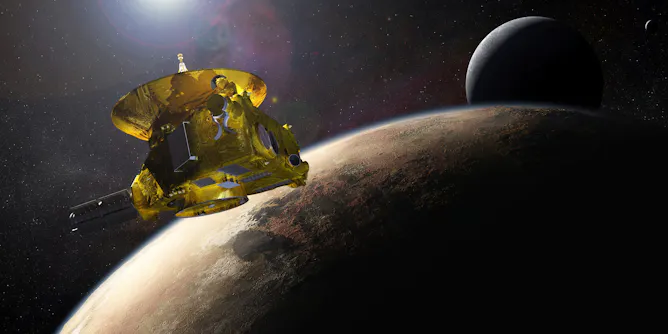
2015 was a year where we expanded our view of the universe, embraced new technologies and got a hint of the profound changes to come.
Articles on General relativity centenary
Displaying all articles
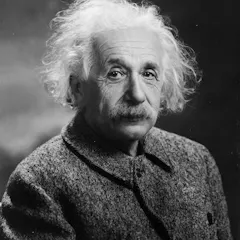
After the triumph of general relativity, Albert Einstein spent the rest of his life chasing a unified theory, which eluded him right up until the end.

Many people think relativity puts a hard speed limit on the universe, but it actually opens up the possibility of faster-than-light travel - if we can overcome some significant practical hurdles.
Einstein’s theory of general relativity is a triumph of reason and imagination, of art and science, with a profound beauty of its own.
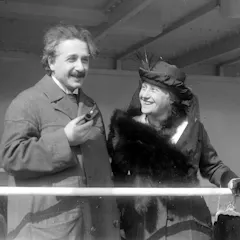
Space, time and space-time: it’s all relative.

General relativity challenges our intuitive conception of how space and time work, which might explain why it’s such a popular target for crank theorists.
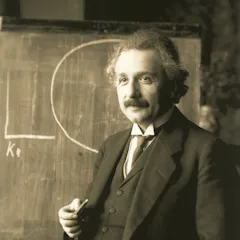
Special relativity was inspired, but it took true genius to conceive of general relativity. Had Einstein not come up with it, it may have taken decades for us to figure it out.

We talk about mass all the time but what is it that actually gives an object mass? And why do some things have mass and others have no mass at all?

This month is the centenary of the general theory of relativity. But how did we get from the absolutism of Newton to the relativity of Einstein?
Top contributors
-

Associate Professor in Physics, Monash University
-
Vice-Chancellor’s Fellow in Science Communication, The University of Melbourne
-
Senior Lecturer in Astronomy & Astrophysics, Coordinator of Swinburne Astronomy Online, Swinburne University of Technology
-
Co-Founder of BQI@UNSW and PhD Student, UNSW
-
Professor of Astrophysics, University of Cambridge
-
Cosmologist, University of Tasmania
-
Associate Professor in Astronomy, Monash University
-
Professor of Astrophysics, University of Sydney
-
Professor Emeritus of Physics, Lancaster University