
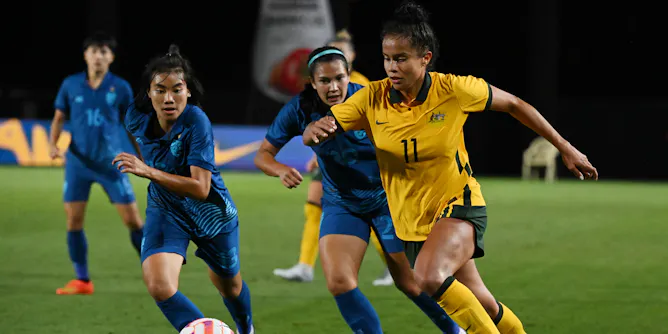
Sport and exercise psychology research studies – which inform the strategies athletes use to reach peak performance – have predominantly used male participants.
Articles on Gender bias in academia
Displaying 1 - 20 of 23 articles

Comparing students’ comments on their teachers in in-person classes in 2019 and online classes in 2020, the one difference that stands out is the increase in bias against female lecturers.

The proportion of women in a discipline influences how rigorous and trustworthy people rate the field overall, as well as whether they categorize a STEM field as a ‘hard’ or ‘soft’ science.

New study finds that workplace hostility toward motherhood in STEM fields can deter even young, childless women from pursuing academic careers.

For decades, scientists believed that only male birds sang. Then women entered the field and showed what their predecessors had missed.

The student loans system is just another source of financial gender inequality.

Women face a number of socio-economic challenges that make it harder for them to access higher education.

There are at least eight different ways to view gender equality. And this helps us understand why one of the biggest challenges for workplace gender equality is defining and measuring success.
Gender biases are revealed in enrolment inequalities and policies that favour male students.

Women are underrepresented in academic science. New research finds the problem is even worse in terms of who authors high-profile journal articles – bad news for women’s career advancement.

Women in science receive less funding than men and apply for smaller grants. This inequality needs to be addressed now.

It took 80 years for a woman to be awarded the highest prize in mathematics, the Fields Medal.
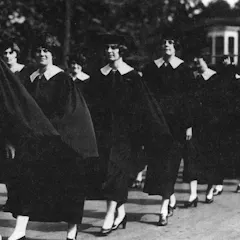
This Tuesday, March 8, is International Women’s Day. Gender biases continue and women’s voices are missing from expert discussions.
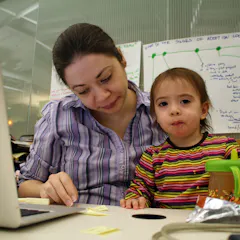
The limits of fertility and an elongated academic career path are currently at odds. If the choice to bear children contributes to the ‘leaky pipeline’ of women in STEM, what can be done?

Previous research found a preference in academia for hiring stellar female candidates over stellar male candidates for STEM jobs. A new study investigated what happens if applicants aren’t as evenly matched.
Men are harsher critics of research that reports evidence of gender bias in STEM fields, while women find it more compelling. How can we deal with the reality when we’re biased about bias?

Being underrepresented in science, technology, engineering and math means women can be made to feel they don’t belong, with long-term mental health consequences.

There is more equality for women winning social research grants, but men still get more overall.

While gender inequality is a pervasive problem in academia, there is a home in universities for women right now. Here’s how to make it a happy one.

Sexism still exists in science, but a recent scandal shows that progress is being made.
Top contributors
-

Ph.D. Candidate in Psychology, Northwestern University
-
Evolutionary Biologist, ARC Future Fellow, UNSW
-
Senior Research Fellow in Global Health, University of Southampton
-
Professor of Human Development, Cornell University
-
Senior Research Fellow in Nursing, University of Leicester
-
Postgraduate student in History and Philosophy of Science, The University of Melbourne
-
Professor of Human Development, Cornell University
-
Professor of Healthcare Evaluation Research, University of Leicester
-
Professor of Psychology, University of Washington
-
Ph.D Candidate in Psychology, University of Washington
-
Associate Professor of Political Science, University of Kentucky
-
Lecturer, Department of Educational Foundations, coordinator PGDE and Content Enhancement Programs, Kenyatta University
-
Whitehead Lecturer at the Mathematical Institute and Supernumerary Fellow at Balliol College, University of Oxford
-
Assistant Professor of Political Communication, Louisiana State University
-
Chair, Vice-Chancellor, Swansea University