
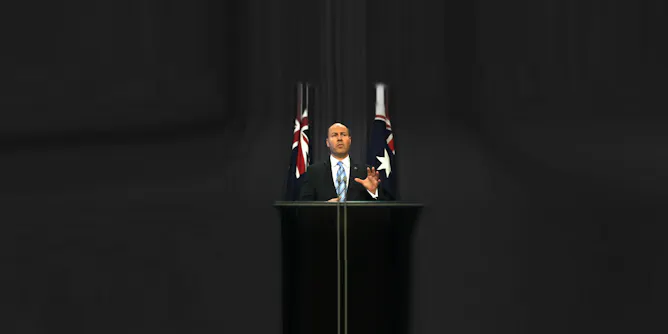
Spending growth has fallen to financial crisis lows. Per person, economic growth and spending has gone backwards. Josh Frydenberg isn’t ruling out action in the pre-Christmas budget update.
Articles on GDP
Displaying 161 - 180 of 346 articles

Societies have much to learn from the pursuit of happiness on an individual level.
A fairer, greener and more prosperous Australia is possible – so long as political leaders don’t focus just on economic growth.
William Nordhaus’ predictions of what the climate crisis will cost the earth are dangerously at odds with climate science.
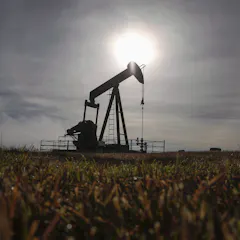
In the aftermath of the election, what is striking about many of the policy positions of Canada’s federal parties is their timidity, especially when it comes to climate change.
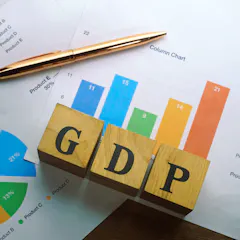
To understand an economic reality where growth is increasingly more qualitative than quantitative and where environmental constraints need a careful understanding, economics needs a major overhaul.
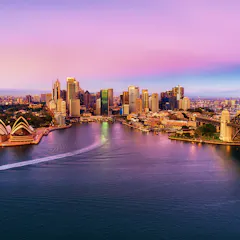
More than good management and more than good luck, we’ve been blessed by delightfully fortunate timing.
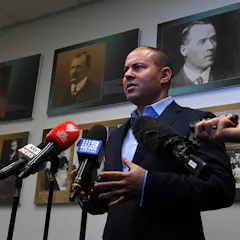
Politics with Michelle Grattan: Treasurer Josh Frydenberg on a slowing economy
This week's June quarter national accounts showed the weakest economic growth since the GFC, but Treasurer Josh Frydenberg remains optimistic.

The Australian government’s approach to economic growth is strictly conventional, and may be leading to the wrong policies.
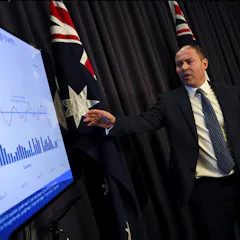
Households are buying no more than they were a year ago, and the wage share of national income is the lowest since 1964.
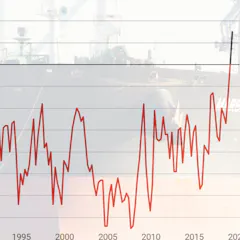
Australia is becoming more like the United States. Increasingly, we invest overseas. Our domestic economy is weak.

If breast milk was made in factories, we’d count it in the GDP.

Most of the gains from the record economy went to those at the top, while everyone else saw much smaller gains – if any – in income and wealth.
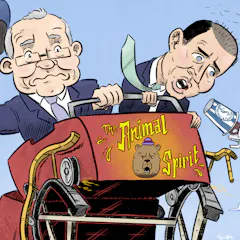
The Conversation’s distinguished panel predicts unusually weak growth, dismal spending, no improvement in either unemployment or wage growth, and an increased chance of recession.

Happiness may well be a choice, but it is a difficult choice. And much that might make that choice a little easier depends on the choices of influential others.

We’ve two options of keeping ourselves out of recession, neither of them easy. The government will have to abandon its determination to get the budget into surplus.
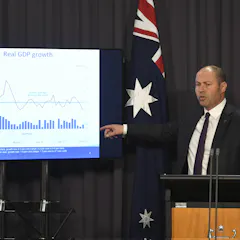
It it wasn’t for a surge in government spending economic growth would be extraordinarily weak. As it is, it’s the weakest since the global financial crisis.
The Reserve Bank cut interest rates on Tuesday because we weren’t spending or pushing up prices at the rate it wanted. On Wednesday we might find things are worse than it thought.

Countries around the world are taking society’s happiness and well-being into account when formulating policy. So, why is Australia so focused on economics as the sole marker of progress?
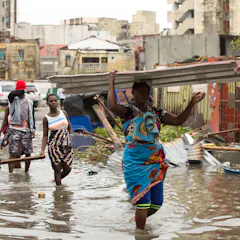
Cyclone Idai hit poor countries the hardest and shows why disaster resilience is a necessity.
Top contributors
-

Visiting Fellow, Crawford School of Public Policy, Australian National University
-
Scientia Professor of Economics, UNSW
-
Senior lecturer, Canberra School of Government, University of Canberra
-
Professorial Fellow, University of Canberra
-
Founding Director, Institute for Sustainability, University of Surrey
-
Professor of Economics, University of Canberra
-
Professor of Economics & Business, Allegheny College
-
Dean of Business School, University of Southern Queensland
-
Director, Centre of Policy Studies, Victoria University
-
Associate Professor, School of Economics, University of Sydney
-
Emeritus Professor of Economics (Griffith University) and Teaching Associate (University of Queensland), Griffith University
-
Director and Professor, Australia-China Relations Institute (UTS:ACRI), University of Technology Sydney
-
Associate Professor in International Macroeconomics, Cambridge Judge Business School
-
Lecturer in Economics, University of the Witwatersrand
-
Professor, School of Economics, The University of Queensland