
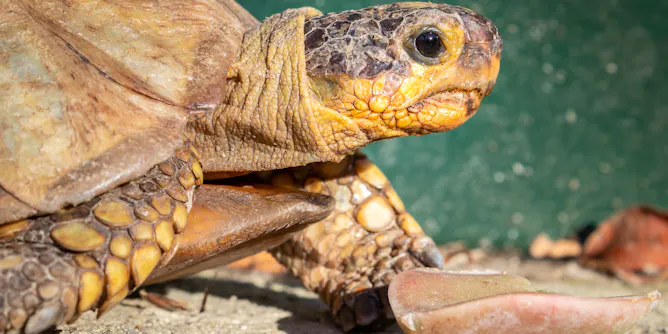
Track marks are a way to fill in the blanks that sometimes exist in the body fossil record.
Articles on Galapagos Islands
Displaying all articles
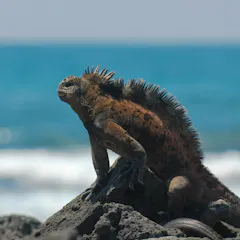
How Pacific winds interact with the sea to bring colder waters up from the depths.
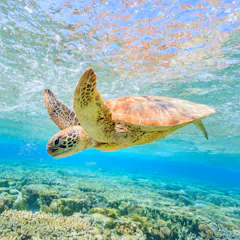
National governments are using political lobbying and empty symbolic efforts to stave off an “in danger” listing for their World Heritage sites.
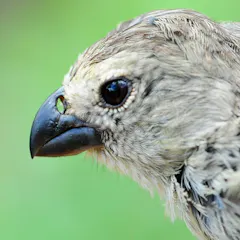
An infestation as a chick leads to enlarged nostrils in the beak of Darwin finches, and that affects their mating call.

Was Darwin inspired by the tropical wildlife of his travels to discover natural selection? Actually, pigeons, worms and barnacles were far more prominent in his thinking.

Blue Planet II reveals what fantastic predators they are.
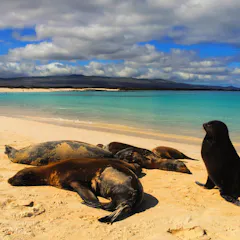
More than 1,500 introduced species have been recorded on the Galapagos Islands, and most have arrived since the archipelago’s tourism industry was expanded in the 1970s.
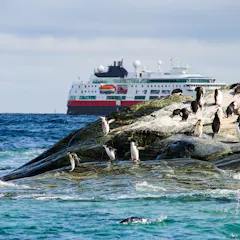
No place is off-limits to tourism, so the industry grows without restriction – but there are ways to curb the environmental damage it does.
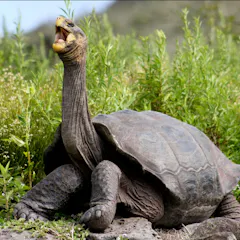
The Galapagos Islands’ giant tortoises are one of the world’s best examples of evolution. Scientists are pioneering new conservation strategies to save them from extinction and restore their habitat.
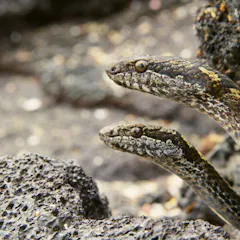
TV audiences cheered on the iguanas’ escape, but won’t somebody think of the poor snakes?

Australia’s government has lobbied hard to avoid the Great Barrier Reef being described internationally as being in danger. But that publicity wouldn’t necessarily hit tourism that hard anyway.
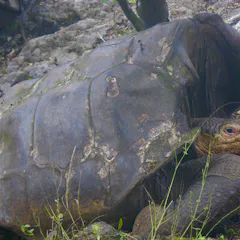
When 100-year-old giant tortoise Lonesome George died in 2012, the world thought his species was lost forever. We went to the Galápagos Islands looking for ‘extinct’ tortoises – and we found them.
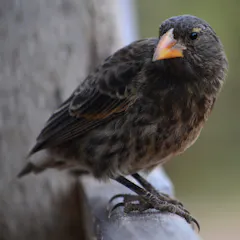
Darwin’s finches are known to be a paragon of evolution by natural selection, but a recent genetic discovery relating to their beaks highlights the evolutionary connectedness of all life.
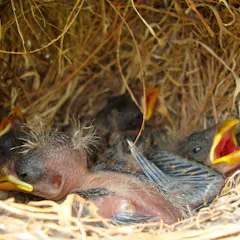
When a bird species is threatened by nest parasites, you might think the logical next step is to fumigate – unsurprisingly, though, physically spraying nests (as you might spray an infested house) is disruptive…
Effects of climate change in the Galapagos Islands are threatening one of the world’s rarest seabirds, the flightless cormorant…
Top contributors
-

Professor of Animal Behaviour, Flinders University
-
Adjunct professor and adjunct senior lecturer in tourism management, Adelaide University
-
Senior Lecturer in Comparative Physiology & Behaviour, Manchester Metropolitan University
-
Professor of Conservation and Sustainable Livelihoods, Charles Darwin University
-
Senior Research Scientist and Lecturer, Department of Ecology & Evolutionary Biology, Yale University
-
Matthew Flinders Professor of Biodiversity Genomics, Flinders University
-
Emeritus Professor of Animal Genetics, University of Sydney
-
Professor of Vertebrate Conservation Biology and Director of the Roosevelt Wild Life Station, State University of New York College of Environmental Science and Forestry
-
Professor of Evolutionary Biology and Science Engagement, University of East Anglia
-
Lecturer in Biology, Cardiff University
-
Adjunct Principal Research Fellow, College of Science and Engineering, James Cook University
-
Professor of Social Sciences, University of Exeter
-
Research Fellow, National Oceanography Centre, University of Southampton
-
Professor of Environmental Justice, Environmental Policy and Planning, Climate + Energy,, University of Michigan
-
Professor of Human Geography, University of Exeter