

Importantly, even if we don’t believe in free will, our sense of accountability stays intact, according to new research.
Articles on Free will
Displaying 1 - 20 of 34 articles
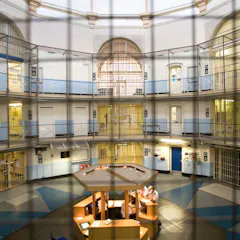
What people believe about choice and responsibility shapes what they think prison is for.

Research has found that when you manipulate people to doubt free will, bad things happen – including cheating and aggression. But does it hold up?
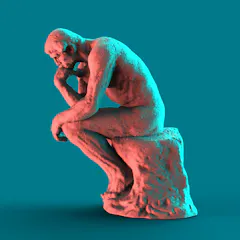
Many philosophers cast doubt on ‘doxastic voluntarism’: the idea that we can control what we believe, just like that. So can people be held to account for their beliefs?
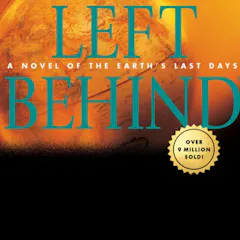
The ‘Left Behind’ series emphasizes themes of authority, loyalty and sanctity, but they are preferences for order, not moral matters.

Sapolsky summarises the latest scientific research relevant to determinism: the idea that we’re causally ‘determined’ to act as we do and couldn’t possibly act any other way.

We tend to think everyone is affected by sly, psychological techniques – except ourselves.

Having the ability to decide either to do something or not, and to act accordingly, is a basic definition of freedom. Smart buildings challenge this freedom.

Thomas the Tank Engine’s movements are restricted by the tracks, but he still thinks he’s free.

Messages about climate change must be adapted to people’s histories, differences and expectations.

Finding ways to make talking about diversity less of a confrontation and more of a dialogue is crucial.

Plus, a philosopher explains the history of the idea that we might all be living in a simulation. Listen to The Conversation Weekly podcast.

Guy is happy living his life unaware that he is just a character in a grand simulation. Could we all be doing same?

In 1983, one study by an American physiologist set off an explosion of research about free will and the brain.

Taking oath is an important tradition before assuming charge of a public office. It entails a commitment to the future. What is the history of oath-taking?
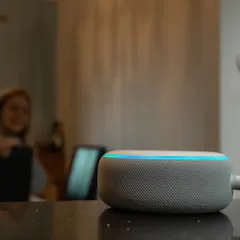
Leading tech companies are increasingly using AI to influence our behaviour. But how persuasive do we find virtual assistants?

The criminal justice system presupposes people generally are free to decide whether or not to engage in criminal behaviour. However, the courts acknowledge not everyone has free will.

Scientists are revealing the extent to which our behaviour is influenced by our genes, calling into question our capacity for free will. But there is still scope for change.
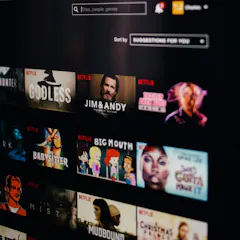
Have you ever watched something because YouTube recommended it to you? You’ve probably been influenced by an algorithm. But at the end of the day, underneath all the algorithms are people.

Is everything predetermined, or is it all random? Or is there something in between that we call free will that defies our attempts to explain it?
Top contributors
-

Senior Lecturer in Philosophy and Ethics, Nottingham Trent University
-
Senior Research Fellow, Uehiro Centre for Practical Ethics, University of Oxford
-
Professor of Genetic Epidemiology, King's College London
-
Associate Professor of Physics, The University of Melbourne
-
Retired, University of Warwick
-
Professor Emerita of Religious Studies, College of the Holy Cross
-
Professor of Philosophy, King's College
-
PhD Candidate of Psychology, University of Essex
-
Ph.D. Candidate in Social and Personality Psychology, Texas A&M University
-
Professor, Australian National University
-
Professor of American Literature and Religion, University of Victoria
-
Professor, Real Estate, Université du Québec à Montréal (UQAM)
-
King's College London
-
Academic Fellow, University of Sydney Law School, University of Sydney
-
Lecturer in Media and Journalism, Glasgow Caledonian University